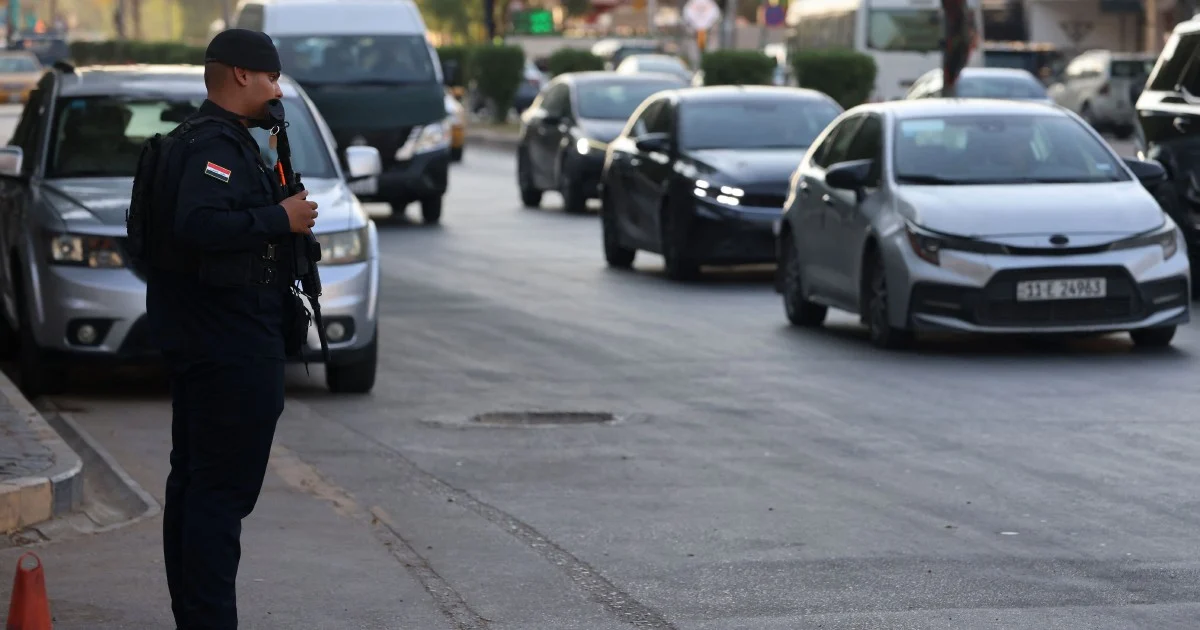
In a substantial enforcement operation, Iraqi authorities moved against 47 government officials and parliamentarians on Sunday, according to announcements from state media. The coordinated arrests represent one of the more significant crackdowns in recent months against officials accused of corruption, a persistent challenge that has undermined Iraq's institutional credibility and economic development for decades.
The scale of the operation—encompassing both administrative officials and elected representatives—underscores the extent to which corruption has permeated multiple levels of Iraq's governance structures. Parliamentary representation in the arrests signals that anti-graft efforts have extended beyond lower and middle-ranking bureaucrats to reach the legislative branch itself, where financial impropriety and abuse of office have long been documented by international watchdog organisations.
Iraq has consistently ranked among the world's most corrupt nations in Transparency International's Corruption Perceptions Index, a distinction that has contributed significantly to public disillusionment with government institutions. Endemic corruption diverts resources away from essential services including healthcare, education, and infrastructure development at a time when Iraq is attempting to rebuild following years of conflict and stabilise its economy against oil price volatility.
For Malaysian observers, Iraq's anti-corruption campaign offers instructive parallels and contrasts. Both nations have grappled with systemic graft affecting institutional legitimacy, though Malaysia's enforcement mechanisms—through agencies like the Malaysian Anti-Corruption Commission—have operated with greater institutional autonomy. The Iraqi operation demonstrates the challenges of pursuing high-level officials in fragmented political systems where competing factions may resist accountability initiatives.
The timing of such enforcement actions in Iraq frequently correlates with political pressure from civil society, international partners, and reform-minded factions within government itself. Sunday's arrests suggest that momentum for tackling official malfeasance remains active, despite structural obstacles including weak judicial independence and insufficient prosecutorial capacity that have historically impeded corruption cases.
The inclusion of parliamentarians in the operation is particularly significant given that legislative bodies in post-conflict states often become repositories for patronage networks and influence-peddling. By extending arrest operations to include elected officials, Iraqi authorities signal—at minimum rhetorically—a commitment to holding senior figures accountable rather than limiting enforcement to subordinate staff members who typically face consequences while patrons remain protected.
Iraq's anti-corruption efforts occur within a broader regional context where Southeast Asian nations have also intensified governance reform initiatives. Indonesia, Thailand, and Vietnam have launched various campaigns targeting official misconduct, suggesting that corruption control has become a prioritised agenda across emerging economies seeking to attract investment and improve institutional performance.
The practical effectiveness of such enforcement campaigns ultimately depends upon whether arrests translate into convictions and meaningful sanctions. Iraqi courts have historically struggled with corruption cases owing to evidentiary challenges, witness intimidation, and political interference, meaning that detention without subsequent prosecution remains a recurrent pattern. Sustained anti-corruption action requires not merely enforcement sweeps but institutional strengthening of prosecutorial and judicial capacity.
International observers, including the World Bank and International Monetary Fund, have repeatedly identified corruption as a critical impediment to Iraq's development trajectory. Both institutions have made governance improvements conditional for continued financial support, providing external leverage that reinforces domestic reform efforts. However, the effectiveness of such conditionality depends upon Iraqi leaders' genuine commitment to institutional change rather than episodic crackdowns designed to satisfy external pressure or improve political positioning.
The broader implications for regional stability deserve consideration. When corruption remains rampant despite stated enforcement efforts, public trust in government deteriorates further, creating space for alternative power structures—including militia groups and extremist organisations—to fill institutional voids. Iraq's experience underscores why corruption control constitutes not merely an economic issue but a security and political concern affecting regional stability and international relations throughout Southeast Asia and the Middle East.
Moving forward, the sustainability of Iraq's anti-corruption initiatives will depend upon whether these operations establish precedent for consistent accountability or represent sporadic enforcement divorced from systematic institutional reform. Meaningful progress requires strengthening judicial independence, improving transparency mechanisms, and addressing the political incentive structures that originally enabled large-scale graft. Without such structural changes, even aggressive arrest operations risk becoming cyclical exercises that temporarily mollify critics without fundamentally altering the governance environment.

