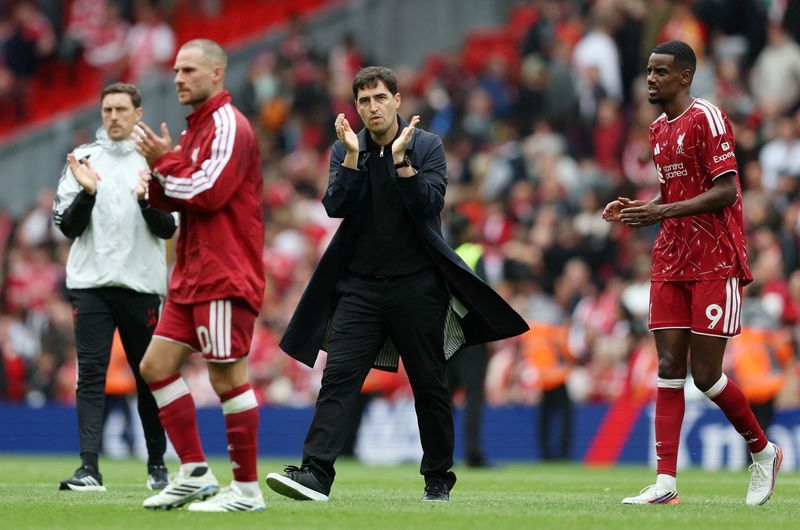
Liverpool's new manager Andoni Iraola has signalled his confidence in the direction of the club's rebuilding project, even as his tenure remains without a Premier League victory. After Saturday's 2-2 stalemate against Nottingham Forest, the Spanish tactician suggested that beneath the surface of a frustrating result lies the groundwork for a more dynamic and competitive side capable of reclaiming English football's elite status.
Iraola arrived at Anfield this summer inheriting a squad reeling from a catastrophic campaign that saw the club plummet from champions in 2025 to fifth place. The scale of that collapse, despite unprecedented investment of £446 million in fresh talent, underscored the urgency of his appointment. His mandate is unambiguous: restore Liverpool to the Premier League summit and resurrect the intimidating atmosphere that once made Anfield a fortress for visiting teams. This represents far more than a cosmetic managerial change; it signals Liverpool's determination to recalibrate after two seasons of strategic inconsistency.
The blueprint Iraola is implementing marks a stark departure from the measured, possession-dominant football that characterised Arne Slot's tenure. Instead, the former Bournemouth manager is demanding immediate, aggressive pressing, rapid ball circulation, and relentless attacking intent—an approach that echoes the high-octane intensity supporters experienced during Juergen Klopp's reign. This philosophy appeals directly to Liverpool's traditionalist fanbase, who chafed under the more cautious methodologies of recent seasons. The philosophical shift, however, requires substantial adjustment and cannot be installed instantaneously across an entire squad.
The draw with Nottingham Forest illustrated both the potential and the peril within this transitional period. Liverpool's opening 45 minutes reflected the team's ongoing inability to establish dominance from kickoff, with Forest capitalising on a direct counterattack through Dan Ndoye to take the lead. Iraola's visible frustration at the sluggish start hinted at deeper concerns about his players' commitment to the new intensity standards. Yet the transformation after the interval proved sufficiently compelling to convince him that the tactical architecture is sound. Alexander Isak's equaliser sparked a sustained spell of Liverpool dominance, culminating in substitute Victor Munoz's late leveller that rescued a second consecutive draw from a losing position.
Munoz's performance across two matches has particularly impressed Iraola, demonstrating the kind of relentless work ethic and positional intelligence the manager demands from his attacking players. The winger's dual contributions—threatening opposition defences while maintaining defensive discipline—exemplify the multifaceted demands of Iraola's system. This emphasis on collective responsibility rather than individual flair suggests Liverpool are pursuing a more balanced, sustainable model than sometimes appeared under recent predecessors.
The underlying tactical issue troubling Iraola stems from Liverpool's defensive shape and pressing mechanics when out of possession. His diagnosis of passive, disorganised defending in the first half—characterised by excessive spacing and a lack of urgency—identifies a correctable deficiency rather than an insurmountable obstacle. The second-half improvement, when Liverpool initiated more aggressive pressing and won greater numbers of contested duels, validates his conviction that intensity and tactical discipline produce tangible results. This represents a crucial insight for supporters attempting to gauge whether Iraola's methods will ultimately succeed at Liverpool.
Liverpool's hierarchical support for Iraola remains evident despite the winless start. Few observers anticipated immediate tactical fluency given the profound stylistic shift under implementation. The manager's transparent communication about the necessity of adjustment time has forestalled the panic that might otherwise accompany consecutive draws. Furthermore, Liverpool's recruitment department continues operating in alignment with Iraola's requirements. Recent reports confirm the imminent signing of Bradley Barcola from Paris Saint-Germain, the 23-year-old French winger whose explosive pace and direct running style complement Iraola's high-tempo system perfectly. Such acquisitions reinforce the institutional commitment to his vision rather than suggesting superficial managerial appointments.
The challenge confronting Iraola transcends individual match results; it involves establishing consistent patterns of dominance and control that opponents cannot circumvent. Liverpool's historical identity derives from their capacity to impose their will on matches through superior intensity and tactical discipline. Rebuilding that identity after years of diminished standards requires not merely tactical sophistication but psychological recalibration—convincing players that relentless aggression and constant pressure represent the acceptable standard rather than occasional exceptions. Iraola's evident frustration with slow starts suggests he is determined to inculcate this mentality systematically.
From a Malaysian and Southeast Asian perspective, Liverpool's regeneration cycle carries broader implications for the Premier League's competitive balance and global football narratives. The club's diminished status opened opportunities for other contenders, while their resurgence would reshape title dynamics. Additionally, Iraola's appointment reflects the cosmopolitan nature of modern football management, with elite clubs increasingly recruiting from outside traditional power structures. His Bournemouth pedigree, relatively modest by Liverpool standards, demonstrates that managerial credentials increasingly emerge from detailed tactical excellence and proven leadership rather than prestigious historical associations.
The points accumulated through draws rather than victories will ultimately frustrate Liverpool's ambitions, as Iraola himself acknowledged. Transforming promising second-half performances into consistent three-point tallies represents the decisive challenge ahead. Nevertheless, the manager's emphasis on character recovery, tactical improvement, and the emerging coherence of his system provides legitimate grounds for qualified optimism. Liverpool remain trapped between theoretical promise and practical achievement, but the trajectory under Iraola's stewardship appears sufficiently positive to suggest the club's dormant potential is beginning to reanimate.

