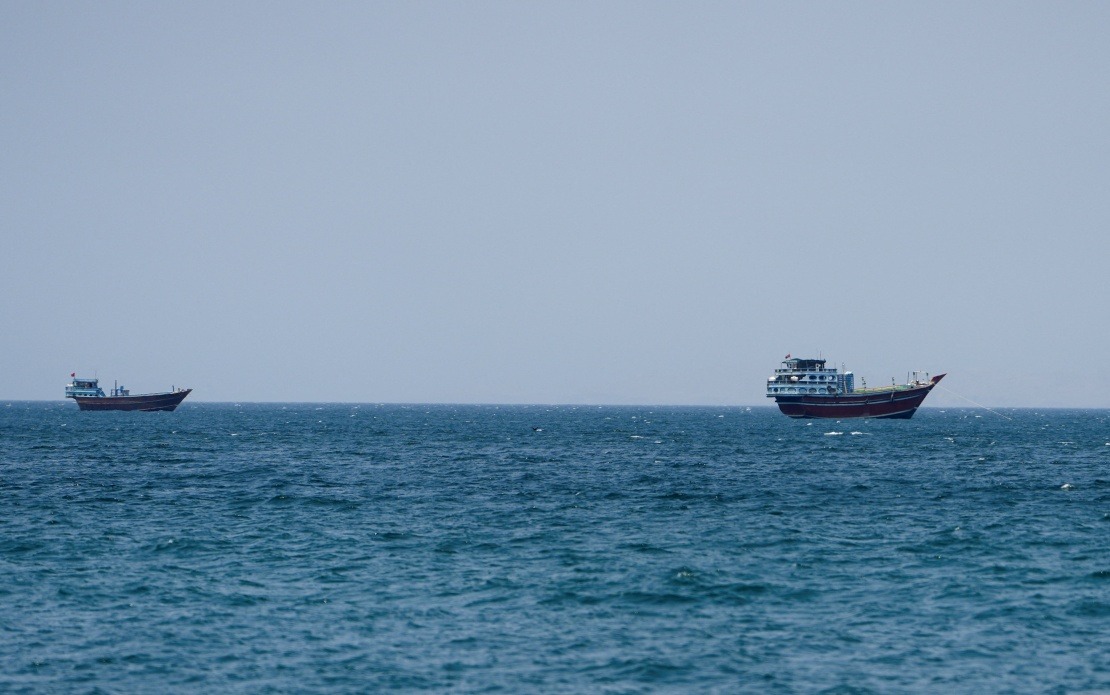
Iran's newly appointed head of the Supreme National Security Council has signalled that the restoration of full maritime traffic through the Strait of Hormuz depends entirely on Washington's willingness to capitulate on several key demands. Mohsen Rezaei conveyed this position during a meeting with China's ambassador to Tehran, underscoring that Tehran maintains a hardened negotiating stance despite months of restrictions on one of the world's most strategically vital shipping corridors.
The Strait of Hormuz has been subject to Iranian-imposed transit limitations since March, a move authorities attributed to what they characterised as American and Israeli military aggression. Through this narrow passage flows roughly one-third of global seaborne oil trade, making any prolonged closure or restriction a matter of acute concern for energy markets worldwide. The closure has already sent ripples through Asian energy supplies, with particular implications for regional economies heavily dependent on Persian Gulf hydrocarbon imports.
Rezaei's conditions, as articulated to the Chinese diplomat, extend beyond simple cessation of hostilities. He explicitly demanded that the United States terminate military operations affecting Iran and its regional partners, while simultaneously releasing substantial sums of Iranian funds that have been frozen through international sanctions mechanisms. These dual requirements reflect Iran's broader grievance structure regarding Western financial pressure and military interventionism in Middle Eastern affairs.
The Iranian security official revealed that additional conditions have been transmitted to Washington through diplomatic back-channels involving mediating nations that have facilitated indirect talks between Tehran and the US in recent weeks. The existence of these supplementary demands suggests a complex negotiating position with multiple dimensions extending beyond the maritime issue itself. Intelligence observers regard these concealed conditions as potentially encompassing nuclear programme guarantees, sanctions relief architecture, and regional security arrangements that Iran views as foundational to any broader settlement.
Significantly, Rezaei asserted that bilateral agreements between Iran and Oman—the other nation bordering the Strait of Hormuz—would not alter Tehran's independent authority over the waterway's operational status. This statement underscores Iran's rejection of any arrangement that might bypass its consent or dilute its strategic leverage. It also suggests that Oman's potential role in regional diplomacy remains subordinate to Iranian decision-making, a positioning that regional analysts view as potentially complicating multilateral efforts to normalise shipping patterns.
For Malaysian readers and Southeast Asian policymakers, these developments carry substantial implications. The region's economies, particularly those in Malaysia, Singapore, and Thailand, depend critically on unimpeded access to Gulf oil and liquefied natural gas. The Strait of Hormuz closure raises energy security concerns and could elevate transportation costs for regional manufacturing sectors. Any prolonged disruption would likely trigger inflationary pressures throughout ASEAN supply chains and dampen economic growth trajectories already challenged by global headwinds.
During his diplomatic engagement, Rezaei also commended China's posture at the United Nations Security Council, specifically praising Beijing's opposition to what he termed an "anti-Iranian and illegal" draft resolution presented during the March escalation. This endorsement of Chinese diplomatic support highlights Iran's strategic recalibration toward Beijing and away from Western interlocutors. The gesture reflects Tehran's deepening reliance on Asian great powers as counterweights to American pressure.
Rezaei further elaborated on the expanding Iran-China strategic partnership, emphasising their shared membership in the Shanghai Cooperation Organisation and BRICS. These institutional frameworks have assumed heightened importance as Iran seeks to insulate itself from Western economic isolation while building alternative diplomatic and economic architectures. The security chief characterised this partnership as possessing substantial potential for future development, suggesting anticipated deepening of defence, commercial, and technological cooperation between the two nations.
The public articulation of these conditions through diplomatic channels indicates Iran has opted for transparent signalling of its demands rather than secretive negotiation. This approach may reflect confidence in its strategic position or recognition that coercive leverage over the Strait provides sufficient bargaining power. It also suggests that Iranian leadership views the status quo—with restricted shipping—as sustainable indefinitely, contradicting assumptions among some Western analysts that economic costs would eventually force Iranian concessions.
From a broader geopolitical perspective, the Hormuz situation exemplifies how regional powers increasingly weaponise control of critical infrastructure to advance political objectives. Iran's approach demonstrates sophisticated understanding of global energy interdependence and willingness to impose costs on distant economies to achieve domestic strategic goals. This calculus has profound implications for international shipping, insurance markets, and the stability of energy-dependent economies throughout Asia.
The stalemate reflects deeper structural tensions between Iran and the United States that transcend maritime issues. Until fundamental shifts occur in the bilateral relationship—including potential sanctions relief frameworks and security assurances—the Strait is likely to remain contested terrain. Regional powers and Southeast Asian nations caught between these competing pressures must develop contingency arrangements for alternative supply routes and diversified energy sourcing to insulate themselves from potential prolonged disruptions.

