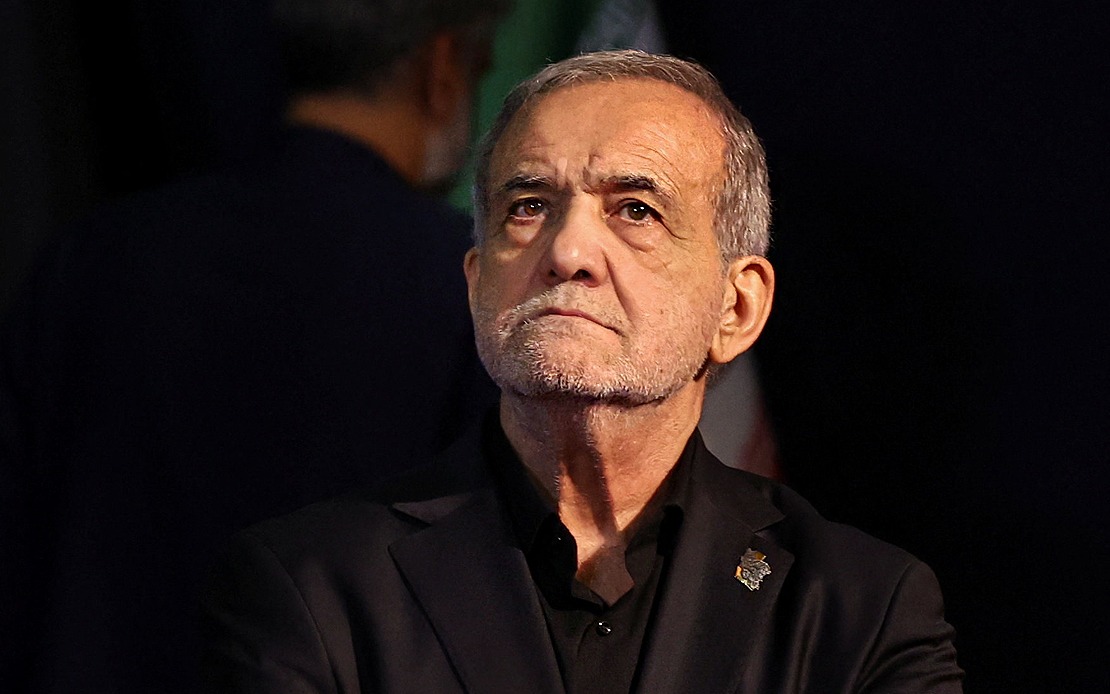
Iranian President Masoud Pezeshkian has escalated his government's response to infrastructure damage by formally calling for international legal proceedings against those responsible, marking a significant diplomatic move in the ongoing tensions between Tehran and Washington. During a ministerial visit on Sunday, Pezeshkian characterised the attacks on Iran's civilian transport facilities as constituting war crimes, signalling his administration's intent to pursue accountability through established international legal frameworks rather than solely through military means.
The president's statements came during an inspection of the Ministry of Roads and Urban Development, where he conducted a comprehensive review of the nation's transport and logistics systems as part of his broader programme of field assessments across government agencies. This visit underscored the operational focus of Iranian leadership on managing the practical consequences of recent military confrontations while simultaneously maintaining a diplomatic offensive at the international level.
During the briefing, ministry officials provided detailed assessments of damage affecting critical infrastructure components including border crossing facilities, major port operations, road networks, railway systems, maritime transport capabilities, and air transport infrastructure. The comprehensive nature of these briefings reflected the widespread scope of the damage inflicted across multiple sectors of Iran's transportation ecosystem, affecting both domestic connectivity and international trade routes essential to the nation's economic functioning.
Roads and Urban Development Minister Farzaneh Sadegh presented extensive documentation of the destruction affecting ports, land border terminals, critical bridges, highway networks, rail infrastructure, and logistics hubs, establishing the factual basis for Pezeshkian's subsequent calls for legal action. This detailed accounting serves both as an internal assessment tool for reconstruction prioritisation and as supporting evidence for potential international legal complaints.
In response to the presented damage assessments, Pezeshkian issued directives for accelerated reconstruction of compromised infrastructure, activation of alternative transportation routes to circumvent damaged sections, and implementation of measures designed to enhance the system's overall resilience against future disruptions. These instructions reflect a dual-track approach combining immediate operational recovery with longer-term systemic hardening.
The president commended the ministry's workforce for maintaining transport operations despite the damage, framing continued service delivery as evidence of national resilience. Pezeshkian characterised public support and government coordination as the mechanism through which Iran would ultimately defeat what he described as adversarial attempts to undermine the country's infrastructure and economic capacity.
The timing of these statements follows the conclusion of a period of heightened military escalation that witnessed sustained aerial bombardment of Iranian territory. Tehran's military leadership responded with retaliatory strikes against American positions in the region, after which the campaign against Iranian infrastructure appears to have halted, suggesting a form of military de-escalation through mutual restraint.
Over an approximately two-week period, sustained air operations resulted in documented damage to transportation networks concentrated in southern Iran, with particular impact on bridge and road systems that serve as critical links in both domestic and regional trade corridors. The apparent cessation of attacks following Iran's demonstration of retaliatory military capability suggests that deterrence through visible force projection may have succeeded where diplomatic channels previously had not.
Pezeshkian's invocation of international legal mechanisms reflects Iran's strategic calculation that military deterrence should be complemented by diplomatic pressure through established international institutions. This approach acknowledges both the limits of unilateral military response and the potential utility of legal frameworks in establishing international precedent and maintaining long-term pressure on adversaries.
The focus on infrastructure damage carries particular significance for Southeast Asian states that depend on regional stability and transit routes through the Persian Gulf and Indian Ocean. Any sustained disruption to Iranian transport systems affects shipping patterns, insurance costs, and commercial routing throughout the broader region, creating indirect economic consequences for trading nations including Malaysia.
The convergence of damage assessments with formal legal complaints indicates that Iran intends to weaponise documentation of civilian infrastructure destruction within international forums, potentially providing leverage in future negotiations or multilateral discussions regarding sanctions, humanitarian access, or conflict resolution mechanisms.
For regional observers, the incident demonstrates the contemporary reality that military confrontations increasingly carry significant economic consequences through infrastructure damage, with civilian populations bearing long-term burdens through degraded transport services and reconstruction costs that persist well beyond active hostilities.

