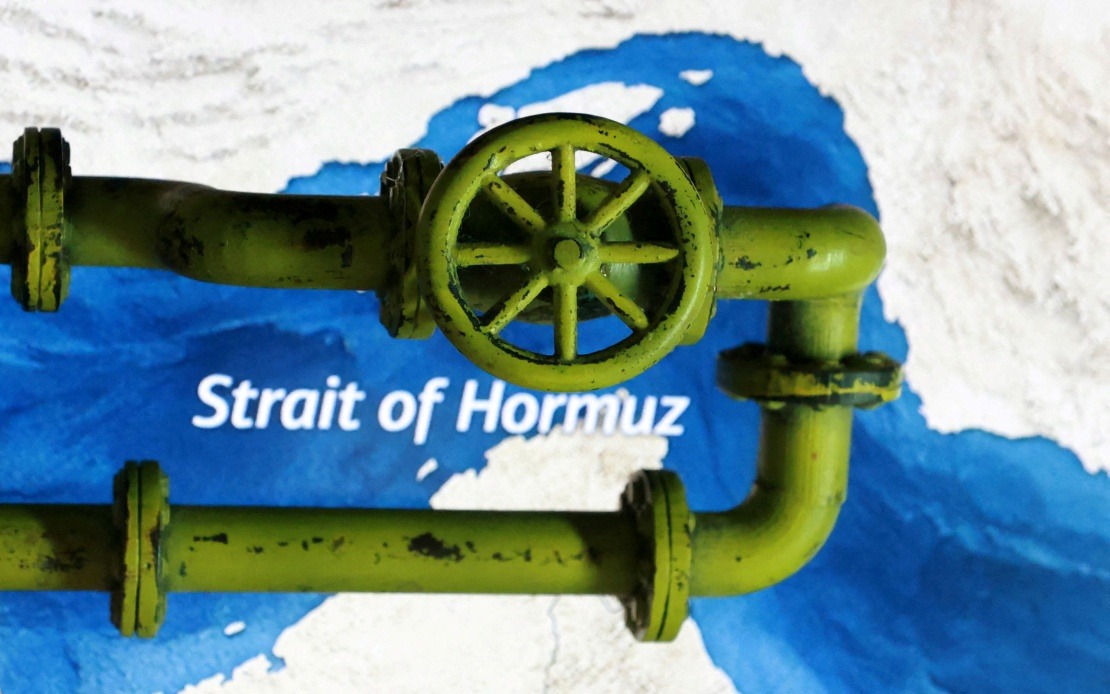
The Iranian Central Bank's top official has acknowledged that the country's oil shipments have virtually ceased, painting a stark picture of economic distress amplified by military tensions and long-standing international restrictions. Governor Abdolnaser Hemmati disclosed in a televised address that Iran now exports virtually no crude oil, matching the plight of neighbouring Iraq and Qatar, whose revenues have similarly evaporated during the current crisis. Yet Hemmati sought to project a degree of preparedness, insisting that Tehran's monetary authorities had anticipated such circumstances and crafted contingency plans to absorb the financial impact.
What distinguishes Iran's predicament from that of its regional peers, Hemmati emphasized, is the asymmetry in financial tools available to manage the fallout. Iraq and Qatar, despite their own revenue troubles, retain the capacity to mobilize assets housed within their central banks to cushion the blow. Iran confronts a far more constrained situation: the United States has immobilized Tehran's foreign currency reserves, denying Iranian officials the ability to access or deploy these holdings. This constraint transforms a temporary export disruption into a more protracted structural challenge, as the government cannot easily tap emergency liquidity reserves that would ordinarily provide breathing room during economic crises.
Adding to this financial squeeze is the unfulfilled promise of capital repatriation through earlier diplomatic negotiations. Hemmati referenced the Islamabad Memorandum, a framework agreement reached between Iran and the United States in June that was designed as a stepping stone toward a comprehensive settlement. That accord contemplated the release of previously frozen Iranian assets, yet those funds have not materialized. The governor characterized this as a separate grievance, underscoring a pattern of pledges made without corresponding delivery—a condition that deepens Tehran's liquidity crisis and compounds public frustration with the stalled diplomatic process.
Iran's economic interdependence with Iraq reveals another dimension of Tehran's vulnerability. Prior to the current hostilities, bilateral trade flowed at an annual rate of roughly $12 billion, with government-to-government transactions—notably natural gas and electricity supplies—accounting for approximately $4 billion, while private sector commerce contributed a further $8 billion. This substantial economic relationship provides Iran with a crucial outlet for non-oil revenues and sustains employment across multiple industries. However, Iraq itself faces mounting difficulties; the closure of the Strait of Hormuz and the broader disruption of regional oil commerce have strained Baghdad's finances, limiting its capacity to meet outstanding obligations to Iranian suppliers and partners.
Despite these headwinds, Hemmati reported constructive developments in bilateral negotiations with Iraqi leadership. Baghdad has committed to addressing arrears owed to Iran, and discussions have progressed regarding mechanisms to unlock Iranian funds currently held within Iraqi banking institutions. These arrangements, if implemented, could provide Tehran with operational flexibility in managing cross-border transactions and settling debts with Iraqi counterparties. The Central Bank governor expressed cautious optimism that such measures will yield tangible improvements in Iran's access to the funds necessary for ongoing commerce.
A particularly notable agreement emerged from Hemmati's recent meeting with Iraq's prime minister concerning the Trade Bank of Iraq, a state-owned financial institution. The two officials concurred on utilizing the bank's resources to backstop guarantees and credit instruments extended to Iranian contractors undertaking projects within Iraq. This mechanism would facilitate Iranian firms' ability to secure working capital and performance bonds, allowing them to continue operations despite the broader sanctions architecture. Iraqi leadership formally endorsed the proposal and directed relevant agencies to expedite implementation, signalling Baghdad's willingness to circumvent some of Washington's financial restrictions through creative bilateral frameworks.
The collapse of Iran's oil export capacity stands as the culmination of decadelong American economic warfare. Washington has systematically targeted Tehran's petroleum sector through successive sanctions regimes, progressively squeezing Iran's access to international payment systems and forcing buyers to abandon Iranian crude. The oil sector has traditionally anchored Iran's external revenue stream, funding government budgets, military expenditures, and development initiatives. The loss of this income source forces policymakers to pursue alternative arrangements—whether through barter, regional trade networks, or bilateral currency swaps—that are inherently less efficient and more politically complicated than conventional energy commerce.
The timing of Hemmati's statement reflects escalating military tensions that have overshadowed any diplomatic runway. The June agreement that raised hopes for sanctions relief has unraveled, and hostile actions have resumed between Tehran and Washington. This deterioration has eliminated whatever modest economic relief might have accompanied a thaw in relations, leaving Iran's monetary authorities to navigate an increasingly austere financial landscape. The breakdown underscores how security crises and economic policy are inseparable in Iran's case: geopolitical confrontation directly translates into financial asphyxiation.
For Malaysia and broader Southeast Asia, Iran's economic predicament carries implications for regional trade and energy markets. Malaysia maintains commercial ties with Iran across sectors including petrochemicals, insurance, and manufacturing. The intensification of American sanctions and Iran's dwindling hard-currency earnings could reshape regional trade patterns and potentially disrupt established business relationships. Malaysian exporters and service providers operating in Iranian markets may face mounting difficulties in securing payment, necessitating alternative settlement mechanisms or portfolio rebalancing toward less-sanctioned markets.
The Iranian Central Bank's acknowledgment of zero oil exports represents not merely an accounting shift but a fundamental reordering of Tehran's economic options. While authorities project confidence in having prepared responses, the frozen foreign reserves and delayed asset releases suggest that room for manoeuvre remains severely constrained. Iraq offers a potential lifeline through bilateral arrangements, yet Iraq's own financial pressures limit how much relief Baghdad can provide. Iran's policymakers must therefore navigate a narrowing corridor between preserving regime stability, sustaining essential imports, and managing public expectations amid prolonged austerity—a balancing act that will shape regional dynamics for years ahead.

