The death of Iran's Supreme Leader Ayatollah Ali Khamenei has triggered a period of extended national mourning, with dignitaries from across the globe converging on Tehran to pay their final respects at a significant tribute ceremony held on Friday. The gathering underscores Iran's enduring regional influence and the international dimensions of its political succession, matters of considerable strategic importance to Southeast Asian nations navigating evolving geopolitical relationships across the Middle East.
The tribute ceremony unfolded at Imam Khomeini's Mosalla prayer hall in central Tehran beginning Friday morning and continuing throughout the day. The location carries profound symbolic weight within Iran's political culture, drawing crowds of mourners alongside the carefully selected roster of state officials and dignitaries. The ceremony represents a formal acknowledgement of Khamenei's four-decade tenure as supreme leader and Iran's constitutional framework for transferring supreme authority.
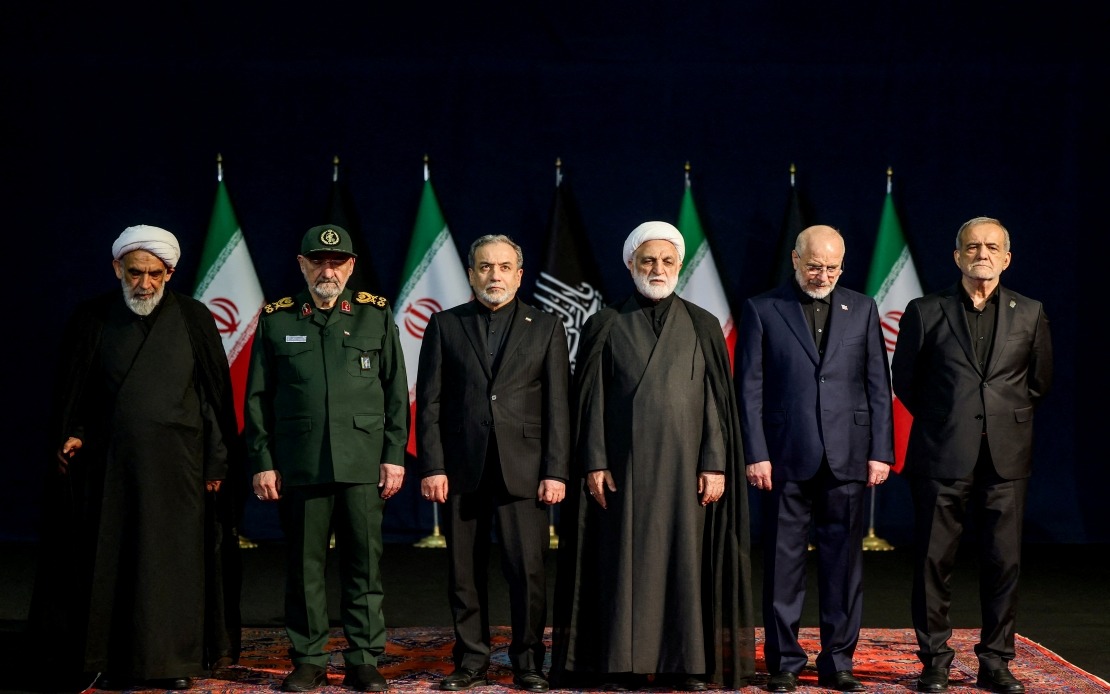
Domestic representation at the ceremony reflected the full spectrum of Iran's political establishment. President Masoud Pezeshkian, Parliament Speaker Mohammad Baqer Qalibaf, Judiciary Chief Gholamhossein Mohseni-Ejei, and Chairman of the Expediency Discernment Council Sadeq Amoli Larijani all participated in the proceedings. This unified display of institutional continuity signals that Iran's governing apparatus remains cohesive during the transition period, a critical factor for stability in a nation frequently navigating regional tensions and international sanctions.
The international dimension of the ceremony proved particularly striking, with heads of state, parliamentary leaders, and government ministers arriving from multiple continents. Pakistan's Prime Minister Shehbaz Sharif and Chief of Army Staff Field Marshal Syed Asim Munir attended, reflecting Islamabad's significant investment in maintaining bilateral relations with Tehran despite complex regional dynamics. Their presence carries particular resonance for Malaysian observers, given Pakistan's role as a key player in South Asian geopolitics and its historical connections to both Southeast Asia and the Islamic world.
Armenian Prime Minister Nikol Pashinyan and Georgian President Mikheil Kavelashvili represented the South Caucasus, a region where Iran maintains considerable diplomatic and strategic interests. Iraqi President Nizar Amedi, alongside Nechirvan Barzani representing Iraq's Kurdistan Region, underscored the depth of Iran's influence in Iraq's political structure. Tajik President Emomali Rahmon's attendance highlighted Tehran's connections across Central Asia, while delegations from major powers including China and Russia demonstrated the global significance attached to Iran's leadership succession.
Beyond formal state representatives, the ceremony drew religious scholars, tribal leaders, and clerics who constitute the broader institutional foundations of Iran's Islamic Republic. This inclusive approach to mourning rituals reflects the theocratic nature of Iran's governance model, where religious legitimacy intertwines inseparably with political authority. Such ceremonies serve not merely as funeral rites but as opportunities for Iran's leadership to reinforce domestic cohesion and project stability to the international community.
Khamenei's death resulted from a United States and Israeli strike on Tehran on February 28, an operation that intensified existing regional tensions and raised concerns about potential escalation across the Middle East. The circumstances of his killing carry implications extending far beyond Iran's borders, affecting maritime security in the Strait of Hormuz, oil market volatility, and broader patterns of regional conflict that indirectly touch Southeast Asian economic interests and security considerations.
The succession process has already proceeded with notable speed. Mojtaba Khamenei, the late supreme leader's son, received selection as Iran's new supreme leader in March, establishing a dynasty-like continuity that departs from earlier leadership transitions. This succession choice potentially signals a more consolidated power structure within Iran's clerical establishment, though the long-term implications for Iran's foreign policy orientation remain uncertain.
Extended funeral ceremonies continuing through July 9 will encompass multiple Iranian cities, with processions planned for Tehran, Qom, and Mashhad alongside religious rites conducted in Iraq. These elaborate, geographically dispersed observances reflect the magnitude of Khamenei's position within Iran's political system and offer opportunities for popular participation in the mourning process. Iranian authorities have imposed significant public closures and airspace restrictions in Tehran and Mashhad during key ceremonial dates, with Thursday designated as a national day of mourning, demonstrating the state's commitment to ensuring appropriate solemnity during the transition.
For Malaysian policymakers and regional analysts, Iran's leadership succession carries substantial consequences. The transition period may influence Tehran's engagement with international negotiations, its approach to regional alliances, and the trajectory of Middle Eastern stability more broadly. The impressive turnout of international dignitaries suggests that Iran's diplomatic standing remains resilient despite international isolation, while the swift succession arrangement indicates institutional continuity rather than internal instability. These factors collectively shape the regional environment within which Southeast Asian nations, including Malaysia, navigate their own diplomatic and economic relationships across the broader Islamic world and the Middle East.

