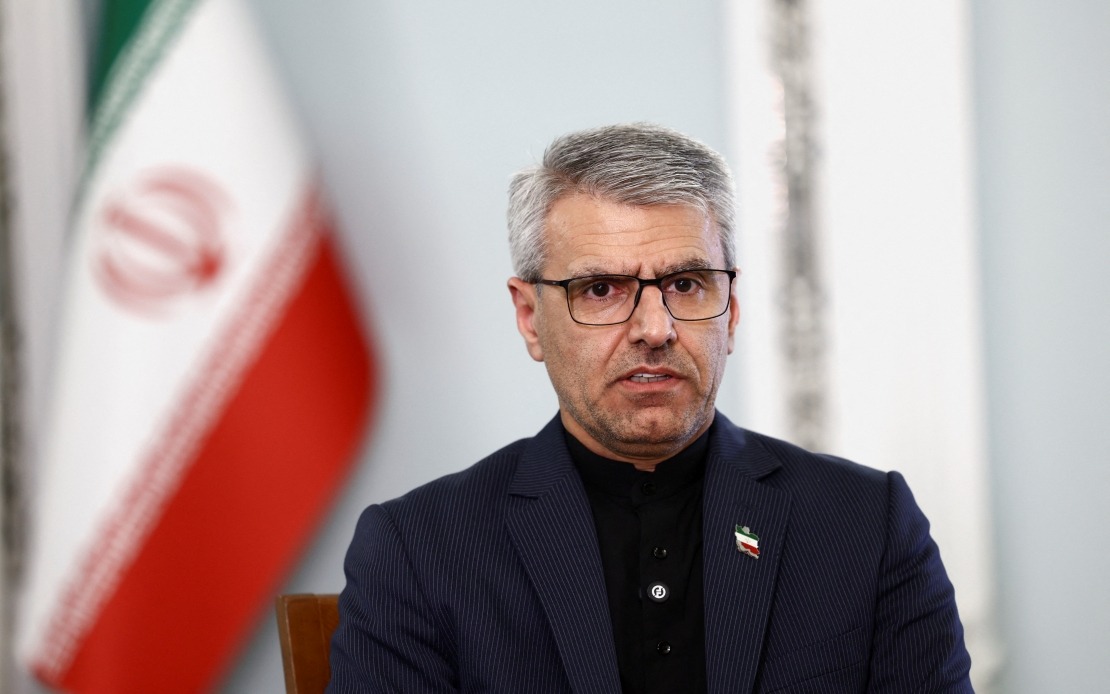
Iran has signalled significant momentum toward resolving its standoff with the United States following a round of high-level talks in Switzerland, with officials describing the outcome as a series of "important steps" designed to enable substantive negotiations on a comprehensive final agreement. Foreign Ministry spokesman Esmaeil Baghaei made the statement on Monday after four-party talks concluded at Burgenstock, near Lake Lucerne, indicating that both sides have shifted beyond preliminary discussions toward concrete procedural arrangements. The announcement reflects a notable escalation in diplomatic engagement after months of indirect negotiations, with Iran and the US seemingly narrowing the gap on several contentious issues that have long obstructed a durable settlement.
One of the most significant developments emerging from the Switzerland talks involves the establishment of what Iranian officials have termed a "deconfliction cell." This monitoring mechanism, which will operate with the involvement of mediators, is tasked with overseeing the continuation of a ceasefire and the maintenance of a halt in hostilities, particularly in Lebanon where proxy tensions have been a persistent source of friction. The creation of such a structure addresses a fundamental security concern for both parties—the need for real-time communication channels to prevent accidental escalation or the miscalculation that could quickly unravel any agreement reached at the negotiating table. For Malaysia and other Southeast Asian nations with strategic interests in regional stability, this development carries particular weight, as instability in the Middle East inevitably affects global energy markets, shipping routes, and the broader geopolitical environment.
Baghaei indicated that discussions at Burgenstock also produced progress on two economically critical issues: the licensing framework for Iranian oil exports and the release of Iran's frozen or restricted assets held by international financial institutions. These matters have long formed the crux of Iran's negotiating position, as sanctions-related asset freezes have severely constrained the country's ability to fund public services and economic development. The reported advancement on these fronts suggests that mediators have identified potential pathways that could satisfy both Iranian demands for financial relief and international concerns regarding oversight and compliance. For oil-importing nations in Asia, including Malaysia, any resolution that increases Iranian crude supply to global markets could have meaningful implications for energy pricing and supply security.
Another key outcome involves establishing a dedicated mechanism to ensure maritime security through the Strait of Hormuz, one of the world's most critical chokepoints for global commerce. The strait's geopolitical significance cannot be overstated—approximately one-third of all seaborne traded oil passes through these waters, making it essential infrastructure for economies throughout Asia and beyond. Repeated incidents of shipping harassment and vessel seizures in recent years have raised insurance costs and created uncertainty for maritime trade. The agreement to develop procedural safeguards for passage represents an attempt to depoliticize what has become an increasingly volatile shipping corridor and restore predictability to international commerce. This consideration will resonate particularly strongly with Malaysian stakeholders in shipping, petrochemicals, and regional trade.
Baghaei's reference to hoping for "seriousness from the other side," while diplomatically phrased, underscores the underlying scepticism that continues to characterize Iran-US relations despite the apparent momentum. This rhetorical positioning suggests that Iranian officials regard the agreements reached as largely procedural and preliminary, with the substantive test of American commitment yet to come during implementation. The emphasis on good-faith execution hints at concerns that previous agreements, including the 2015 Joint Comprehensive Plan of Action, were undermined by unilateral American withdrawal and the reimposition of sanctions. Building sufficient mutual trust to sustain a long-term arrangement remains one of the greatest obstacles to achieving a durable settlement.
Mediator states Qatar and Pakistan separately released a joint statement announcing substantial progress and outlining a 60-day timeline for reaching a final peace agreement. The involvement of these particular mediators reflects the regional diplomatic architecture that has evolved to manage this dispute, with both nations maintaining relationships that allow them to facilitate back-channel communication where direct American-Iranian engagement remains fraught. The compressed timeframe—two months to conclude negotiations—suggests both optimism and perhaps urgency on the part of mediators, possibly responding to international pressure or evolving circumstances that have created a window of opportunity that negotiators wish to exploit before political conditions change.
The talks were structured as part of a memorandum signed in the preceding week, which itself represented a major breakthrough in de-escalating the US-Israeli war launched on February 28. This temporal connection underscores how interconnected Middle Eastern conflicts have become, with the resolution of one dispute intimately tied to progress on others. The choreography of these negotiations reflects an understanding that lasting stability in the region requires addressing multiple overlapping disputes simultaneously rather than attempting to resolve them in isolation. For Southeast Asian observers and policymakers monitoring Middle Eastern developments, this integrated approach illustrates the complex web of regional interactions that ultimately affect Asian interests and stability.
Technical working groups are now tasked with advancing discussions on the specific issues identified during the summit, including the precise mechanisms for implementing the maritime security framework, the modalities for asset release, and the licensing procedures for oil exports. This phase of detailed technical negotiation often determines whether high-level political agreements actually translate into workable arrangements or become mired in disputes over implementation details. The outcome of these technical discussions will reveal whether the parties possess genuine commitment to making a deal function or whether they are primarily securing public relations victories while actual disagreements persist beneath the surface.
For Malaysia and regional stakeholders, the trajectory of Iran-US negotiations carries implications extending far beyond bilateral Middle Eastern concerns. A successful final agreement could stabilize energy markets, reduce geopolitical tensions affecting global shipping, and create space for renewed international cooperation on shared challenges. Conversely, failure to reach a comprehensive settlement risks renewed sanctions escalation, heightened military tensions, and disruption to strategic shipping routes upon which Asian economies depend. The coming weeks will test whether the momentum evident in Switzerland can be sustained through the difficult task of translating political will into binding legal arrangements that address the deep-seated suspicions characterizing decades of American-Iranian antagonism.