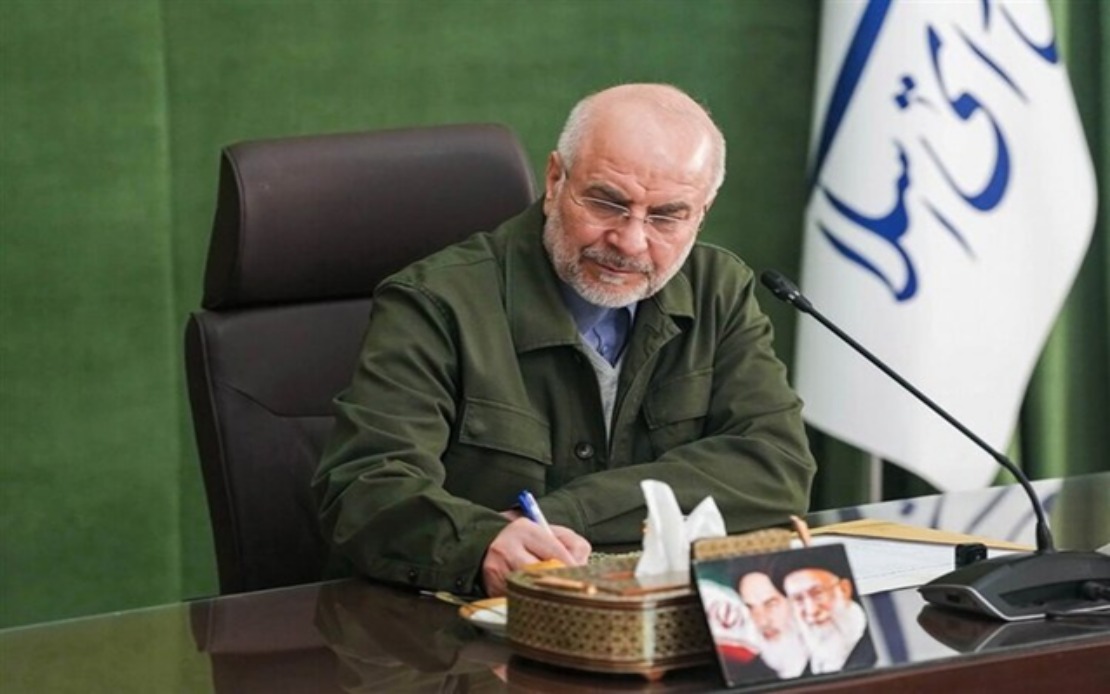
The Iranian government has forcefully disputed assertions from the United States that released frozen assets will be directed toward purchasing American agricultural commodities, marking another point of contention in an already fraught relationship between the two nations. Mohammad Bagher Ghalibaf, who serves simultaneously as Iran's Parliament Speaker and a principal figure in nuclear negotiations, made the rejection explicit through a statement on social media, characterising American claims as false while invoking a loaded historical metaphor about the two countries' decades-long mistrust.
Ghalibaf's pointed rebuke came in direct response to recent pronouncements by senior American officials regarding how Iran should deploy its newly accessible financial resources. Vice President JD Vance had suggested on Monday that the unfrozen funds could be channelled toward importing American soybeans, corn, and wheat products. President Donald Trump subsequently went further, asserting on Tuesday that the released assets would be placed into an escrow account controlled by the United States, with disbursements restricted exclusively to purchasing American food and medical supplies.
The disagreement reflects deeper anxieties on both sides about the deployment of recently unfrozen Iranian capital, following the conclusion of preliminary negotiations. Iran maintains that such funds represent its own sovereign resources and should be allocated according to Tehran's economic priorities and national interests, without external constraints or direction. The Iranian position emphasises autonomy in financial decision-making as a fundamental principle that cannot be compromised in any settlement framework.
Esmaeil Baghaei, serving as Iran's Foreign Ministry spokesperson, articulated this stance more formally on Tuesday, declaring that Iran would utilise its unfrozen assets in accordance with its own national priorities and without imposed limitations. He further clarified that purchasing decisions would hinge on conventional commercial considerations: the cost-competitiveness and quality benchmarks of available goods, rather than any political arrangement or preference for particular trading partners.
Abdolnaser Hemmati, who heads Iran's Central Bank, provided additional nuance to Iran's position while stopping short of categorically excluding American products. He emphasised that Iran faces no contractual or moral obligation to purchase goods from the United States, yet simultaneously indicated that Iranian decision-makers would remain open to acquiring American commodities provided they offered superior value for money compared with alternatives from other sources. This formulation preserves Iran's negotiating flexibility while resisting any appearance of capitulation to American preconditions.
The renewed friction over asset utilisation illustrates the persistent gap between the two sides' expectations regarding the terms and implementation of any nuclear accord. Even as both governments have committed to a peace memorandum of understanding signed on June 18, which establishes a sixty-day timeline for substantive negotiations toward a comprehensive agreement on Iran's nuclear programme and international sanctions relief, fundamental disagreements about the practical mechanics of any settlement remain unresolved.
For Malaysia and the Southeast Asian region, this impasse carries implications that extend beyond bilateral Iran-US relations. The frozen assets dispute signals that deeper structural questions about trust, sovereignty, and enforcement mechanisms in international agreements remain contested. Regional states pursuing their own negotiations with major powers should note how even nominally agreed frameworks can fracture over implementation details and underlying assumptions about control and accountability.
The latest round of formal negotiations took place in Switzerland this past weekend, suggesting that despite public disagreements through media channels, both delegations remain engaged in direct dialogue. This pattern—simultaneous negotiation and public posturing—reflects the domestic political pressures both governments face, with each required to demonstrate to domestic constituencies that it has not surrendered core interests or national prerogatives.
The agricultural commodities issue, while superficially technical, touches on deeper questions about whether sanctions relief truly represents a return to normal commercial relations or a conditional arrangement subject to American oversight. Iran's historical experience with international agreements, particularly earlier nuclear arrangements, has bred deep scepticism about commitments that appear to vest excessive control or verification authority in the hands of Western powers.
American insistence on directing the use of released funds reflects Washington's concern that unfrozen assets might be redirected toward financing activities that the United States views as destabilising in the Middle East. This underlying security anxiety shapes American negotiating positions even when expressed through seemingly mundane commercial language about agricultural purchases. The dispute thus represents not merely a disagreement about commodity trade but a fundamental clash over the nature of post-sanctions relations between the two countries.
The coming weeks will determine whether both sides can navigate these tensions constructively within the sixty-day window provided by the June 18 memorandum. Success would require each party to move beyond public declarations and identify compromise formulations that address legitimate concerns while preserving each side's core requirements regarding national sovereignty and security interests.

