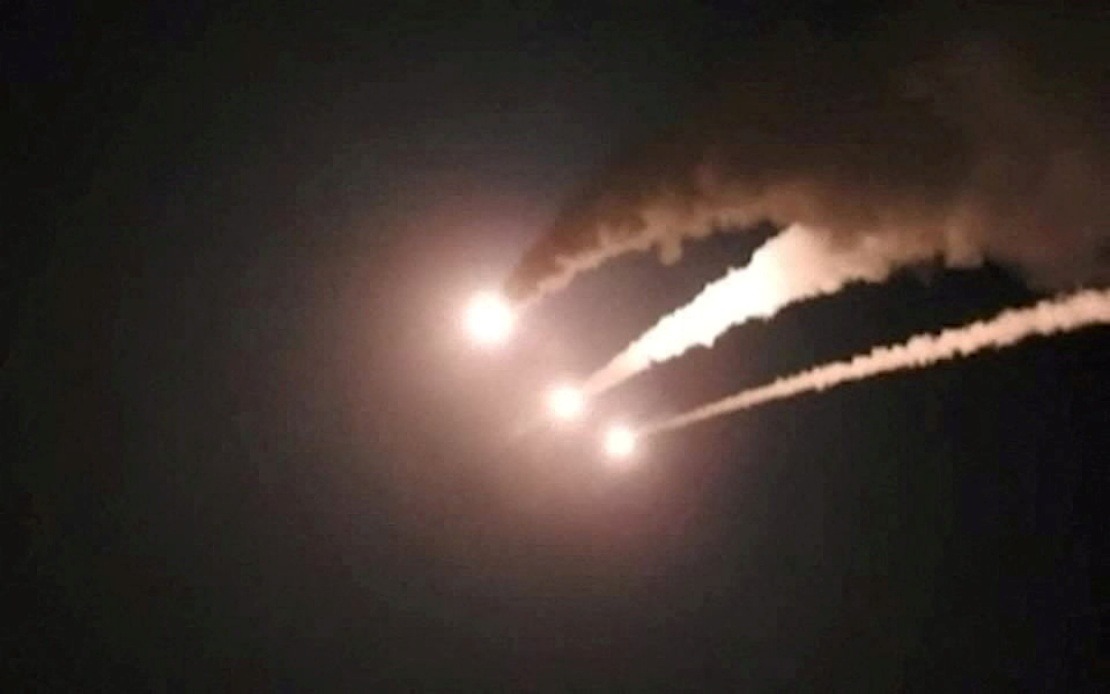
Escalating tensions in the Middle East reached a critical juncture as Iran's armed forces issued a stark warning on Wednesday that American military installations throughout the region face drone strikes if the United States continues breaching a ceasefire arrangement. The Iranian army, through state broadcaster IRIB, claimed responsibility for targeting what it described as US force concentrations at Sheikh Isa Air Base in Bahrain, framing the operation as a direct response to perceived American military aggression.
The Iranian military statement specifically cited what it characterised as US "hostile aggression against military and civilian areas in the southern part of the country" as justification for its actions. Officials asserted that Washington had repeatedly violated the 14 articles of an existing ceasefire agreement. The threatening language was explicit: "The consequences of repeatedly and blatantly violating the ceasefire with criminal America will be that all American bases in the region will be legitimate targets for the Army's drones." This rhetorical escalation signals Tehran's willingness to dramatically expand any potential conflict beyond targeted strikes to encompassing broader military infrastructure across the Gulf region.
The Iranian Islamic Revolutionary Guard Corps (IRGC) claimed it had executed a coordinated missile and drone operation targeting 85 US military sites in the preceding hours. According to the semi-official Tasnim news agency, these targets included Salman Port, which hosts the US Navy's Fifth Fleet headquarters in Bahrain, and Ali Al-Salem Air Base in Kuwait. Such a comprehensive and simultaneous strike operation, if verified, would represent a significant escalation in capability and intent, demonstrating Iran's capacity to execute complex multi-domain military operations across several countries simultaneously.
Defensive responses from regional allies underscored the immediate threat perception. Kuwait's Ministry of Defence reported that its air defence systems successfully intercepted missiles and drones launched during the Iranian operation, though the scale of interceptions relative to the claimed number of projectiles remained unclear. Meanwhile, residents and military personnel in Bahrain experienced air raid sirens sounding during the attack window, indicating the strikes had crossed into operational reality rather than remaining rhetorical posturing. These defensive activities highlighted the vulnerability of Gulf states caught between escalating US-Iranian tensions.
For Malaysian observers, this regional instability carries tangible consequences. Malaysia's substantial maritime trade depends heavily on freedom of navigation through the Strait of Hormuz, through which roughly one-fifth of global petroleum shipments pass. Any escalation affecting commercial vessel transits directly threatens Malaysian economic interests, supply chains, and energy security. The involvement of Strait of Hormuz shipping in the US-Iran dispute means Malaysian-flagged vessels and those carrying Malaysian cargo face heightened risks from potential military operations or accidental targeting.
The United States military responded with its own significant operation, with Central Command announcing it had conducted retaliatory strikes against more than 80 Iranian targets. The timing and scale of these American operations suggest a carefully calibrated response designed to demonstrate resolve while potentially offering space for diplomatic off-ramps. The stated rationale focused on Iranian attacks on commercial vessels transiting the Strait of Hormuz, positioning the American strikes as protective measures for international shipping rather than purely offensive maneuvers.
The cyclical nature of these escalations—Iranian strikes prompting American responses, which in turn trigger Iranian threats—suggests the underlying conflict remains fundamentally unresolved. The ceasefire agreement referenced in Iranian statements appears fragile, with both parties accusing the other of systematic violations. Without intervention from international mediators or regional powers capable of influencing both sides, the pattern risks continuing toward a point where operational errors or miscalculation could spiral into broader conflict.
Southeast Asian states, including Malaysia, maintain economic and diplomatic relationships with both the United States and Iran, positioning the region as a stakeholder in reducing rather than amplifying tensions. Malaysia's status as a Muslim-majority nation with historical ties to Iran adds complexity to its strategic positioning. Regional powers must consider how prolonged US-Iranian hostilities could destabilise energy markets, disrupt shipping corridors vital to Asian trade, and create refugee crises requiring humanitarian response.
The sophistication demonstrated by both Iranian and American military capabilities—evidenced by the scale of coordinated strikes and precision targeting claims—suggests that any further escalation could produce consequences beyond the immediate theatre of operations. Disruptions to Hormuz shipping would reverberate through global energy markets, affecting fuel prices and supply chains across Asia. Insurance premiums for vessels transiting contested waters would rise sharply, effectively adding surcharges to the cost of international commerce affecting everyone from Malaysian manufacturers to consumers.
Regional diplomatic initiatives, whether through the Association of Southeast Asian Nations, the Strait of Malacca Council, or bilateral channels, could potentially contribute to de-escalation efforts. Malaysia and other Southeast Asian maritime powers have legitimate interests in promoting stability in Middle Eastern waters, given the existential importance of these shipping lanes to their economies. The situation demands that regional voices emphasise the shared global interest in preventing further military escalation and maintaining open international waterways essential to all trading nations.

