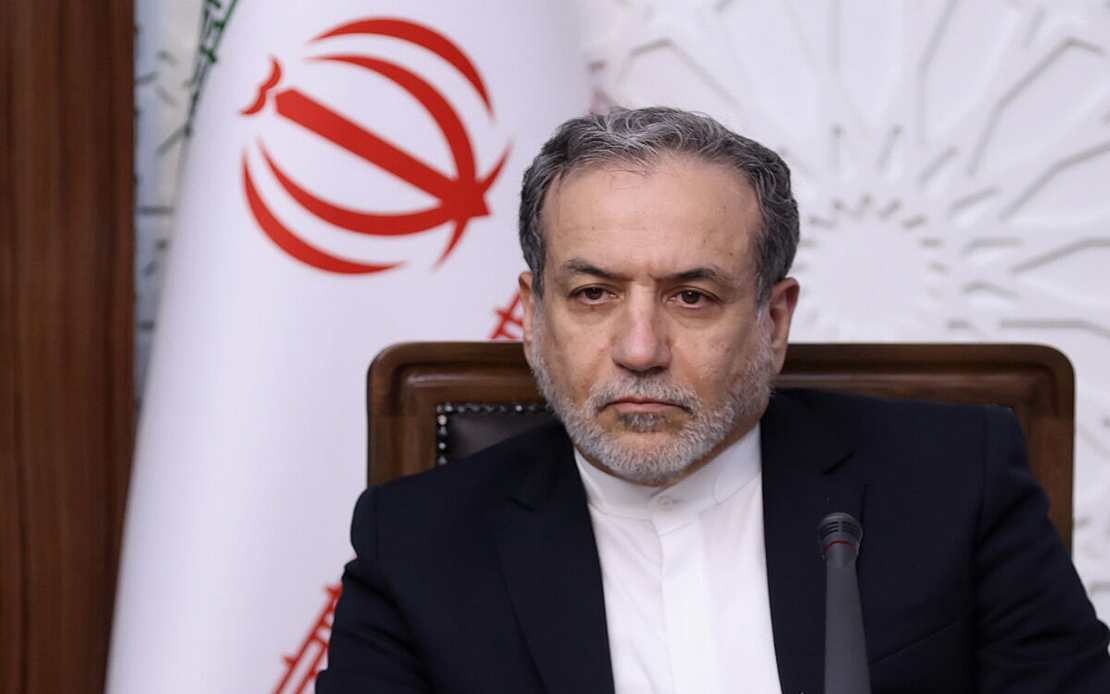
Iranian Foreign Minister Abbas Araghchi moved swiftly on Tuesday to pursue diplomatic channels with two key regional players, signalling Tehran's renewed commitment to de-escalation amid escalating tensions in the Middle East. His separate conversations with Pakistan's Army Chief Field Marshal Asim Munir and Qatari Foreign Minister Mohammed bin Abdulrahman Al Thani underscore the delicate balancing act required to prevent further deterioration in an already volatile region. Both calls emphasised the importance of sustained dialogue and collaborative approaches to restore stability, reflecting a recognition that military posturing alone cannot resolve the underlying geopolitical disputes that have fuelled repeated cycles of confrontation.
The timing of these diplomatic overtures carries particular significance given the volatile trajectory of US-Iran relations over recent months. In late February, coordinated American and Israeli military strikes against Iranian targets prompted Tehran to retaliate with missile and drone attacks directed at both Israel and US military installations across the broader region. This tit-for-tat cycle intensified further last month when Washington resumed offensive operations, with Iran responding in kind by striking American military assets positioned in allied Arab nations. Each escalation has raised the prospect of a wider conflagration that could engulf the entire Gulf region and disrupt critical global energy supplies.
Pakistan's involvement in these mediation efforts reflects Islamabad's traditional role as a bridge between different regional and international actors. As a nation with deep historical ties to both Saudi Arabia and Iran, Pakistan maintains a precarious equilibrium in its regional relations. Field Marshal Munir's inclusion in the Foreign Ministry's outreach suggests that military considerations are integral to any diplomatic breakthrough, acknowledging that security establishments in the region often hold decisive influence over foreign policy directions. The emphasis during their conversation on continued consultations and joint peace-building initiatives indicates Pakistani interest in preventing the conflict from spreading westward across the Arabian Sea.
Qatar's diplomatic engagement reflects Doha's evolving position as a neutral intermediary in regional disputes. The Gulf emirate has invested considerable diplomatic capital in maintaining channels with multiple parties, including the United States, Iran, and various Arab states. Al Thani's discussion with Araghchi on the importance of diplomatic pathways and maintained coordination demonstrates Qatar's commitment to preventing further escalation. Beyond these bilateral concerns, the Qatari Foreign Ministry emphasised Al Thani's backing for diplomatic initiatives and comprehensive regional solutions that would guarantee maritime freedom while establishing sustainable peace architecture.
The most concrete development to emerge from the diplomatic push came through an unexpected partnership announcement between Oman and Iran. Following a Tehran meeting between Omani Foreign Minister Badr Albusaidi and Araghchi, the two nations unveiled a proposed framework for establishing a temporary joint shipping corridor through the strategically vital Strait of Hormuz. Simultaneously, they announced plans for a collaborative mine-clearance operation in the waterway. This initiative addresses one of the most contentious issues in regional security, as the Strait of Hormuz remains the world's most critical oil transit chokepoint, through which approximately one-third of global seaborne petroleum passes daily.
The Omani proposal represents a pragmatic approach to resolving maritime access disputes that have repeatedly threatened global energy markets. Rather than pursuing adversarial approaches to controlling the waterway, the framework suggests establishing cooperative mechanisms that could benefit all parties while reducing the risk of accidental escalation. Mine clearance operations carry particular importance given previous incidents where unexplained underwater explosions have raised tensions and security concerns. By framing this as a joint project rather than unilateral action, the proposal sidesteps sovereignty disputes while addressing genuine security hazards.
However, the American perspective on these developments reflects a fundamentally different vision for the Strait of Hormuz. President Donald Trump announced on Tuesday that the US Navy had informed him that all mines in international waters of the Strait had been removed or detonated, though independent verification of this claim remains unclear. Washington's longstanding position treats the Strait as an international waterway that must remain open to free navigation without impediment or fee collection. The United States explicitly opposes any arrangement that would grant Iran formal administrative or managerial authority over maritime traffic through the waterway, viewing such an arrangement as incompatible with American strategic interests and global maritime freedom principles.
The divergence between American and Iranian visions for Strait governance reflects deeper disagreements about regional hegemony and navigation rights. Washington has consistently championed the use of an alternative southern shipping route closer to Omani territorial waters, effectively bypassing Iranian territory and reducing Tehran's geographic leverage. Simultaneously, the United States maintains comprehensive economic sanctions on Iran and enforces a de facto blockade of Iranian ports, constraining Tehran's international trade and economic recovery. This dual approach of sanctions enforcement combined with route diversification has intensified Iranian frustration with American policies and contributed to the recurring cycles of military confrontation.
The broader diplomatic context illuminates the fragility of recent peace efforts in the region. In mid-June, the United States and Iran, with mediation from Pakistan and Qatar, signed a memorandum of understanding aimed at reducing hostilities. Yet this agreement encountered significant implementation obstacles stemming from disagreements over precisely these Strait of Hormuz management issues. The failure to operationalise the June agreement demonstrates how technical disputes over maritime governance can become intractable when embedded within larger strategic competitions. Without resolving fundamental questions about Iran's role in regional affairs, temporary ceasefires prove insufficient for establishing durable peace.
For Malaysia and other Southeast Asian nations, these Middle Eastern developments carry profound implications for regional and global stability. The Strait of Hormuz disruptions directly affect energy prices and supply chains that sustain Southeast Asian economies. Volatility in this critical waterway increases shipping insurance costs, extends maritime transit times, and creates uncertainty for energy-dependent manufacturing sectors throughout the region. Any military escalation that threatens freedom of navigation would particularly disadvantage maritime trading nations like Malaysia, which depend heavily on secure access to international sea lanes.
The diplomatic initiatives involving Pakistan and Qatar, while modest in immediate scope, suggest that some regional actors recognise the necessity of negotiated settlements over perpetual confrontation. Oman's constructive role as mediator demonstrates how smaller nations can exercise meaningful influence through strategic neutrality and institutional bridge-building. The success or failure of these current initiatives will likely determine whether the region moves toward gradual de-escalation or continues spiralling through recurring cycles of military provocation and retaliation.

