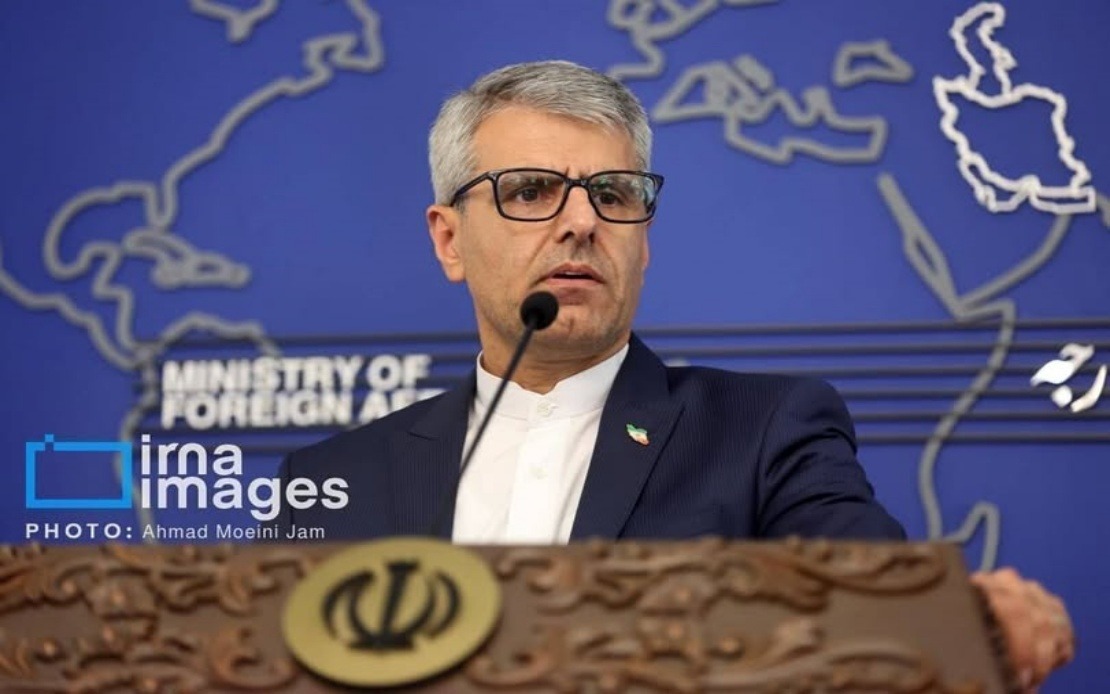
Iran has escalated diplomatic pressure on the United States to compel Israel into what it characterises as an unconditional military withdrawal from Lebanese territories, positioning the demand as a prerequisite for broader regional stability. Speaking in Istanbul on Sunday, Iranian Foreign Ministry spokesman Esmaeil Baqaei outlined Tehran's insistence that the withdrawal question occupy the highest priority in ongoing negotiations between Iran and Washington, which have yielded two separate memoranda in recent months aimed at de-escalating Middle Eastern tensions.
Baqaei's remarks underscore a fundamental disagreement over implementation timelines and sequencing of commitments outlined in the June 18 memorandum signed by the two countries. According to the Iranian official, Tehran views the cessation of Israeli military operations against Lebanon and the complete removal of occupying forces from Lebanese sovereign territory as non-negotiable conditions for reaching what he termed a "final and sustainable agreement." This framing reflects Iran's broader strategic concern that without ironclad guarantees on Lebanese territorial integrity, any regional accord remains vulnerable to future violations and geopolitical manipulation.
The Iranian position directly challenges Washington's diplomatic approach and raises questions about whether the United States has the political leverage—or willingness—to pressure its Israeli ally into binding withdrawal commitments. Baqaei explicitly called on the Americans to "take all necessary measures to force the Zionist regime to stop any aggression and military operations against all Lebanese regions," language that acknowledges the historical asymmetry in US-Israel relations while attempting to reset expectations for American enforcement capacity. The statement suggests Tehran believes Washington either lacks sufficient influence or has not yet fully mobilized it to achieve Iranian objectives.
Parliamentary speaker and chief Iranian negotiator Mohammad Bagher Qalibaf reinforced these demands during a telephone conversation with Lebanese Parliament Speaker Nabih Berri, claiming that Iran is "seriously pursuing" an end to the conflict. Qalibaf's emphasis on the Lebanon question in recent Swiss talks with American counterparts indicates that this issue has emerged as a central negotiating point rather than peripheral concern. The prominence Tehran has assigned to Lebanese sovereignty in the talks reflects broader Iranian strategic interests in maintaining influence within Lebanon and preventing Israeli military dominance in the region, particularly given Hezbollah's deep historical and operational ties to Iranian interests.
A key development underscoring the tensions over agreement implementation is the establishment of what Iranian sources describe as a "conflict-control unit" comprising Iran, the United States, and Lebanon. This monitoring mechanism reportedly emerged after Iran objected to what it characterized as violations of provisions in what Qalibaf termed the "Islamabad memorandum." The creation of such a mechanism suggests that trust between the parties remains fractured, and that disagreements over interpretation and compliance have already surfaced within weeks of the agreement's signing. For Malaysian observers, this monitoring structure recalls similar post-conflict arrangements in Southeast Asia and raises questions about whether external mechanisms can genuinely enforce compliance when signatories hold fundamentally incompatible strategic interests.
Iran's dual-track demands—linking the Lebanese withdrawal question explicitly to broader security arrangements affecting Iranian territory—reflect a negotiating strategy aimed at preventing the United States from compartmentalizing discussions. By repeatedly tying Israeli operations in Lebanon to the central 14-point understanding reached between Tehran and Washington, Iranian officials are attempting to prevent American negotiators from treating Lebanese issues as secondary to other regional concerns. This interconnection of demands, whether deliberate or reflective of genuine Iranian security calculations, complicates American diplomatic flexibility and potentially increases risks of negotiation collapse if progress on any single issue stalls.
The timing of these statements is significant, arriving amid continuing efforts by both nations to implement the broader 14-point arrangement that followed weeks of regional military escalation and intensive diplomatic engagement. The fact that compliance questions have already emerged suggests that the memoranda represent frameworks for continued negotiation rather than settled agreements. This interpretation has implications for regional stability assumptions, as it indicates ongoing dispute over fundamental questions including withdrawal timelines, verification mechanisms, and enforcement procedures. For countries in Southeast Asia monitoring Middle Eastern developments, the fragility of these arrangements underscores broader challenges in achieving durable conflict resolution when parties maintain competing strategic objectives.
Qalibaf's articulation of Iranian goals—"ending the war in Lebanon, returning displaced people to their homes, ending the occupation and securing the withdrawal of the Zionist regime from Lebanese territory"—combines humanitarian framing with security demands. This rhetorical strategy appeals to international sentiment supporting Lebanese civilian interests while maintaining focus on what Tehran characterizes as necessary security outcomes. The explicit mention of displaced populations reflects the humanitarian dimensions of the conflict and suggests Iran believes linkage to civilian welfare strengthens its negotiating position and international legitimacy for demands that might otherwise face resistance from Washington or its regional partners.
The underlying tension evident in Iranian communications concerns whether the June memorandum genuinely constrains Israeli actions or merely formalizes continued American acquiescence to Israeli military operations in the region. Tehran's repeated demands for American enforcement suggest skepticism about American willingness or capacity to influence Israeli decision-making, a concern that echoes throughout decades of Middle Eastern conflict resolution attempts. For Malaysian policymakers and analysts, these developments illustrate the persistent challenges in achieving lasting regional settlements when military actors retain autonomy over escalation decisions and when external guarantor powers have competing or insufficient leverage over all parties.
The diplomatic standoff also highlights broader questions about the sustainability of any arrangement emerging from current negotiations. If Iran maintains these demands as non-negotiable while the United States hesitates to pressure Israel into binding withdrawal timelines, the memoranda may represent temporary understandings rather than framework agreements capable of underpinning long-term stability. The establishment of monitoring mechanisms, while potentially useful, cannot substitute for genuine alignment of party interests or sufficient external enforcement capacity. These structural challenges suggest that resolution of the Lebanon question may prove more intractable than current diplomatic activity implies, with potential consequences for regional stability extending well beyond the immediate parties to conflict.

