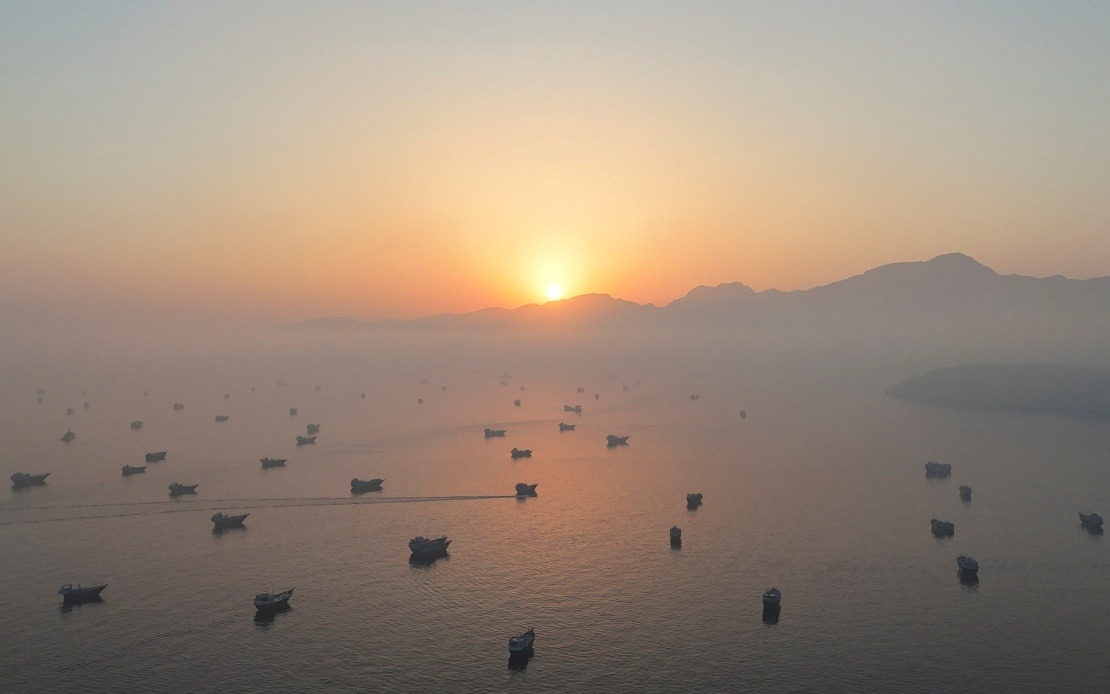
Iran's military leadership has escalated rhetoric over international shipping in the Strait of Hormuz, declaring unilaterally that no tanker carrying oil, liquefied natural gas, or fertiliser will be permitted passage without explicit Iranian authorisation. The announcement came after the Islamic Revolutionary Guard Corps reported incidents involving what it described as four US-backed vessels on Sunday that allegedly attempted transit through what Tehran characterises as an unsafe corridor while concealing their positions by disabling navigation systems.
The confrontation in the Persian Gulf reflects mounting tensions between Tehran and Washington following a cycle of military actions that began on July 8. During that period, American forces launched successive strikes against Iranian targets, actions Washington's Central Command justified as responses to what it described as threatening Iranian conduct toward commercial shipping in one of the world's most strategically vital waterways. In retaliation, Iranian military units conducted strikes against US military installations across multiple countries in the broader Middle East region.
According to the IRGC's account of Sunday's incident, two of the four vessels experienced problems and subsequently halted their transit attempts, while the remaining pair reversed course and departed the area. The Iranian military statement emphasised that each vessel had received warnings before the incidents occurred, suggesting that Iranian forces maintain active surveillance and enforcement mechanisms throughout the strait. The framing of these events as deliberate violations rather than accidental occurrences underscores Iran's assertion of de facto sovereignty over this internationally recognised waterway.
The Strait of Hormuz represents one of global commerce's most critical chokepoints, with approximately one-third of all seaborne traded oil and substantial liquefied natural gas volumes passing through its narrow channels daily. For Malaysia and other Southeast Asian economies heavily dependent on imported energy, disruptions or complications in Hormuz transit directly affect fuel costs, supply reliability, and ultimately consumer prices. The imposition of unilateral permit requirements by Iran creates additional commercial friction and uncertainty for regional shipping companies and oil importers.
Tehran's insistence that it has established an exclusive "safe route" through the strait and that all other passages constitute unsafe corridors represents a significant assertion of control over international waters. This claim conflicts with established principles of maritime law recognising the strait as an international shipping lane where vessels from all nations retain the right of innocent passage. The IRGC's characterisation of vessels operating outside Iran-designated channels as violators reflects a much broader interpretation of Iranian authority than most maritime nations would accept.
The strategic implications extend beyond immediate shipping concerns. Iran's repeated emphasis that no energy exports will transit without its permission carries implications for global oil markets and energy security calculations throughout the region. For Southeast Asian nations including Malaysia, which rely on Hormuz oil supplies for their energy needs, such assertions create uncertainty regarding future availability and pricing stability. Energy security considerations have long shaped regional foreign policy, and any sustained disruption or complication of Hormuz transits could necessitate policy adjustments across Southeast Asia.
The recent cycle of military escalation demonstrates how quickly miscalculation or deliberate provocation can destabilise the Persian Gulf region with consequences extending far beyond the immediate participants. The involvement of what the IRGC characterises as US-backed vessels suggests these incidents form part of a broader strategic competition rather than isolated maritime events. Each confrontation incrementally raises tensions and risks of unintended consequences that could dramatically impact global energy markets and regional stability.
Malaysian policymakers have historically maintained cautious diplomatic approaches toward Middle Eastern conflicts, preferring to focus on commercial relationships and regional development rather than taking sides in great power competitions. However, the potential for Hormuz disruptions forces consideration of energy contingencies and supply diversification strategies. The country's substantial dependence on stable energy imports means that escalating tensions in the Persian Gulf command attention regardless of Malaysia's preferred diplomatic posture.
The underlying causes of escalating Iran-US tensions in the Gulf region involve complex historical grievances, nuclear programme disputes, sanctions regimes, and competing regional influence agendas that extend far beyond maritime disputes. However, shipping incidents and confrontations over vessel transit have become flashpoints where miscalculation risks kinetic confrontation with potentially severe regional consequences. Each new incident, whether genuinely threatening or rhetorically inflated, contributes to an atmosphere of rising danger that international maritime commerce operators must navigate with increasing caution.

