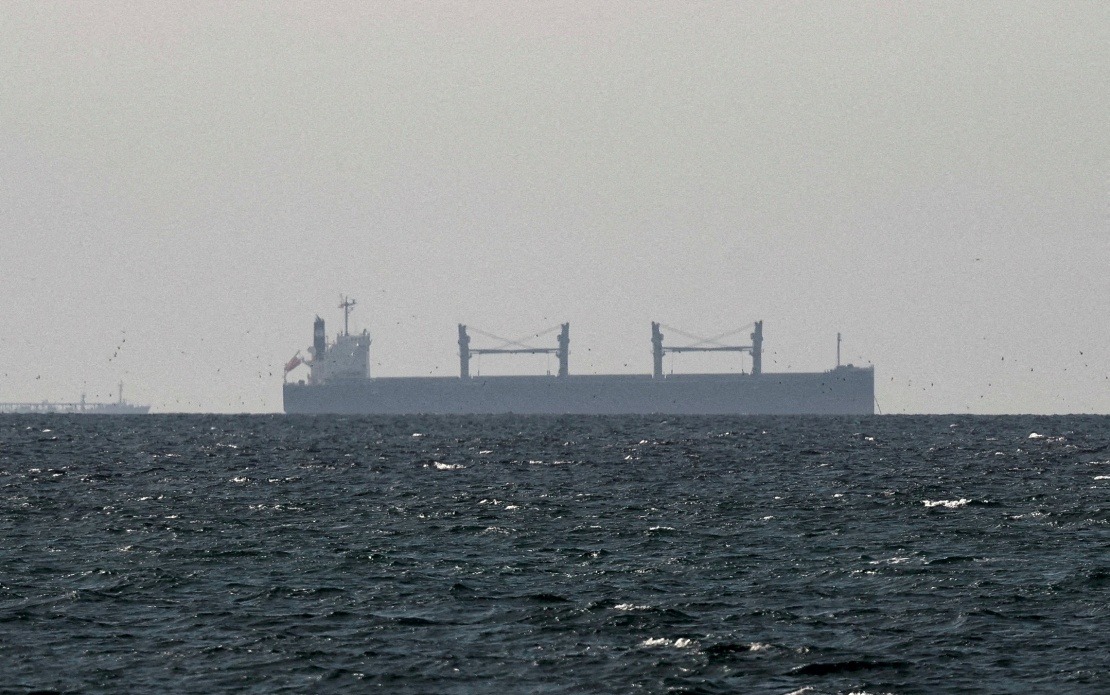
Iran's Islamic Revolutionary Guard Corps alleged Friday that two oil tankers caught fire and sustained damage after encountering mines in the southern Strait of Hormuz, according to reports carried by Iran's state news agency. The military body issued a public statement through the Fars News Agency making the claims, though it refrained from identifying the vessels or providing information about the extent of casualties and damage.
According to the IRGC assertion, United States intelligence agencies had directed the commercial vessels into the region during that morning, suggesting coordination between Washington and the tanker operators. However, the claim lacked supporting evidence, and neither American officials nor independent maritime observers have corroborated the Iranian narrative. The vagueness surrounding vessel identities, flags, and ownership details has left the international shipping community and analysts unable to independently verify what occurred in these strategic waters.
The Iranian military authority used the incident to reinforce its broader messaging about the security situation in the chokepoint, declaring the Strait of Hormuz "extremely unsafe" and "completely closed" to traffic. In a stark warning to the international shipping industry, the IRGC declared that regional exports of crude oil, liquefied natural gas, and chemical fertilisers would remain blocked indefinitely until American military operations in the area cease. Such proclamations carry significant weight given Iran's demonstrated capacity to disrupt commerce through the waterway, generating anxiety among energy markets worldwide.
For Malaysian importers and the broader Southeast Asian energy sector, disruptions to Strait of Hormuz transit carry immediate commercial consequences. Malaysia's substantial reliance on petroleum imports makes price volatility in global oil markets a pressing concern for its economy and industries. The region imports significant quantities of oil and gas through this critical passage, meaning that sustained blockades or shipping incidents would elevate energy costs across Southeast Asia and potentially trigger inflationary pressures domestically.
The Strait of Hormuz remains one of the world's most consequential maritime passages, serving as the gateway between the Persian Gulf and the Arabian Sea. Approximately one-third of global seaborne petroleum trade navigates through this roughly 55-kilometre-wide waterway, making it indispensable to international commerce and energy security. The concentration of this volume through a single chokepoint has long been recognised as a geopolitical vulnerability, and any disruption reverberates throughout global supply chains within days.
The latest incident reflects an intensification of confrontational rhetoric and alleged military actions between Tehran and Washington, despite reported diplomatic efforts to de-escalate tensions. A Pakistan-brokered memorandum of understanding was reportedly concluded in recent weeks with the stated objective of halting hostilities and establishing a sustainable peace framework between the two adversaries. Yet the continued pattern of mutual accusations and threatening statements suggests that underlying animosities persist and that diplomatic progress remains fragile at best.
The Iranian military's explicit instruction to commercial vessels to avoid the strait represents a dramatic escalation in messaging. By essentially declaring the waterway dangerous and recommending avoidance, the IRGC is signalling its willingness to disrupt one of the planet's most critical trade routes. Such rhetoric, whether backed by actual military capability or employed for psychological effect, creates uncertainty that itself damages commerce as shipping companies reassess risk and insurance costs rise.
The tanker incident, regardless of verification status, arrives at a moment when global energy markets are already sensitive to supply shocks. Crude oil prices react sharply to geopolitical risks in the Middle East, particularly threats to Persian Gulf trade flows. Malaysian consumers and businesses dependent on stable energy costs face potential exposure to price spikes triggered by Middle Eastern instability that appears beyond the control of Southeast Asian policymakers.
Regional stability has become increasingly contested as various state and non-state actors pursue divergent strategic objectives in the Persian Gulf and surrounding waters. The pattern of claimed incidents—whether involving mines, drones, or other weaponry—creates a climate of mutual suspicion that complicates diplomatic resolution. For countries like Malaysia that depend on stable maritime commerce, such tensions abroad represent unwelcome external shocks with domestic economic repercussions.
The absence of independent confirmation of the tanker incident underscores the information challenges facing the international community when assessing security situations in contested zones. Neither American authorities nor major shipping organizations have released corroborating statements, leaving observers to weigh the credibility of Iranian military claims against historical patterns of such allegations. This ambiguity itself creates risk, as prudent shipping operators must factor in uncertainty when deciding whether to route vessels through the strait or seek alternatives.
Moving forward, the trajectory of US-Iran relations will substantially influence Persian Gulf security conditions and, by extension, energy affordability across Southeast Asia. Malaysian policymakers monitoring these developments face the uncomfortable reality that regional energy security depends partly on the outcome of great power tensions thousands of kilometres away. The reported diplomatic initiative offers hope for stabilization, yet the pattern of mutual accusations and the IRGC's inflammatory declarations suggest that conflict dynamics remain unresolved beneath surface-level negotiation attempts.

