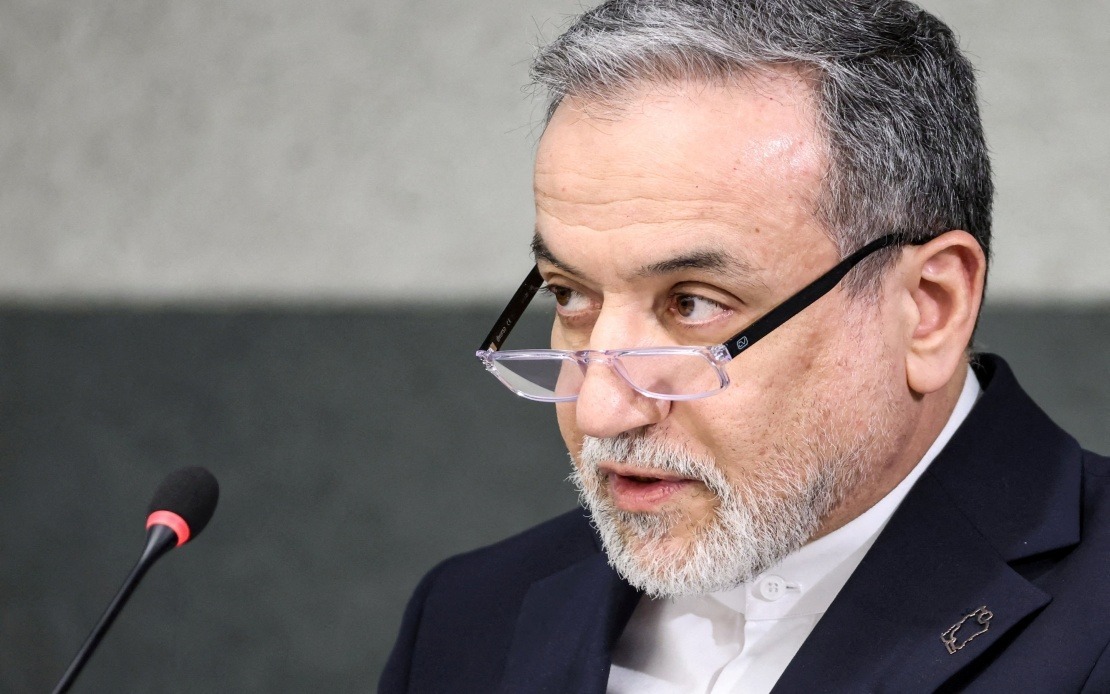
Iran's Foreign Minister Abbas Araghchi has doubled down on Tehran's assertion that it serves as the guardian of the Strait of Hormuz, responding pointedly to US President Donald Trump's recent threat to blockade Iran and impose a 20 per cent fee on international shipping through the strategically vital waterway. Speaking through social media on Monday from Istanbul, Araghchi appeared to initially validate Trump's underlying premise—that entities providing security for commercial passage should receive compensation—before pivoting to contest the American president's implementation of the concept.
The Strait of Hormuz remains among the world's most consequential maritime chokepoints, with roughly one-fifth of globally traded crude oil passing through its narrow waters annually. For Malaysia and other Southeast Asian economies heavily dependent on energy imports and international trade, disruptions to this corridor carry profound implications for inflation, supply-chain stability, and regional prosperity. Any escalation in US-Iran tensions centred on this passage therefore extends far beyond bilateral dispute to affect Asian economies substantially.
Araghchi's carefully worded response acknowledged the legitimacy of compensation mechanisms for maritime security, a rhetorical move that appeared designed to steal Trump's argument while rejecting its specific application. However, the Foreign Minister immediately rejected the 20 per cent figure as excessive, declaring that Iran would implement any fee structure on far more reasonable terms. This positioning allows Tehran to claim the moral high ground as a moderate actor willing to discuss reasonable security arrangements while portraying the United States as economically predatory.
The strategic context underlying this latest confrontation involves longstanding American efforts to contain Iranian regional influence and Tehran's counter-assertion of its right to shape security arrangements in waters adjacent to its territory. Trump's proposal to blockade Iran represents an unprecedented escalation in the decades-long rivalry, essentially threatening to weaponise one of the world's most critical shipping routes to enforce unilateral American policy objectives.
Iran's assertion of guardianship reflects a nationalist narrative deeply embedded in Iranian political discourse, one that frames the nation as the legitimate custodian of Persian Gulf security against external interference. For domestic audiences, Araghchi's response reinforces the government's position as a principled defender of national sovereignty and regional interests, even while acknowledging potential flexibility on secondary matters like fee structures.
The deteriorating security environment in the strait has tangible consequences already evident. Previous exchanges between US and Iranian forces, coupled with attacks on commercial shipping attributed to Iranian-aligned proxies, have driven up maritime insurance costs and encouraged some shipping companies to route vessels around the Cape of Good Hope—a vastly more expensive and time-consuming alternative that ultimately burdens global consumers through higher prices.
Tensions have intensified despite ongoing diplomatic efforts, notably a Pakistan-mediated memorandum of understanding intended to de-escalate hostilities and establish a framework for lasting peace. The apparent ineffectiveness of such initiatives suggests that both Washington and Tehran harbour incompatible strategic objectives that dialogue alone cannot resolve, particularly given Trump's demonstrated preference for confrontational approaches to Iran policy.
For Southeast Asian nations like Malaysia, the implications extend beyond immediate economic disruption. The Strait of Hormuz crisis exemplifies how geopolitical rivalries in distant regions can reshape global energy markets and trade patterns, affecting everyone from petrochemical manufacturers to consumers dependent on reasonably priced fuel and goods. Malaysia's own position as a maritime trading nation with significant interests in freedom of navigation makes it inherently concerned with any precedent permitting major powers to unilaterally impose tolls or restrictions on international shipping lanes.
Araghchi's invocation of Iran's permanent guardianship role also serves as a subtle warning to other regional actors and international observers that Tehran views itself as a non-negotiable fixture in Persian Gulf security architecture. This assertion directly challenges American assumptions about its ability to dictate regional security arrangements and signals that Iran intends to resist any attempt to exclude it from these discussions or subordinate its interests to external powers.
The trajectory of this dispute suggests limited room for compromise given the fundamental incompatibility of Trump's maximalist approach and Iran's insistence on sovereign dignity and regional agency. As long as both sides maintain their current positions—the United States determined to impose restrictions and fees, Iran resolute in asserting guardianship and refusing subordination—the Strait of Hormuz will remain a flashpoint capable of disrupting global commerce and destabilising an already volatile region.

