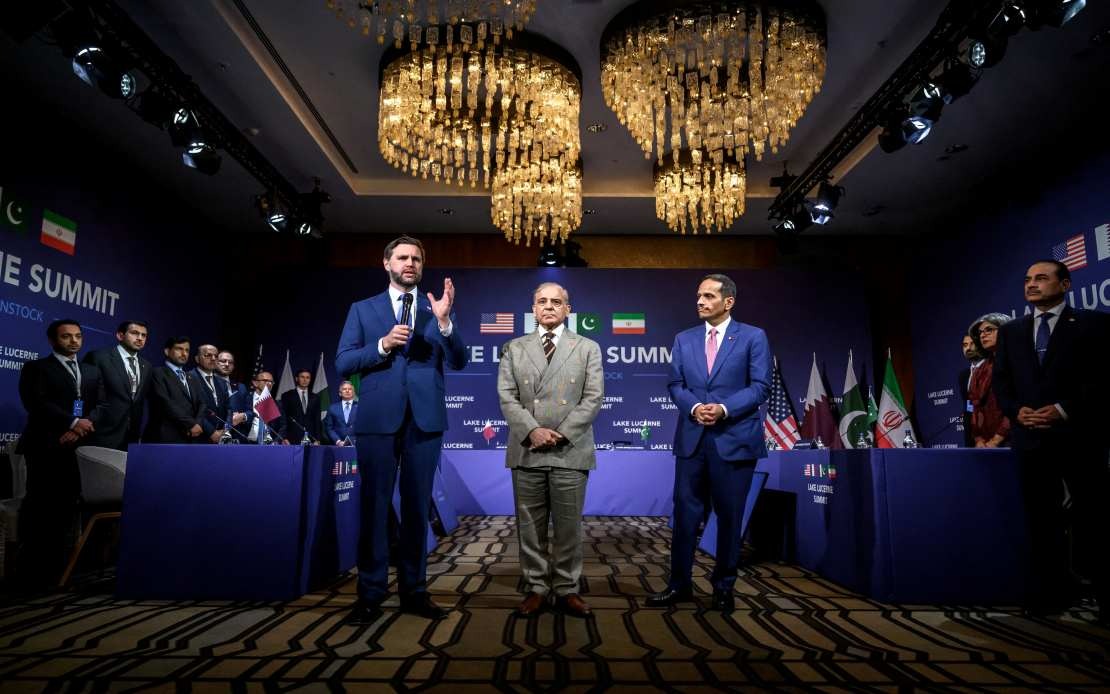
Diplomatic representatives from Iran and the United States have completed the opening session of landmark negotiations held in Switzerland, marking the first formal talks between the two nations since signing a preliminary agreement aimed at resolving months of escalating regional conflict. The four-party discussions, facilitated by mediators from Qatar and Pakistan, represent a significant diplomatic shift in efforts to stabilise the strategically critical West Asia region and restore unimpeded shipping through the Strait of Hormuz.
The negotiating delegations convened at Bürgenstock following confirmation from Qatar that both sides had agreed to pursue direct dialogue. The initial round lasted approximately eighty minutes before representatives adjourned to conduct internal consultations with their respective capitals, a standard procedural step in high-stakes international negotiations where governments must review progress and receive updated instructions from senior leadership.
The US delegation is headed by Vice President JD Vance, whose prominent role underscores Washington's commitment to the process and the importance accorded to these discussions at the highest levels of American government. Iran's negotiating team is similarly elevated, comprising Parliament Speaker Mohammad Bagher Qalibaf and Foreign Minister Abbas Araghchi, indicating Tehran's serious engagement despite considerable domestic political considerations surrounding any agreement with the United States.
These talks are grounded in a memorandum of understanding signed on Wednesday, which both nations have committed to implement through technical discussions and diplomatic engagement. The framework addresses specific mechanisms for de-escalation and the restoration of normal commercial activity in the Strait of Hormuz, one of the world's most critical energy chokepoints through which approximately one-third of global seaborne oil passes annually. For Malaysia and other Southeast Asian economies heavily dependent on Middle Eastern energy supplies, the successful resolution of this standoff carries profound implications for regional security and economic stability.
The involvement of Qatar and Pakistan as mediators reflects the complex diplomatic architecture required to facilitate direct communication between adversaries with deep historical grievances. Both nations bring distinct advantages to the mediation process: Qatar maintains discrete channels with both Washington and Tehran, while Pakistan's geographic proximity to Iran and its longstanding diplomatic relationships provide additional leverage and credibility. This multilateral approach has proven effective in previous confidence-building measures and serves to reassure both sides that discussions remain balanced and transparent.
The timing of these negotiations follows a particularly volatile period in West Asia, where military escalations threatened to trigger broader regional conflict. The preliminary agreement represents a significant breakthrough, requiring both governments to overcome substantial domestic political opposition and security establishment scepticism. Each side faces constituencies and institutions sceptical of rapprochement, making the careful, technical nature of these talks essential to maintaining fragile momentum.
The decision to suspend the initial session after limited discussion time allows both delegations to conduct thorough internal reviews before subsequent rounds. This measured pace reflects the complexity of the implementation challenges ahead, including verification mechanisms, sanctions modifications, and confidence-building measures that must be negotiated across multiple technical domains. Neither side appears to be rushing toward predetermined outcomes, suggesting a commitment to achieving sustainable agreements rather than superficial accords that could collapse under scrutiny.
For the broader Southeast Asian region, the successful resolution of Iran-US tensions carries significant economic ramifications. Maritime trade routes through the Strait of Hormuz and surrounding waters remain vulnerable to disruption, and any renewed hostilities could immediately impact regional shipping costs, insurance premiums, and energy prices. Malaysian businesses engaged in regional trade, from petroleum products to manufactured goods, face reduced operational certainty while tensions persist, making the progress of these negotiations directly relevant to domestic economic planning and investment decisions.
The absence of immediate announcements regarding the next round of talks suggests that negotiators are adopting a deliberate, non-pressurised approach. This strategy allows governments to consult with allied nations, brief domestic stakeholders, and prepare comprehensive responses to proposals without artificial deadlines forcing premature concessions. Such patience, while potentially frustrating to observers seeking rapid resolution, often produces more durable agreements capable of withstanding implementation challenges and political transitions.
The participation of Pakistan as a mediator also reflects evolving regional dynamics in South and West Asia, where Islamabad has increasingly positioned itself as a bridge between different geopolitical camps. This role enhancement demonstrates Pakistan's diplomatic significance and its capacity to influence outcomes in disputes extending beyond its immediate borders. For Malaysia, observing how Pakistan leverages this position may offer insights into navigating regional diplomacy and conflict resolution mechanisms.
The technical focus of these negotiations—implementing specific terms rather than debating fundamental principles—suggests that both sides have already achieved basic conceptual agreement on the dispute's resolution. This phase of talks typically involves resolving operational details, establishing verification procedures, and creating mechanisms for addressing violations or misunderstandings. Success at this level requires less ideological consensus and more practical problem-solving, potentially explaining why both delegations agreed to direct engagement after extended diplomatic isolation.
As these discussions continue, the international community, including Southeast Asian nations, watches for indications that de-escalation efforts will prove durable. The Strait of Hormuz's security status affects global energy markets and regional commerce far beyond the immediate parties to the conflict. Malaysia's strategic location along major maritime routes and its economic dependence on stable energy supplies position the nation as an interested stakeholder in these negotiations' outcomes, even without direct participation in the talks themselves.
%22%2F%3E%3C%2Fpattern%3E%3C%2Fdefs%3E%3Crect%20width%3D%22100%25%22%20height%3D%22100%25%22%20fill%3D%22url(%23ph4eeujg)%22%2F%3E%3Crect%20width%3D%22100%25%22%20height%3D%22100%25%22%20fill%3D%22url(%23ph4eeujp)%22%2F%3E%3Ctext%20x%3D%2250%25%22%20y%3D%2250%25%22%20text-anchor%3D%22middle%22%20dominant-baseline%3D%22central%22%20fill%3D%22rgba(255%2C255%2C255%2C0.95)%22%20font-family%3D%22Georgia%2C%20'Times%20New%20Roman'%2C%20serif%22%20font-weight%3D%22700%22%20font-size%3D%22194%22%20letter-spacing%3D%22-0.02em%22%3EBintulu%3C%2Ftext%3E%3C%2Fsvg%3E)