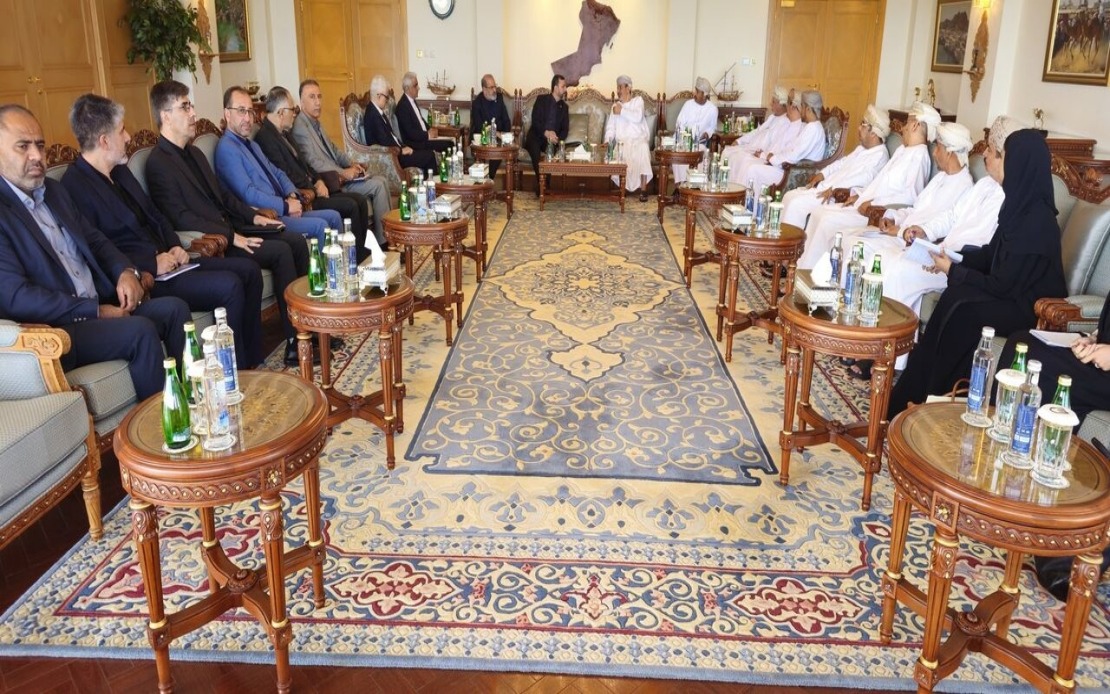
Iran and Oman have taken a significant step toward formalising cooperation over one of the world's most strategically vital maritime passages. Iranian Deputy Foreign Minister for Legal and International Affairs Kazem Gharibabadi announced that representatives from both nations gathered for the inaugural session of the Joint Hormuz Committee, marking a diplomatic milestone in regional coordination over the Strait of Hormuz.
Gharibabadi's visit to Muscat on Monday culminated in meetings with Oman's Ambassador-at-Large Abdulaziz Al Hinai, where officials charted the course for this newly established bilateral mechanism. The inaugural gathering brought together experts tasked with examining pressing concerns affecting one of global shipping's most congested waterways, through which approximately one-third of the world's traded oil passes annually. For Malaysian and regional stakeholders, the strait's security and operational stability have profound implications for energy costs, supply chain resilience, and maritime commerce.
During their discussions, both delegations evaluated contemporary challenges confronting the Strait and deliberated on sustainable frameworks for its future administration. The talks were explicitly anchored in Paragraph 5 of the Islamabad Memorandum of Understanding, a foundational legal instrument, alongside affirmations of the coastal nations' fundamental sovereign prerogatives. This legalistic framing underscores both countries' commitment to resolving governance questions within established international conventions rather than through unilateral action—a reassurance to regional and global shipping interests concerned about potential disruptions.
The formation of this committee follows a broader diplomatic engagement between Tehran and Muscat. Just six days prior, both governments released a joint statement following Iranian Foreign Minister Abbas Araghchi's official visit to Oman, accompanied by Mohammad Bagher Ghalibaf, Iran's chief negotiator on the matter. That earlier communiqué emphasised an unwavering principle: any arrangements governing the Strait must scrupulously respect the sovereignty and maritime rights of both littoral states. This consistency of messaging signals genuine commitment to a rules-based approach rather than ad-hoc arrangements that could prove destabilising.
The two nations have formalised a commitment to maintain sustained dialogue through the newly minted joint committee, with representatives drawn from their respective foreign ministries. This institutional approach suggests both parties view this as a long-term engagement rather than a episodic negotiation. For Southeast Asia, which depends on the Strait as a critical transit corridor, the establishment of structured dialogue mechanisms offers hope that governance disputes will be managed through communication rather than confrontation.
Central to the committee's mandate is achieving consensus on future stewardship of maritime navigation within the Strait. Negotiations will encompass critical operational details including service provision mechanisms and associated cost-sharing arrangements. These seemingly technical matters carry substantial weight for shipping operators and insurers across Asia and beyond, who face variable risk premiums depending on the perceived stability of the passage. Clear, mutually agreed protocols could reduce uncertainty and enhance predictability for commercial entities.
The emphasis on alignment with international standards reflects recognition that the Strait's governance cannot function in isolation from the broader maritime legal framework. Both Tehran and Muscat appear committed to integrating their bilateral arrangements with established conventions governing international navigation, maritime safety, and environmental protection. This orientation suggests they seek legitimacy and acceptance from the international community rather than pursuing arrangements that might invite external criticism or intervention.
Oman's role as a bridging nation warrants particular attention. Historically positioned as a pragmatic actor in regional affairs, Oman's engagement with Iran on this matter reflects its strategic interest in maintaining stability and commerce through waters that directly affect its economy and international standing. For Malaysia and other trading nations, Oman's involvement enhances the credibility of emerging arrangements, as Muscat has consistently advocated for inclusive, consensus-based approaches to regional challenges.
The establishment of this committee represents a departure from previous patterns where the Strait's governance remained contested or ad-hoc. For Malaysian policymakers and business operators, the development warrants close monitoring. Should the Iran-Oman dialogue yield workable frameworks for dispute resolution, service standards, and cost allocation, the benefits could extend throughout Southeast Asia's maritime community. Conversely, should negotiations falter, regional actors may need to revisit their contingency planning regarding alternative routes and risk mitigation strategies.
The committee's success will likely depend on whether both nations can translate high-level diplomatic statements into concrete operational agreements. The coming weeks and months will test whether institutional commitment translates into substantive progress on thorny issues including toll structures, safety coordination, environmental stewardship, and dispute resolution mechanisms. For Asia-Pacific trading nations like Malaysia, the outcomes of these deliberations carry direct implications for shipping costs, insurance premiums, and supply chain security.

