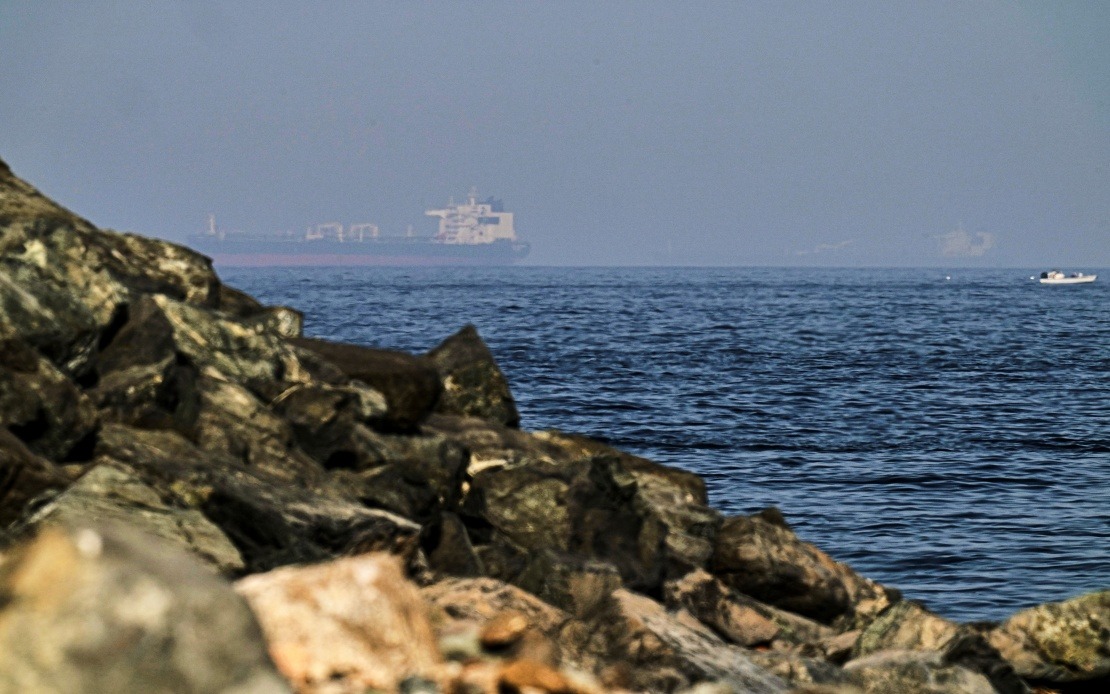
Iran and Oman have jointly established a temporary shipping corridor through the Strait of Hormuz that allows vessels to transit through waters shared by both nations, according to Major General Mohsen Rezaei, Secretary of Iran's Supreme National Security Council. Speaking to Al-Manar television, Rezaei outlined the carefully negotiated arrangement that positions the passage through the centre of the strategic waterway, with each country administering its respective portion of the designated route.
The bilateral agreement represents a significant development in managing one of the world's most critical maritime chokepoints, through which roughly one-third of global seaborne oil passes annually. For Malaysian and Southeast Asian economies heavily dependent on predictable energy supplies and reliable shipping lanes, the corridor's establishment signals an attempt to restore some stability to a vital transportation artery that has faced repeated tensions and security threats. The corridor's precise location and joint management framework suggest a structured approach designed to reduce incidents and provide shipping companies with a clearly defined safe passage.
However, Rezaei stressed that the temporary nature of this arrangement carries broader geopolitical implications. He explicitly linked any permanent reopening of the strait to Washington's acceptance of a comprehensive list of Iranian conditions. These demands prioritize an end to ongoing conflicts across West Asia, with particular emphasis on halting hostilities in Lebanon and Gaza, securing Israeli withdrawal from occupied Lebanese territory, and terminating Israeli military operations against Syria. This conditionality transforms the shipping corridor from a purely commercial arrangement into a leverage point in Iran's broader regional negotiating strategy.
The Iranian official characterized the current state of relations with the United States as defined by a profound breach of trust, requiring Washington to demonstrate genuine commitment through substantive action rather than diplomatic promises. Rezaei indicated that Iran views the corridor as a temporary measure offering limited maritime access while negotiations proceed on the larger regional architecture. He stressed that permanent solutions cannot be divorced from the interconnected security challenges affecting multiple nations throughout the Middle East, framing conflicts in Lebanon, Gaza, and Syria as components of a unified regional crisis requiring coordinated resolution.
Rezaei's remarks regarding Iran's military posture reveal a carefully calibrated escalation doctrine that has evolved through successive confrontations. He noted that Iran initially exercised restraint by avoiding strikes on American military installations housed within Gulf Arab states, subsequently expanding its response parameters to encompass United States facilities across broader geographic areas. This incremental approach, according to the Iranian security chief, reflects deliberate consideration of humanitarian consequences and strategic legitimacy. The doctrine suggests Iranian decision-makers calculate that measured responses generate greater regional and international support than comprehensive strikes.
The official drew a pointed distinction between military and economic dimensions of potential future confrontation. Rezaei warned that should the United States intensify economic pressure against Iran, Tehran would pursue countermeasures specifically targeting American economic interests throughout the region. This threat underscores how regional conflicts increasingly intertwine with economic warfare, potentially affecting supply chains and investment flows that matter significantly for Southeast Asian nations with commercial interests across the Gulf and broader Middle East.
On Iranian-Turkish relations, Rezaei emphasized the depth and resilience of bilateral trade connections, dismissing suggestions that Ankara might leverage economic coercion against Tehran. He invoked historical precedent from the Iran-Iraq War in the 1980s, when Turkey functioned as a critical commercial corridor sustaining Iranian commerce through an extended period of international isolation. This reference signals confidence in sustained Turkish pragmatism despite regional tensions and indicates Iran's expectation of continued economic cooperation with its northwestern neighbour.
Rezaei characterized Iran's relationship with Lebanon as historically profound, rooted in centuries-old scholarly and cultural connections between Jabal Amel and Persian intellectual centres. He reaffirmed Tehran's commitment to supporting Lebanon with comprehensive capabilities, positioning this assistance as grounded in enduring civilizational ties rather than recent geopolitical calculations. This framing attempts to establish Iranian support as a natural historical extension rather than opportunistic intervention, though it reflects the complex sectarian and political dynamics that shape the country's regional influence.
Regarding military developments, Rezaei asserted that Israel no longer possesses the capacity to advance toward Beirut or southern Beirut suburbs, citing substantial losses inflicted by Hezbollah during the preceding three to four months. He attributed this deterioration in Israeli military prospects partly to the cumulative impact of Iranian threats and capabilities, suggesting that Iranian deterrent actions have constrained Israeli operational freedom. This assessment, though presented from an Iranian perspective, highlights how deterrence calculations among regional powers increasingly factor into military planning and operational scope.
The establishment of the temporary corridor demonstrates how maritime commerce and regional security become entangled in broader strategic competitions. For Malaysian stakeholders in shipping, energy, and trade, the arrangement offers short-term relief from uncertainty, yet the conditionality surrounding permanent reopening creates ongoing vulnerability. The corridor's temporary status leaves substantial ambiguity about maritime predictability that shipping companies and energy traders require for long-term planning. The linkage between strait access and regional conflict resolution indicates that resolution of current Middle Eastern tensions will substantially determine whether this arrangement transitions toward permanent normalized maritime commerce or dissolves amid renewed confrontation.
The Iranian framework for negotiation appears designed to leverage control over a critical waterway as a tool for advancing demands across multiple simultaneous conflicts. Rezaei's emphasis on the interconnected nature of regional security challenges reflects Iranian analysis that incremental settlements prove insufficient without comprehensive regional recalibration. This approach suggests negotiations over strait passage will likely remain subordinate to broader diplomatic efforts addressing the constellation of conflicts spanning Gaza, Lebanon, and Syria, making maritime stability dependent upon achievement of political settlements currently appearing remote.

