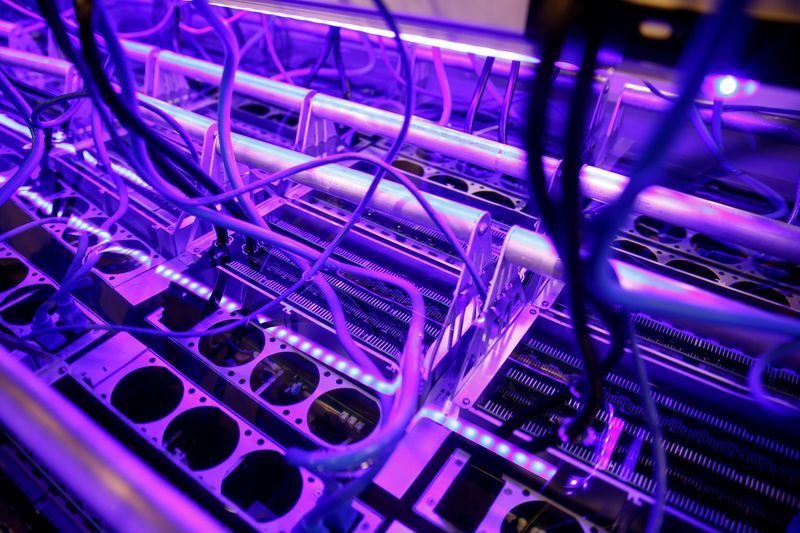
Ionic Digital, an emerging player in the cryptocurrency mining and artificial intelligence infrastructure sectors, has moved forward with plans to become a publicly traded company by filing for a direct listing on Nasdaq. The announcement, made on Monday, marks a significant milestone for the firm and represents a resurgence of sorts within the troubled cryptocurrency lending space, which experienced a dramatic collapse just over two years ago.
The company's origins lie in the wreckage of one of crypto's most prominent casualties. Ionic Digital was established in January 2024 specifically to acquire and operate the mining operations previously owned by Celsius Mining, a subsidiary of Celsius Network. Celsius itself, a New Jersey-based cryptocurrency lending platform, had filed for Chapter 11 bankruptcy protection in July 2022, just one month after it froze customer accounts and halted all withdrawals—a decision that sent shockwaves through the digital asset community. The company received formal approval from U.S. bankruptcy court in November 2023 to proceed with its restructuring plan, which ultimately paved the way for Ionic's formation.
Understanding the mechanics of Ionic's path to public markets provides insight into how distressed crypto assets are being salvaged. Unlike traditional initial public offerings that involve new share issuance and underwritten offerings by investment banks, a direct listing allows existing shareholders to sell their current holdings on an exchange without creating fresh equity. This approach offers several practical advantages: it avoids the price-setting complexities of IPOs, minimises dilution, and grants insiders immediate liquidity for their stakes. In Ionic's case, the company's registered stockholders intend to sell approximately 10.8 million shares of common stock through the listing process.
The distribution of Ionic's shares reveals how Celsius' creditors have been transformed into stakeholders in the new venture. As part of the bankruptcy restructuring, Ionic issued roughly 37 million Class A shares to Celsius creditors, effectively converting them from claimants in a failing enterprise into equity holders in a potentially profitable mining and AI infrastructure operation. This arrangement reflects the broader strategy of maximising recovery for affected creditors while creating a functioning business entity capable of generating returns.
Celsius' spectacular collapse exemplified the broader vulnerabilities that emerged within the cryptocurrency lending ecosystem. The platform's rapid growth during the COVID-19 pandemic, when digital assets surged in popularity and value, masked underlying structural weaknesses and excessive risk-taking. When market conditions reversed sharply in 2022, Celsius—alongside several peers including BlockFi and Voyager Digital—proved unable to sustain operations, leaving millions of retail investors and creditors facing substantial losses. The fact that assets salvaged from this wreckage are now being brought to public markets suggests that at least some value can be recovered from the ruins.
Ionic's recent fundraising accomplishments provide clear evidence that investors remain willing to back ventures in this space, provided they demonstrate viable business models and credible leadership. Just last week, the firm successfully raised $400 million in a financing round that valued the company at $2 billion on a pre-money basis. This substantial capital infusion was led by prominent investment firms including Attestor, Oaktree Capital Management, and Sachem Head Capital Management. The participation of such established financial players signals confidence in Ionic's prospects and the underlying economics of cryptocurrency mining and AI infrastructure businesses.
The direct listing will proceed under the ticker symbol "IOND" on Nasdaq, with J.P.Morgan, Jefferies, and BTIG serving as financial advisors guiding the transaction. These investment banking heavyweights bring considerable experience in capital markets transactions and will assist in navigating the regulatory requirements and mechanics of bringing Ionic to public shareholders. Their involvement underscores the mainstream acceptance of cryptocurrency-adjacent businesses within traditional finance infrastructure.
For Malaysian and Southeast Asian investors and observers, Ionic's public market debut carries several implications. The region has emerged as a significant hub for cryptocurrency mining operations, with companies and investors increasingly active across Malaysia, Singapore, and neighbouring jurisdictions. A successful Ionic listing could encourage further capital formation in the mining and digital infrastructure sectors, potentially attracting both domestic and foreign investment. Additionally, the valuation and market reception of Ionic shares may influence how the investment community perceives the recovery prospects of other distressed crypto firms and their salvaged assets.
The timing of Ionic's direct listing also reflects broader market dynamics within cryptocurrency and technology sectors. After a prolonged period of regulatory scrutiny and market pessimism following the 2022 crypto winter, there is renewed appetite for exposure to digital assets and AI infrastructure among institutional and retail investors. Ionic's positioning at the intersection of these two high-growth narratives—cryptocurrency mining and artificial intelligence—may appeal to investors seeking diversified exposure to emerging technology trends.
Celsius' bankruptcy and Ionic's emergence from its ashes illustrate the cyclical nature of financial markets and the importance of robust risk management within rapidly scaling businesses. While Celsius' collapse caused immense harm to creditors and customers, the restructuring process has enabled the survival and potential growth of its productive assets under new ownership and management. Whether Ionic can execute on its strategic vision and deliver returns to its public shareholders will depend on factors including cryptocurrency price movements, the efficiency of its mining operations, and the commercial viability of its AI infrastructure offerings.

