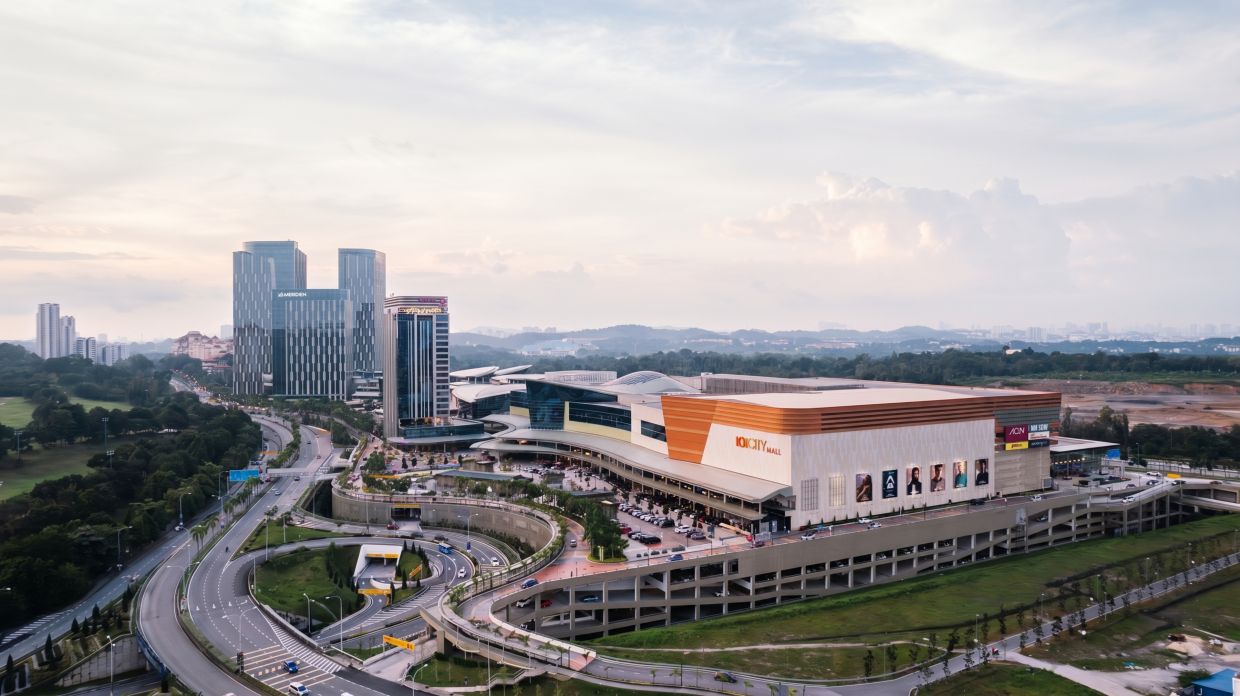
IOI Properties Group has cleared a major regulatory hurdle with the Securities Commission's approval for a real estate investment trust that will bundle together some of Malaysia's most recognizable commercial and hospitality assets into a single listed vehicle. The REIT will launch with 5.5 billion units representing an underlying asset base valued at RM7.58 billion, marking one of the region's more substantial property securitizations in recent years.
The asset portfolio underpinning the REIT spans the company's portfolio of trophy properties across the Klang Valley and beyond. The retail component centres on IOI City Mall, with both its Phase 1 and Phase 2 sections contributing substantial income streams from their mix of anchor tenants and specialist retailers. Complementing the mall are the office towers at IOI City and the PFCC Towers, which house corporate tenants seeking premium workspace in established commercial precincts. This diversification between retail and office use provides investors with exposure to different segments of the Malaysian commercial property market, reducing reliance on any single sector.
The hospitality dimension of the REIT reflects IOI Properties' significant investment in Malaysia's tourism and business travel infrastructure. The portfolio includes high-profile branded properties such as the Putrajaya Marriott and Le Méridien Putrajaya, both positioned to capture government-related business and leisure travel. The addition of Moxy Putrajaya caters to the emerging trend of lifestyle-focused mid-range hospitality, while Four Points by Sheraton Puchong serves the Selangor business traveller. The W Kuala Lumpur brings luxury positioning to the portfolio, and the Courtyard by Marriott Penang extends the REIT's geographic reach to the northern region, capturing both the Penang tourism market and regional business demand.
The funding mechanism for acquiring these assets relies on a two-pronged approach. IOI Properties will issue 5.5 billion consideration units priced at 90 sen per unit, generating approximately RM4.95 billion. The remaining RM2.65 billion will be sourced through Sukuk financing, an Islamic financing instrument that appeals to Malaysia's substantial Muslim investor base and aligns with Malaysia's position as a leading Islamic finance centre. This debt-to-equity balance reflects prudent capital structure planning for a revenue-generating property platform.
The initial public offering has been meticulously structured to balance retail accessibility with institutional participation while meeting regulatory requirements for Bumiputera participation. The retail tranche encompasses 715.6 million units, subdivided across several categories. A restricted offer targets existing IOIPG shareholders, providing them preferential access to the REIT before the broader public offering. An allocation to eligible persons—a category typically including staff and professional advisers—creates internal stakeholder alignment. The public retail tranche reserves 55 million units specifically for Bumiputera investors, directly addressing equity participation targets established by Malaysian regulators.
Institutional investors will have access to up to 1.48 billion units through a parallel offering mechanism, creating substantial liquidity for larger portfolio managers, pension funds, and foreign institutions seeking Malaysian property exposure. This bifurcated structure—dividing the offer between retail and institutional tranches—is standard international practice for REITs of this scale, ensuring sufficient units reach both retail Malaysian citizens and the institutional investor base that provides ongoing market depth.
The Securities Commission's conditional approval underscores regulatory attention to shareholder value and corporate governance in the REIT sector. The mandate for 12.5 percent Bumiputera equity participation ensures indigenous Malaysian investors retain meaningful ownership stakes in this significant property vehicle, aligning with national economic participation policies. Post-listing operational audits represent a forward-looking governance requirement, enabling regulators to monitor asset management standards and performance metrics after the REIT begins trading.
For IOI Properties Group, this REIT listing represents a strategic crystallization of value from mature, income-generating real estate holdings. Rather than holding these assets on its balance sheet indefinitely, securitizing them into a REIT vehicle allows the company to access capital markets directly, potentially unlocking value for shareholders while maintaining operational involvement in asset management. This capital redeployment capacity enables IOI to pursue fresh development opportunities or strengthen its balance sheet.
The REIT landscape in Malaysia has evolved significantly over the past decade, with REITs now constituting a material portion of the Kuala Lumpur stock exchange's capitalization. Investors seeking steady dividend income with underlying real asset backing have increasingly gravitated toward REITs as alternatives to traditional dividend stocks. IOI's offering taps into this demand while providing exposure to the Malaysian economy's service sectors—retail, corporate offices, and tourism hospitality—sectors that have shown resilience despite macroeconomic cycles.
The geographic and sectoral diversification within the IOI Properties REIT positions it to weather sector-specific downturns. Putrajaya's government concentration provides counter-cyclical stability, while Klang Valley retail exposure captures the densest consumer market in Malaysia. This geographic and functional spread differentiates the offering from single-asset or single-sector REITs that might be more vulnerable to localized economic disruptions.
For Malaysian retail investors, the REIT offers a relatively transparent means of investing in high-quality commercial real estate previously accessible only to large institutional players or high-net-worth individuals. The 90 sen unit price point, combined with retail allocation sizes, makes participation achievable for middle-income Malaysians building diversified portfolios. Regular dividend distributions tied to rental income from the underlying properties should generate predictable cash returns.
The broader significance of this REIT extends to Malaysia's position within the Southeast Asian real estate investment community. Large-scale property securitizations demonstrate market maturity, regulatory competence, and investor appetite for the region's commercial assets. As neighbouring economies develop their own REIT markets, Malaysia's established framework and successful launches like IOI's position the country as a regional hub for property investment vehicles, attracting regional and international capital flows.

