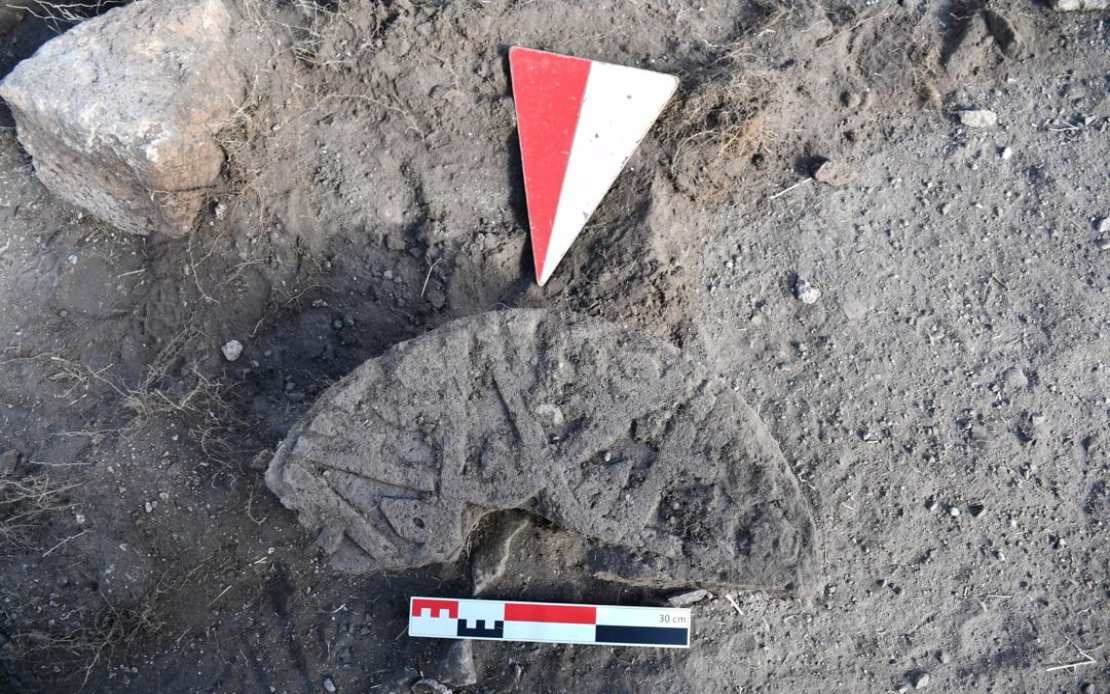
A significant archaeological discovery has emerged from eastern Türkiye, where excavations at the historic Ani site have yielded a stone artefact bearing multiple inscriptions of Prophet Muhammad's name in Kufic script. Turkish Culture and Tourism Minister Mehmet Nuri Ersoy announced the finding on social media, highlighting the artefact's importance for understanding the region's complex cultural heritage. The stone, which bears the Prophet's name six times, represents a tangible connection to the Islamic artistic and religious traditions that flourished across medieval Anatolia.
The inscriptions appear in an intricate arrangement across the stone's surface, with three of them forming part of a decorative band that encircles an eight-pointed star motif. This particular design choice reflects the sophisticated aesthetic conventions employed by Seljuk craftsmen, who were known for integrating religious symbolism with geometric ornamentation in their architectural and commemorative works. The placement and repetition of the name suggest deliberate religious intent, likely serving a devotional or commemorative purpose for those who would have encountered the stone.
Archaeological teams uncovered the artefact during ongoing excavations at a Seljuk cemetery that has been subject to systematic study since 2021. The cemetery itself represents an important research site for understanding burial practices, social hierarchies, and cultural expressions during the Seljuk period. The discovery of this inscribed stone adds material evidence to scholarly understanding of how Islamic traditions were practiced and memorialised in this frontier region during the medieval period.
Ani's geographical and historical significance extends far beyond this single discovery. Situated in Kars province on the border between Türkiye and Armenia, the ancient city occupied a crucial position along the Silk Road trade networks that connected East and West for centuries. The commercial and cultural exchanges facilitated by this location transformed Ani into a prosperous urban centre, attracting merchants, artisans, and religious communities from diverse backgrounds.
The city reached its zenith as the capital of the Bagratid Armenian kingdom during the tenth and eleventh centuries, a period when Ani emerged as one of the most important cultural and economic centres in the region. Its prosperity during this era left an architectural legacy that continues to captivate historians and archaeologists. The successive periods of Byzantine, Seljuk, and Ottoman rule that followed the Bagratid kingdom fundamentally reshaped the city's character and religious composition, introducing new administrative structures, artistic traditions, and settlement patterns.
The inscription discovery reflects this layered history of cultural coexistence and transformation. The presence of a Seljuk-era artefact bearing Islamic religious inscriptions demonstrates how Seljuk Turkish traditions became interwoven with the existing landscape and heritage of the region. This is particularly significant in understanding how different civilisations left their imprints upon the same geographical space, creating palimpsests of cultural memory embedded in both the physical and archaeological record.
Ani's recognition as a UNESCO World Heritage Site in 2016 marked international acknowledgment of its exceptional universal value. The designation reflects the site's outstanding representation of Armenian, Byzantine, and Islamic architectural traditions, as well as its role as a vital crossroads of trade and culture. However, the heritage site status also brings responsibility for careful preservation and contextual interpretation of artefacts that are continually being recovered through systematic excavation.
For Malaysian and Southeast Asian scholars, the Ani discoveries offer valuable comparative perspective on how medieval societies in geographically distinct regions approached the memorialisation of religious figures and the integration of calligraphic traditions into monumental art. The Seljuk inscriptional practices documented at Ani parallel, in some respects, the development of Islamic epigraphy in Southeast Asian contexts during the same historical periods, suggesting transnational networks of cultural influence and artistic exchange.
The continued excavation and analysis of materials from Ani promises to deepen understanding of Seljuk material culture, religious practices, and the aesthetic principles guiding artistic production in medieval Anatolia. Each artefact recovered contributes incremental but important knowledge to the historical narrative of a region that has experienced profound transformations across multiple centuries. The inscribed stone bearing Prophet Muhammad's name stands as one tangible testament to these layers of cultural heritage and the persistent human impulse to preserve spiritual meaning through inscribed stone.

