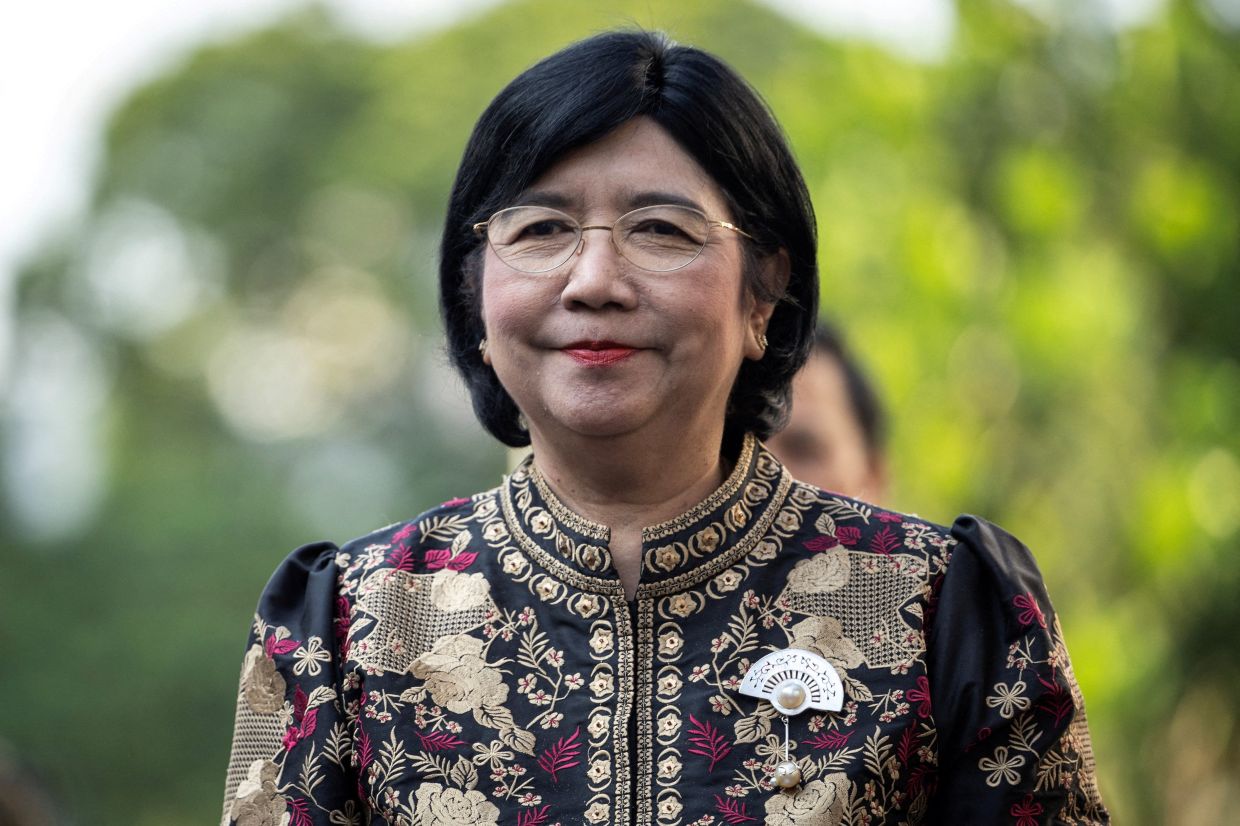
President Prabowo Subianto has put forward Destry Damayanti as the sole contender for the position of governor at Bank Indonesia, according to a statement from the presidential office released on Monday. The nomination comes as the Indonesian central bank navigates a period of considerable uncertainty following the abrupt departure of Perry Warjiyo, who stepped down at the end of last month citing personal circumstances.
Damayanti has been serving in an acting capacity since Warjiyo's exit and brings substantial experience from her role as senior deputy governor, a position she has held since 2019. Her elevation marks a significant moment for Indonesia's monetary policy establishment, as she becomes the frontrunner to lead the institution through what financial markets view as a critical period for the country's economic management. The financial community has been watching developments closely, aware that leadership transitions at the central bank can have ripple effects across Southeast Asian markets.
Market reaction to Damayanti's nomination has been decidedly positive. The rupiah, Indonesia's currency, extended its recent gains following the announcement, reaching levels not seen since mid-June against the United States dollar. This rally suggests investor confidence in the nomination outcome, reflecting expectations that Damayanti's appointment would bring continuity and stability to monetary policy at a time when the rupiah has faced considerable depreciation pressures throughout the year.
Parliament, where Prabowo's coalition commands a substantial majority, will have thirty days to either approve or reject the nomination. Historically, this process has favoured sitting presidents—Indonesia's parliament has not blocked a presidential nominee for the central bank governorship since 2008. With control of the legislature, Prabowo's coalition appears positioned to facilitate Damayanti's confirmation, though the formal parliamentary procedure remains the final hurdle before she can assume the position permanently.
Warjiyo's unexpected resignation had unsettled financial markets already contending with broader anxieties about Indonesia's economic trajectory. The G20 member has faced mounting investor scrutiny over multiple concerns, including worries about fiscal discipline, questions surrounding the autonomy of monetary policy decisions from political interference, governance gaps within the equity markets, and the broader geopolitical implications of regional instability affecting capital flows into Southeast Asia. These accumulated pressures had created a backdrop of heightened uncertainty into which the sudden leadership change landed.
The central bank has been navigating competing pressures to simultaneously support the president's ambitious growth agenda whilst maintaining its traditional mandates. Prabowo has signalled expectations that Bank Indonesia will help drive economic expansion toward an 8 percent growth target, substantially above the current rate of approximately 5 percent. This dual responsibility—pursuing both expansionary growth policies favoured by the administration and prudent monetary management—represents a fundamental tension that Damayanti will inherit.
Under Warjiyo's tenure, the central bank deployed an array of policy tools to defend the rupiah and manage inflationary pressures. The institution raised its benchmark interest rate by 100 basis points across 2024, introduced incentive schemes to encourage rupiah hedging, and expanded offerings of high-yielding short-term securities to pull investment capital into Indonesia. These measures represented efforts to stabilise the currency whilst attempting to meet growth expectations, demonstrating the delicate balancing act required of the governor's office.
Damayanti's appointment carries implications beyond Indonesia itself. As a major emerging market and ASEAN's largest economy, Indonesia's monetary policy framework influences regional financial stability and capital allocation decisions across Southeast Asia. Investor confidence in the central bank's independence and technical competence helps determine not only Indonesian asset valuations but also the region's attractiveness as a destination for capital. Her confirmation would signal continuity in approach despite the political changeover at the presidential level.
The nomination also reflects Prabowo's approach to technocratic governance in sensitive positions. Rather than appointing someone entirely from outside the central banking system, he has elevated an experienced insider, suggesting a preference for institutional continuity over dramatic shifts in policy direction. This conservative approach may reassure international investors concerned about the administration's economic priorities, even as questions persist about the scope for central bank independence within Prabowo's broader policy framework.
Looking ahead, Damayanti faces immediate challenges in managing exchange rate stability whilst facilitating credit growth and controlling inflation—objectives that have grown increasingly difficult to reconcile as global interest rates remain elevated and capital flows prove volatile. Her success in balancing these pressures will substantially influence Indonesia's economic performance and investor sentiment toward the country over coming years. The parliamentary confirmation process will likely proceed smoothly, but the real test of her leadership will emerge in the execution of monetary policy amid persistent headwinds.

