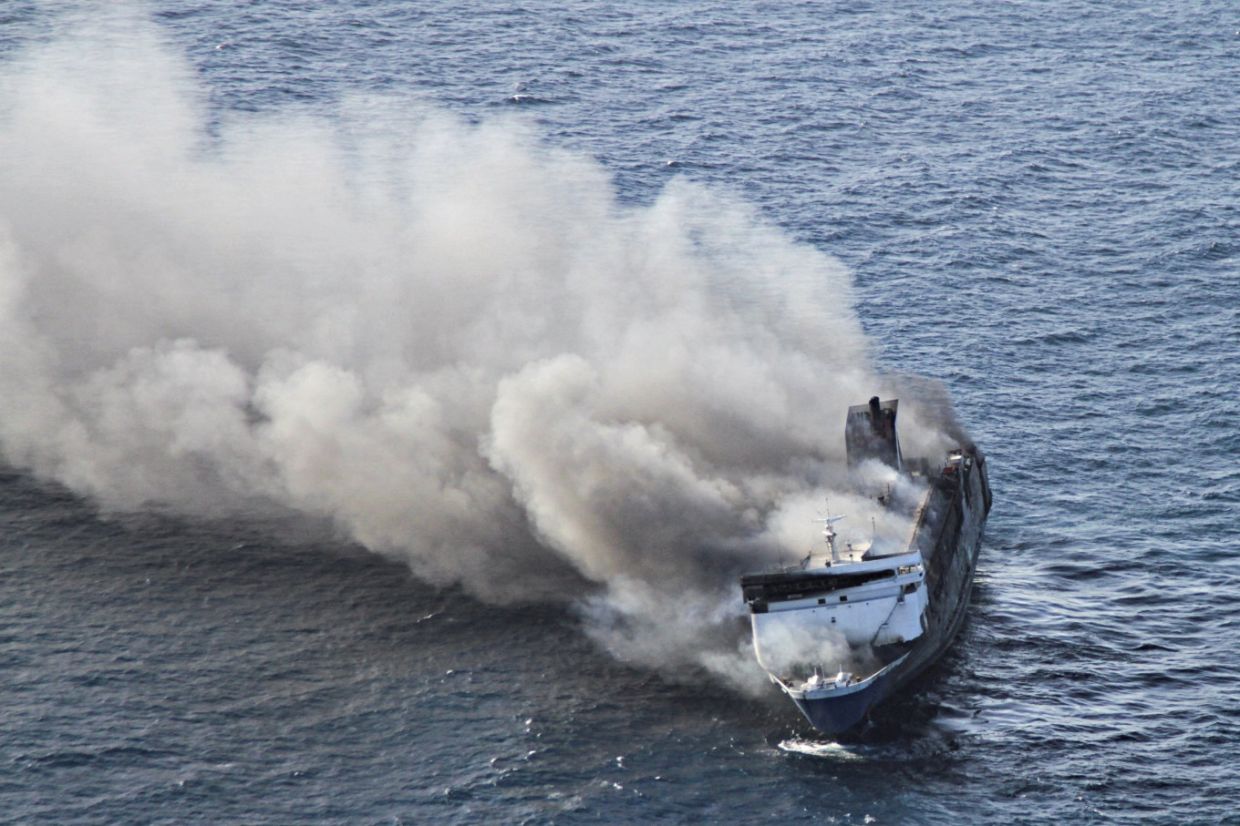
Indonesia's maritime safety system faces intensifying scrutiny following a catastrophic fire aboard the KMP Mutiara Sentosa II, a passenger ferry operating between Surabaya in East Java and Makassar in South Sulawesi. The vessel, which was transporting 236 passengers and 39 crew members, erupted in flames around 6 o'clock on the morning of August 2, resulting in at least five confirmed deaths and two people reported missing. The disaster has reignited concerns about the adequacy of national oversight mechanisms and raised questions about whether Indonesia's regulatory framework can effectively protect the thousands of passengers who depend on inter-island ferry services daily.
The 160-meter-long vessel's evacuation exposed alarming deficiencies in emergency preparedness. According to Udin Karo Karo, chairman of the Makassar–Surabaya Truck Drivers Association, crew members failed to provide organized guidance to passengers as the fire spread. Rather than following established evacuation protocols, approximately 40 percent of the drivers aboard the ferry were forced to rely on their own initiative to escape the burning vessel. Many passengers had no choice but to jump into the sea equipped only with life jackets, as no lifeboats or inflatable rescue rafts were deployed during the chaos. This fundamental breakdown in emergency response procedures represents a violation of established maritime regulations and highlights the gap between paper safety standards and their actual implementation on commercial vessels.
The vessel's operator, PT Atosim Lampung Pelayaran (ALP), has become the focal point of official and public concern. Disturbingly, this is not the company's first major maritime incident. In May 2017, another ALP-operated vessel, the KMP Mutiara Sentosa I, also caught fire near Madura, claiming five lives in an eerily similar tragedy. The recurrence of serious accidents involving the same operator within a five-year period suggests systemic failures rather than isolated misfortune. This pattern has prompted Transportation Minister Dudy Purwagandhi to commit to a comprehensive evaluation of ALP's operations and compliance with safety standards, contingent upon findings from the National Transportation Safety Committee's investigation into the cause of the August 2 incident.
Beyond the immediate technical failures, safety experts have identified deeper organizational deficiencies that demand investigation. Edi Priyanto, deputy chairman of the East Java Occupational Safety and Health Council, argues that the fire represents a failure of safety culture, organizational learning, and risk management systems rather than merely a technical malfunction. He emphasizes that similar incidents recurring at the same company indicate that lessons from previous accidents have not been adequately implemented or internalized. The investigation into the KMP Mutiara Sentosa II fire, Priyanto insists, must extend beyond identifying what caused the initial ignition to examining why the fire spread so rapidly, whether emergency systems functioned properly, and whether crew training adequately prepared personnel for actual emergency situations.
The broader context of maritime accidents in Indonesian waters underscores the urgency of systemic reform. Just one month before the ferry fire, another vessel carrying more than 70 passengers sank near Selayar, a small island adjacent to South Sulawesi, resulting in at least four confirmed deaths and fourteen missing persons. Within this compressed timeframe, Indonesia has experienced multiple catastrophic maritime incidents, suggesting that isolated measures targeting individual companies will prove insufficient. Abdul Hadi, a House of Representatives member serving on Commission V which oversees transportation and infrastructure, has characterized these repeated accidents as a systemic warning rather than a series of unfortunate coincidences. He argues that when maritime disasters cluster within short periods, the nation must recognize a fundamental weakness in its safety oversight architecture.
The certification and inspection regimen for Indonesian maritime vessels has come under particular scrutiny from legislative and safety officials. Abdul Hadi has called for thorough examination of how seaworthiness certificates are issued and whether safety inspections represent genuine assessments of vessel safety or merely administrative formalities. In many cases, regulatory procedures have apparently become routine rubber-stamp exercises divorced from meaningful safety evaluation. Vessels may receive certifications that fail to accurately reflect their actual operational readiness or the competency of their crews. This decoupling between regulatory approval and genuine safety creates a dangerous illusion of oversight while exposing passengers to unacceptable risks.
The relationship between safety inspection procedures and organizational accountability remains critically weak. Inspectors may conduct routine walkthroughs of vessels, complete paperwork, and issue certificates without genuinely verifying that emergency procedures are practiced, that equipment functions properly, or that crews possess adequate training. Safety procedures specified in maritime regulations often exist only on paper, unconnected to how crews actually respond during emergencies. When fire erupts and passengers find themselves with no organized evacuation plan and no visible lifeboats, the disconnect between certified compliance and actual safety becomes tragically apparent. This gap must be bridged through more rigorous surprise inspections, mandatory emergency drills with independent verification, and personal accountability for maritime officials who certify vessels.
The regulatory framework governing ferry operations also requires examination of operator selection and ongoing monitoring. PT ALP's history of serious incidents should have triggered enhanced scrutiny long before the August 2 fire. Questions arise about whether regulatory agencies maintain adequate systems for tracking operator safety records across multiple vessels and fleets, whether they possess authority to suspend operations based on patterns of incidents rather than individual violations, and whether financial penalties imposed for previous accidents translated into genuine operational improvements. Indonesian regulators must develop more sophisticated mechanisms for identifying high-risk operators and enforcing corrective actions before further tragedies occur.
The compensation and accountability framework for maritime disaster victims must also be addressed comprehensively. Families of those killed and injured passengers require not only financial recompense but also assurance that systemic changes will prevent similar incidents. Accountability extends beyond determining who bears financial responsibility to include criminal or administrative sanctions for regulatory failures. If maritime officials knowingly approved a vessel's operation despite red flags, or if company management consciously neglected safety requirements, such negligence should trigger personal consequences for those decision-makers. Without meaningful accountability beyond corporate-level fines, incentives for systemic improvement remain weak.
Regional implications of Indonesia's maritime safety challenges extend beyond national borders. The Southeast Asian maritime corridors depend on reliable, safe inter-island and international ferry services. Ships operating in Malaysian waters may have been chartered or managed by Indonesian companies, just as vessels registered in other nations operate Indonesian routes. Weak safety standards in one nation's maritime sector create hazards that may affect neighboring countries. International maritime organizations must work with Indonesia to strengthen regulatory capacity and ensure that vessels operating in regional waters meet consistent safety standards regardless of flag state or operator nationality. Investment in training for maritime inspectors, modern inspection equipment, and systematic information-sharing among regional navies and maritime authorities would benefit all Southeast Asian nations.
The cultural dimension of maritime safety culture in Indonesia cannot be overlooked. Safety must become intrinsic to maritime operations rather than an external requirement imposed by regulators. This transformation requires engagement with shipping companies, crew training organizations, port authorities, and passengers themselves. Companies must view safety investments not as regulatory burdens but as essential to long-term operational viability and reputation. Crew members must receive compensation and working conditions that permit adequate rest and focus on safety responsibilities rather than merely meeting transport schedules. Passengers must develop expectations that adequate safety features and procedures are standard on commercial vessels. Cultural change of this magnitude requires sustained government commitment, industry cooperation, and public awareness campaigns demonstrating the real-world consequences of safety negligence.
As the National Transportation Safety Committee conducts its investigation into the KMP Mutiara Sentosa II fire, Indonesian policymakers face a critical juncture. Superficial reforms targeting only the immediate incident will likely prove inadequate to prevent future tragedies. Comprehensive transformation of maritime safety oversight requires new legislation strengthening regulatory authority, revised inspection protocols with independent verification, enhanced penalties for safety violations, mandatory crew training standards, passenger compensation requirements, and cultural reorientation within shipping companies toward genuine rather than nominal safety compliance. The repeated loss of lives in Indonesian maritime disasters represents not merely administrative failures but a fundamental breach of public trust that demands decisive government action and sustained commitment to systemic reform.

