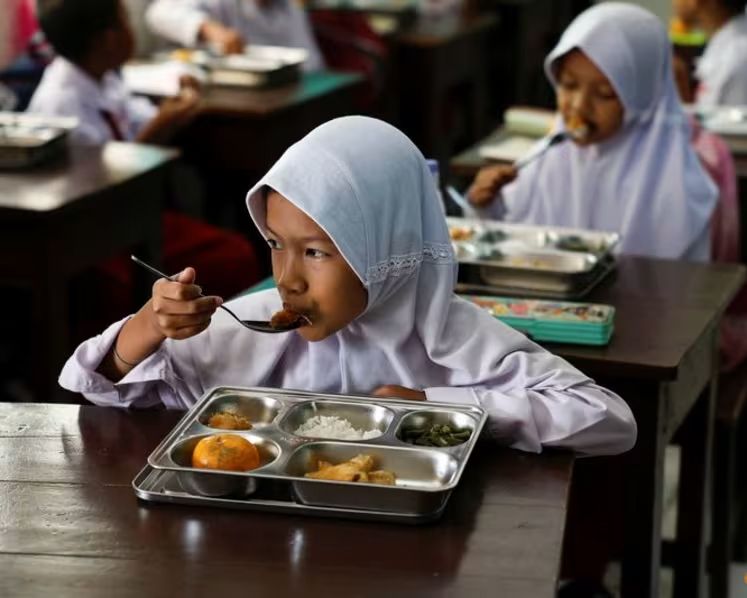
Indonesia's ambitious free meals programme, one of President Prabowo Subianto's centrepiece policy commitments, faces fresh turbulence following the resignation of the National Nutrition Agency chief Nanik Sudaryati Deyang this week. Her departure marks the second major leadership change at the agency in just over a month, underscoring the mounting pressures bearing down on what has become one of Southeast Asia's largest social welfare initiatives. Nanik, who assumed the top role only in June, cited severe health complications as her reason for stepping down, though her exit comes amid severe budget constraints and an active criminal investigation into the sprawling programme.
The timing of Nanik's departure signals deepening challenges within Indonesia's governance machinery. Her predecessor was removed from office last month and subsequently arrested on corruption-related charges stemming from the multibillion-rupiah initiative, which had only launched the previous month. In her public announcement via Facebook, Nanik framed her decision as one driven by medical necessity, noting that she required overseas treatment for a serious cardiac condition exacerbated by workplace stress. She revealed that her physician had warned of severe arterial blockages attributed to the extreme pressure of her position, a candid acknowledgment of the toll the role has exacted.
The programme itself has struggled since its January 2025 launch, plagued by operational complications that have compromised its credibility. Beyond the internal governance crises, the initiative has faced persistent reports of food quality lapses, difficulties in coordinating nationwide meal distribution, and disturbingly, multiple instances of mass food poisoning affecting beneficiaries. These substantive failures have compounded the reputational damage caused by allegations of financial mismanagement, creating a perfect storm of concern around one of the government's most visible undertakings. For Malaysian observers, the parallels to large-scale social programme rollouts are instructive, particularly regarding the coordination challenges inherent in reaching tens of millions of beneficiaries across a sprawling archipelago.
Financial pressures have intensified further as the government tightens spending controls. The agency announced that its 2026 budget allocation had been slashed for a second consecutive time, dropping from 268 trillion rupiah to 229 trillion rupiah, equivalent to approximately USD 12.79 billion. This latest reduction is particularly significant because it represents a cumulative cut of more than 100 trillion rupiah from the original 335 trillion rupiah budgeted for the scheme. The successive budget reductions suggest that central authorities, presumably responding to broader fiscal concerns, are reassessing the scale and scope of the commitment. Additional cuts may still follow pending further budgetary reviews, indicating that the financial trajectory of the programme remains uncertain and potentially subject to continued contraction.
The original ambition of the programme was extraordinarily expansive by regional standards. When conceived, the free meals initiative aimed to serve 83 million Indonesians, encompassing schoolchildren, pregnant women, and other vulnerable populations. Such universal coverage would have represented an unprecedented commitment of public resources to in-kind nutrition support. However, the cascading budget cuts and operational difficulties have necessitated scaled-back expectations. Prior to the most recent budget reduction announcement, agency officials disclosed that the programme had managed to extend free meals to 62.5 million people, still a substantial figure but falling notably short of the initial 83 million target. The gap between aspiration and achievement, narrowing as it is, exemplifies the friction between political ambition and fiscal reality.
Prabowo has maintained that the free meals initiative represents a purely developmental intervention focused on child nutrition outcomes, rather than a politically motivated expenditure. In statements attributed to Nanik, the president has sought to frame criticisms of the programme as misguided political attacks rather than legitimate policy concerns. This defensive posture suggests sensitivity to accusations that the scheme functions as disguised campaign spending. For observers across Southeast Asia, including Malaysia, the debate highlights the tension between large-scale social programmes and questions of fiscal sustainability and implementation capacity. Whether such initiatives can be successfully delivered at continental scale, or whether they risk collapsing under their own administrative weight, remains an open question.
Regarding succession arrangements, Nanik indicated that Prabowo was contemplating the establishment of a supervisory board to provide oversight of the agency's operations, a proposal that may reflect attempts to shore up institutional credibility following the corruption allegations. Nanik herself is being considered for a leadership role within this proposed governance structure. However, the identity of her immediate successor as agency chief remained unclear at the time of her resignation announcement. She cryptically noted that her replacement would be a junior colleague from within the agency, suggesting that the government may prefer internal continuity over external recruitment. The lack of clarity surrounding the transition heightens concerns about leadership stability and strategic direction.
The unfolding crisis within Indonesia's free meals programme carries implications extending beyond the nation's borders. As the region's largest economy and a G20 member, Indonesia's capacity to successfully implement flagship social policies resonates throughout Southeast Asia. Malaysia, with its own network of student meal schemes and social support programmes, shares structural and administrative challenges with its larger neighbour. The Indonesian experience demonstrates how rapidly ambitious welfare initiatives can encounter implementation obstacles, budget pressures, and internal governance failures. Policymakers and administrators across the region are observing how Jakarta navigates these constraints and whether it can salvage the core objectives of the programme while managing fiscal discipline.
Looking forward, the programme faces a critical juncture. The agency must stabilise its leadership, clarify its budgetary trajectory, and most importantly, restore public confidence through demonstrable improvements in service delivery and food safety. The criminal investigation into the previous administration adds pressure on incoming leadership to demonstrate rigorous financial controls and transparent operations. Whether the proposed supervisory board will genuinely enhance accountability or merely create another bureaucratic layer remains to be seen. For the 62.5 million beneficiaries currently receiving meals, continuity of service during this transitional period will be essential to preventing disruption. The coming months will determine whether Prabowo's signature initiative becomes a model for evidence-based welfare delivery or a cautionary tale about the perils of untested large-scale programmes.

