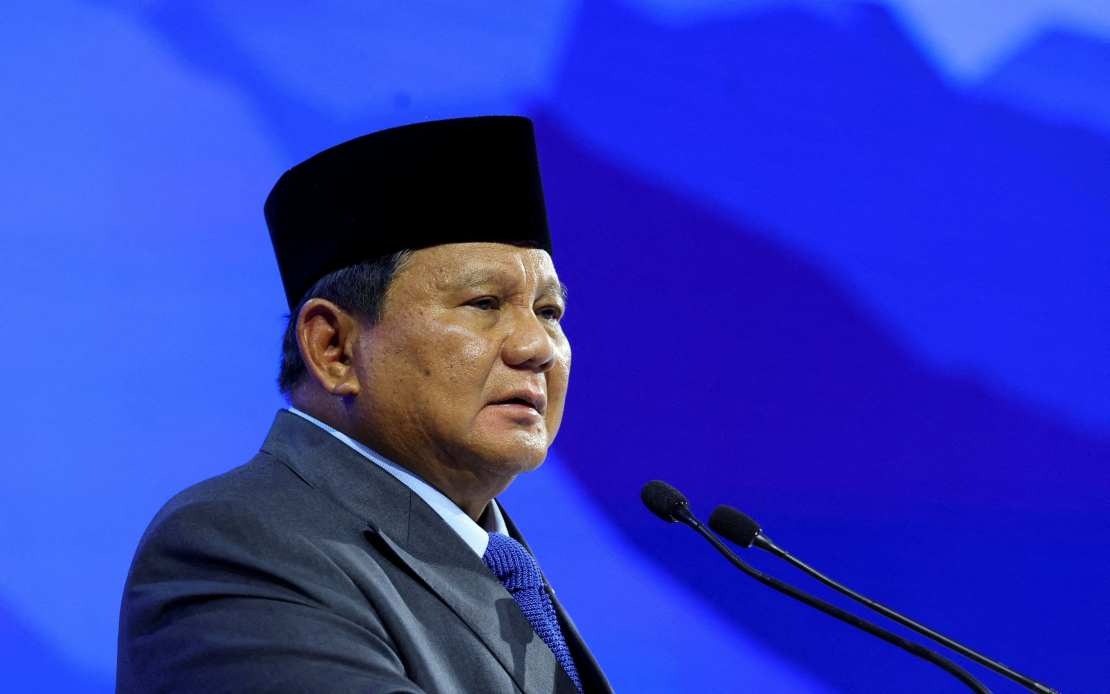
President Prabowo Subianto has signalled cautiously optimistic progress in tackling Indonesia's ongoing forest and land fires, telling a public gathering in Bali on Tuesday that the situation appears increasingly manageable in multiple locations. Speaking at an event launching the country's ambitious 100-gigawatt solar power initiative in Jembrana, the president indicated that a full resolution of the crisis could materialise within the coming one to two weeks, contingent on sustained mobilisation of national resources and favourable weather conditions.
The government has committed substantial capacity to firefighting operations across Indonesia's vulnerable regions. Prabowo detailed the deployment of dozens of helicopters and more than a dozen fixed-wing aircraft, complemented by hundreds of water wells and pump systems scattered across affected areas. Beyond hardware, the coordinated response encompasses thousands of personnel drawn from civil disaster agencies, military units, police forces, and regional government bodies working in tandem to suppress the fires and prevent their spread.
The president's optimism must be tempered by the acknowledgment of environmental headwinds facing the archipelago this year. Indonesia is contending with what meteorologists forecast as one of the strongest El Niño phenomena on record, a weather pattern historically associated with severe drought conditions across Southeast Asia. The phenomenon elevates fire risk substantially and demands heightened vigilance from authorities monitoring vegetation moisture levels and atmospheric conditions, factors that remain partially beyond governmental control.
Prabowo's confidence appears grounded in direct field observation. He personally inspected firefighting operations in West and Central Kalimantan last Saturday, then travelled to Sumatra on Monday to assess containment efforts in that region. These visits allowed the president to evaluate coordination mechanisms among federal agencies, provincial administrations, and security forces deployed across the nation's most fire-prone zones. His presence in the field served both operational and symbolic purposes, demonstrating executive-level commitment to crisis management.
The forest fire emergency represents one challenge among several testing Indonesia's disaster response capacity. Earlier this month, a magnitude 7.7 earthquake devastated the Flores region in East Nusa Tenggara on August 15, claiming 103 lives and leaving 1,666 people injured. As of Tuesday afternoon, the National Disaster Management Agency reported that 185,131 individuals remained displaced following the seismic event. The earthquake subsequently triggered 7,029 recorded aftershocks, including 141 tremors strong enough to be perceptible to residents, extending the period of public anxiety and requiring sustained emergency services deployment.
Prabowo framed the government's dual response to fires and earthquake relief as evidence of institutional capability to manage multiple simultaneous crises. He specifically referenced the handling of a separate disaster in Aceh, suggesting that response timeframes exceeded expectations among observers. Regarding the Flores earthquake, the president characterised the intervention as rapid and massive in scale, emphasising that governmental presence extended to all affected communities regardless of geographic remoteness or infrastructure constraints.
For Malaysian and broader Southeast Asian observers, Indonesia's experience with compounded environmental and geological hazards carries relevance. Regional countries sharing similar tropical geography, monsoon patterns, and seismic vulnerability must consider how institutional frameworks adapt when multiple emergencies compete for finite resources. The El Niño phenomenon affecting Indonesia similarly influences fire risk across Malaysia, particularly in East Malaysian states, making cross-border learning from response strategies potentially valuable.
The timeline Prabowo offered—resolution within one to two weeks—assumes continued optimal coordination and the absence of unforeseen complications. Weather patterns could shift unpredictably, complicating firefighting operations or suddenly alleviating pressure on suppression efforts. The actualisation of this projection will provide important data about governmental efficiency and resource adequacy, especially considering the simultaneous demand created by earthquake aftermath management and humanitarian relief distribution across distant regions.
Indonesia's approach reflects recognition that large-scale environmental disasters require whole-of-government mobilisation transcending normal bureaucratic silos. Military assets, civilian helicopters, water infrastructure typically serving agricultural and municipal purposes, and personnel from disparate agencies all contribute to unified tactical efforts. This integration model, though demanding substantial coordination overhead, demonstrates how centrally coordinated emergency frameworks can theoretically amplify response capacity during crisis periods.
The emerging success in fire containment, should Prabowo's projections materialise, would offer a meaningful counterpoint to previous years when Indonesian fires burned uncontrolled for extended periods, degrading air quality across the wider region and generating diplomatic tensions. Sustained suppression would indicate either improving early-detection and prevention mechanisms, more effective resource deployment methodologies, or simply fortunate timing relative to weather patterns. The distinction matters considerably for policy assessment and future preparedness planning across Southeast Asia.

