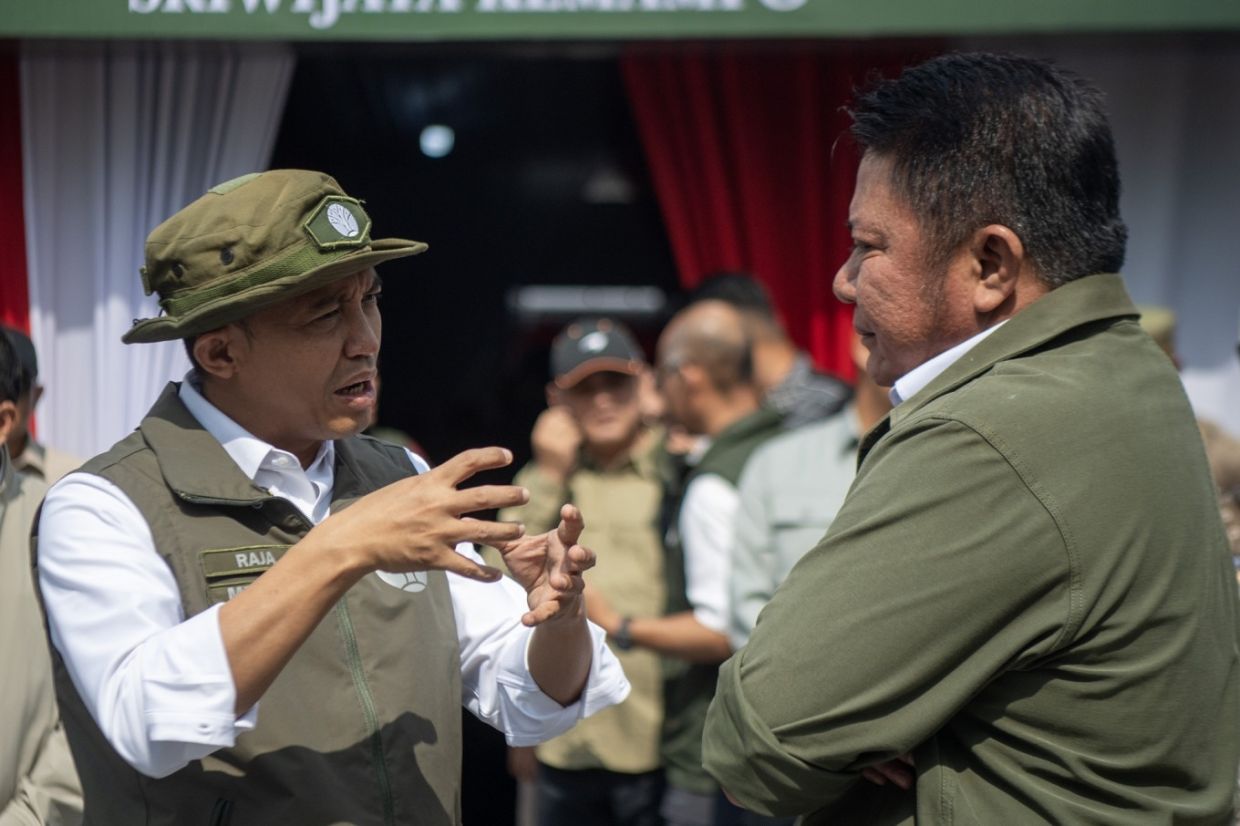
Indonesia's Corruption Eradication Commission (KPK) has reopened investigative lines into Forestry Minister Raja Juli Antoni's handling of alleged bribery, focusing on whether the amount of illicit funds he reported matches what he actually received from Suhardiman Amby, a regent in Riau province. The renewed scrutiny reflects growing concerns within the anti-graft agency that discrepancies exist between funds acknowledged by Raja Juli and the total cash handed over during what officials describe as a meeting on June 2 between forestry ministry representatives and the Kuantan Singingi administration.
According to KPK spokesperson Budi Prasetyo, investigators are carefully examining the gap between sums that were allegedly given to the minister and amounts he subsequently returned. The focal point of this investigation centres on an envelope Suhardiman presented to Raja Juli, initially containing S$14,000 in Singapore dollars—equivalent to approximately US$10,919. This case has widened beyond the minister alone; other ministry staff members allegedly received separate kickbacks totalling S$12,500 from various officials within the Kuantan Singingi administration, suggesting a broader pattern of attempted influence.
The minister's account of events has drawn particular scrutiny from anti-corruption investigators. Raja Juli reported the incident to the KPK on July 3, claiming he had rejected Suhardiman's overture and returned the envelope on June 12—a full ten days after their initial meeting—at the Kuantan Singingi Police headquarters. His stated rationale was that accepting such funds would have been inappropriate for a public official. However, the KPK's investigation appears to centre on whether his actions aligned with anti-corruption protocols, specifically whether all illicit money was fully accounted for and returned without retention.
The timing and legal framework underpinning this investigation carries significant implications. Indonesian law mandates that state officials must report improper gifts connected to their public position directly to the KPK within 30 days of receipt, rather than to local police. By returning funds to a police station instead of immediately notifying the anti-graft commission, Raja Juli may have created procedural complications that have now triggered deeper scrutiny. Penalties for state officials convicted of accepting illicit gifts under Indonesian law are severe, with potential sentences reaching 20 years imprisonment alongside fines of up to Rp 1 billion (approximately US$55,867).
The underlying catalyst for these alleged kickbacks appears linked to a significant environmental and administrative matter. Suhardiman's administration had submitted proposals requesting the Forestry Ministry to reclassify more than 1,800 hectares of limited production forest (HPT) within Kuantan Singingi. The KPK's suspicion is that the bribe attempts were designed to facilitate or influence this reclassification decision, leveraging the minister's authority over such determinations. The forestry ministry retains substantial power in this domain, holding authority to alter forest classifications for various land-use purposes, including conversion of HPT land designated strictly for low-intensity production, settlement, or industrial development.
Investigators have also documented multiple interactions between the two officials that predate the June 2 meeting. Budi revealed that Raja Juli and Suhardiman met on at least three separate occasions during April, May, and June, though the KPK has not yet publicly clarified whether these earlier meetings directly related to the forest reclassification request or served other purposes. The pattern of engagement across several months suggests potentially coordinated effort rather than isolated incident, lending weight to the anti-corruption agency's determination to examine all financial transfers and underlying motivations.
Suhardiman himself already faces serious legal jeopardy. The regent, who holds membership in President Prabowo Subianto's Gerindra Party, was arrested and formally designated as a graft suspect by the KPK in late June. His original prosecution stemmed from allegations of receiving kickbacks from Zulkarnain, the regency's secretary, in what authorities characterised as an exchange for Zulkarnain's appointment to the regional administration secretary position. The KPK subsequently expanded its investigation to encompass alleged payments from Suhardiman to the Forestry Ministry regarding forest conversion authorisation, transforming the case into one with potentially wider ramifications.
Raja Juli's position as both Forestry Minister and secretary-general of the Indonesian Solidarity Party (PSI) has intensified political dimensions to this investigation. Lawmakers in the House of Representatives Commission IV, which oversees forestry policy and planning, have sought clarification directly from the minister regarding the allegations. However, Raja Juli's absence from a scheduled parliamentary meeting on July 14 drew criticism, with Commission IV deputy chair Alex Indra Lukman from the Indonesian Democratic Party of Struggle (PDI-P) attributing the minister's non-attendance to an umrah religious pilgrimage. The minister's limited public engagement on the matter has left opposition figures with latitude to amplify concerns about accountability.
The Forestry Ministry has attempted to navigate the controversy through a measured institutional response. In formal statements, ministry officials have affirmed their commitment to full cooperation with the KPK's ongoing investigation, pledging to provide any documents or information the anti-graft body requests. Significantly, the ministry has explicitly stated that no forest reclassifications affecting Kuantan Singingi have been granted to date. The three most recent proposals from the regency administration remain either formally rejected or currently undergoing verification procedures, suggesting that any alleged bribe attempts did not successfully translate into administrative approval. This defensive posture aims to separate the ministry's institutional integrity from the alleged personal misconduct of individual officials.
For Malaysian observers, this case illustrates the broader regional challenge of corruption within environmental and land-use governance. Southeast Asia's forest resources remain subject to competing commercial pressures and administrative vulnerabilities, with officials frequently encountering incentives to reclassify protected or limited-use forests for development purposes. The KPK's renewed determination to investigate apparent discrepancies in the Kuantan Singingi matter reflects institutional capacity to pursue complex financial trails and hold senior government figures accountable. However, the investigation also reveals how technical breaches—such as reporting procedures—can complicate cases even when underlying allegations of improper enrichment appear substantive.
The ramifications extend beyond individual accountability. If investigators confirm that Raja Juli retained portions of the alleged kickback, it would constitute not merely a procedural violation but substantive evidence of corruption. Such a finding would further erode public confidence in environmental governance precisely when questions about deforestation rates and forest conversion decisions demand public trust in decision-making integrity. The case demonstrates how anti-corruption investigations function not as isolated prosecutorial exercises but as mechanisms through which democratic institutions reassert control over executive discretion and financial accountability within the state apparatus.

