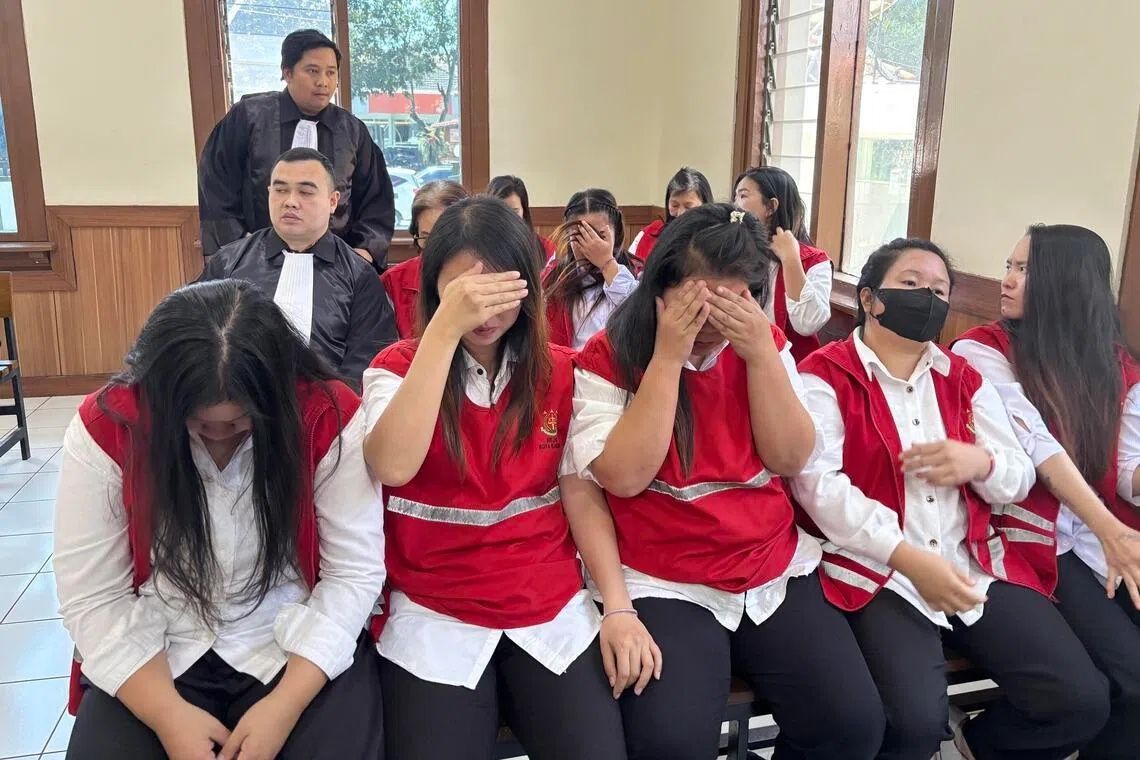
Indonesian prosecutors formally requested sentences of up to 10 years' imprisonment on Tuesday for members of an alleged baby trafficking syndicate that authorities say sold at least 34 infants, with confirmed evidence of at least 12 being transported to Singapore. The case, involving 19 defendants spread across 18 women and one man, represents a striking example of organized human trafficking that exploited Indonesia's vulnerable population and exposed regulatory gaps in cross-border adoption procedures. The trial, which commenced in April, has revealed the systematic nature of an operation spanning from 2023 through 2025, with each infant allegedly changing hands for between 200 to 250 million rupiah, equivalent to approximately S$18,110 per child.
At the centre of the prosecution's case stands 70-year-old Lie Siu Luan, identified by investigators as the alleged ringleader and referred to within the network as Lily or Popo. According to prosecutors, Lie orchestrated the entire operation by managing the identification and recruitment of vulnerable babies, preparing falsified adoption documentation, and orchestrating the international movement of infants to buyers abroad. The Bandung District Court heard the prosecution argue that Lie should be found guilty under Indonesian law of recruiting, harbouring, sending, transferring, and receiving persons for the explicit purpose of exploitation within Indonesian territory. This charge carries significant legal weight, as it encompasses the full spectrum of human trafficking offences recognized under Indonesian criminal statutes.
Prosecutor Cucu Gantina specifically named several defendants for enhanced culpability. Astri Fitrinika, described as one of the operation's primary recruiters, faces the same maximum 10-year sentence sought for Lie, a decision that has created tension within the defence strategy. Similarly, fellow recruiters Djaka Hamdani and an individual identified only as Elin face identical 10-year recommendations. Lai Su Hua, whose role centred on fabricating state documents to satisfy adoption requirements, was also targeted for the maximum sentence. The remaining 14 defendants, who prosecutors characterize as caretakers responsible for the physical custody and care of the infants while awaiting transfer, face recommendations of five years' imprisonment each. This differentiation in sentencing reflects prosecutors' assessment of culpability levels within the trafficking hierarchy.
The emotional dimensions of the proceedings became apparent when both Lie and Astri shed tears as the prosecution outlined its case. This reaction contrasts sharply with the defendants' legal strategies, which increasingly focus on disputing the fundamental elements of the charges rather than the acts themselves. Lie's legal counsel, Sendi Sanjaya, specifically challenged what he characterized as the prosecution's critical failure to establish exploitation as required by law. Sanjaya argued that the evidence presented during trial demonstrated that the transferred children remained healthy and their locations remained known to relevant parties, thus failing to meet the legal threshold of exploitation necessary to sustain trafficking convictions. This defence strategy effectively concedes the transfer of children but argues that the transaction did not constitute trafficking in the legal sense.
Astri's defence attorney, Hendri Samuel Tampubolon, took a different approach by attempting to diminish his client's culpability relative to Lie. Tampubolon argued that equating the sentencing recommendations for Astri and the alleged mastermind fundamentally misrepresents the power dynamics and control structures within the organization. He characterized Astri as functioning under Lie's dominance rather than exercising independent agency, and emphasized that Astri had demonstrated cooperation with both police and prosecutorial authorities during the investigation phase. This cooperation, Tampubolon suggested, should weigh substantially in favour of a reduced sentence when the court renders its decision.
The case originated from a tip provided by a private citizen named Dani Hidayat, a West Java resident who encountered the operation through a Facebook adoption group. Hidayat and his wife, anticipating their own child's birth, had joined the online community seeking adoption information when Astri contacted him directly with an offer. The proposal was remarkable in its directness: Astri allegedly offered Hidayat eight million rupiah in exchange for his unborn child. This direct approach suggests a confidence within the network that such transactions could occur with minimal risk of detection, pointing to broader systemic vulnerabilities in how Indonesia monitors private adoption arrangements and cross-border child transfers.
The international dimension of the case became firmly established when police operations commenced in July 2025 following Hidayat's report. Investigators detained approximately a dozen suspects in West Java and subsequently uncovered evidence of connections extending to Singapore. During trial proceedings, Lie named four Singaporean individuals allegedly operating as adoption agents for the network—identified only as "Petter," "John," "Mr Tan," and "Mr Chew." These Singapore connections underscore how trafficking networks exploit the relative ease of moving infants across borders while exploiting both countries' adoption systems. The coordination between Indonesian and Singaporean authorities was formally announced on January 9, with both governments committing to collaborative investigation and prosecution efforts.
For Malaysia and other Southeast Asian nations, this case carries substantial implications regarding the robustness of existing protections for vulnerable children and the adequacy of cross-border monitoring mechanisms. The operational scale of the syndicate—moving 34 infants across international boundaries over roughly two years—suggests that either detection capabilities remain limited or that the risk calculation for traffickers has become more favourable. The prices commanded per infant, ranging from S$18,110 to approximately RM80,000 at current exchange rates, provide sufficient financial incentive to motivate organized criminal activity. For Malaysian authorities, the case highlights the importance of strengthening adoption verification procedures, enhancing communication with neighbouring governments regarding suspicious adoption applications, and ensuring that Facebook groups and other social media platforms used for adoption discussions incorporate stronger identity verification and reporting mechanisms.
The trial's continuation into the defence phase presents crucial opportunities for clarification regarding Singapore's role in the trafficking chain and whether additional arrests or charges will follow in that jurisdiction. The next hearing, scheduled for the following week, will allow all 19 defendants to present their counter-narratives and legal challenges to the prosecution's evidence. Legal observers anticipate that the defence will focus on challenging the trafficking characterization while potentially conceding the financial transactions themselves. The court's eventual ruling will establish important precedent regarding how Indonesian courts interpret the exploitation requirement within trafficking cases, potentially influencing how similar cases are prosecuted across the region.

