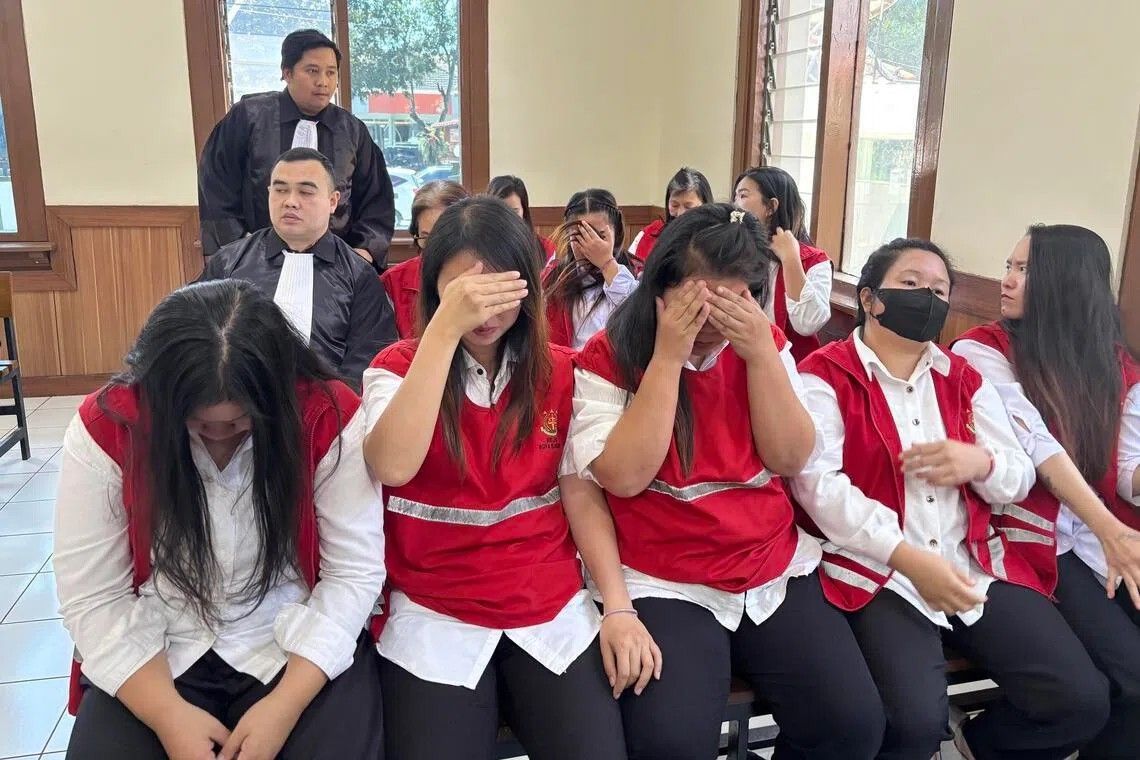
An Indonesian court has delivered guilty verdicts against all 19 members of a sophisticated baby-smuggling operation that sent dozens of infants across borders, including to Singapore, in what prosecutors described as a systematic human-trafficking enterprise. Lie Siu Luan, the 70-year-old ringleader also known by aliases Popo and Lily, was sentenced to seven years imprisonment on July 21 for masterminding the scheme, which operated between 2023 and 2025 and profited substantially from the exploitation of vulnerable newborns and desperate families.
The Bandung District Court in West Java handed down its rulings after a trial that began in April, concluding that Lie orchestrated every facet of the trafficking network's operations. His responsibilities encompassed recruiting infants, producing forged adoption documents, and coordinating logistics to transport the children across international borders. Judge Gatot Ardian Agustriono, presiding over a three-judge panel, explicitly found that Lie had "been legally proven guilty of committing the criminal act of recruiting, harbouring, sending, transferring, or receiving a person... for the purpose of exploiting said person within the territory of the Unitary State of the Republic of Indonesia." The sentence fell short of prosecutors' request for a ten-year term, reflecting the court's assessment of mitigating factors or evidentiary considerations.
The scope of the trafficking operation was staggering by regional standards. Investigators documented the trafficking of at least 34 infants through the syndicate's network, with prosecutors establishing that a minimum of 12 children reached Singapore alone. Each baby generated substantial proceeds for the traffickers, commanding prices between 200 and 250 million rupiah—equivalent to approximately S$18,110—per child. These figures underscore the profitability of the enterprise and why organised criminal networks persist in human trafficking despite severe legal consequences. The financial incentives, combined with what authorities characterised as weak enforcement and document-forgery vulnerabilities, created conditions permitting such operations to function relatively openly.
The conviction extended uniformly across the defendant cohort, with all 18 co-conspirators—predominantly women—also found guilty. The syndicate's hierarchical structure became evident through differentiated sentencing reflecting each defendant's role. Astri Fitrinika, identified as the chief recruiter responsible for identifying and acquiring babies, received six years and seven months imprisonment, as did fellow recruiters Djaka Hamdani and Elin Marlina. These three individuals occupied crucial positions within the trafficking chain, responsible for locating infants and facilitating their removal from their original families or institutional care settings. Their sentences acknowledged this elevated culpability compared to lower-tier operatives.
Lai Su Hua, a document specialist within the network, also received six years and seven months for falsifying state documents essential to the adoption deception. Her role reveals a critical vulnerability in transnational adoption procedures: the reliance on documentary verification rather than substantive investigation into the legitimacy of placements and the genuine consent of biological parents. By producing forged or misleading adoption paperwork, Lai enabled the syndicate to present trafficked children to receiving families as legally adopted infants with proper institutional oversight, masking the criminal sourcing beneath a veneer of administrative legitimacy.
The remaining 14 defendants, functioning as caregivers within the network's infrastructure, received more lenient sentences of three years and four months. These individuals provided custodial care for infants between recruitment and international transfer, representing essential operational support despite their peripheral involvement in the fundamental trafficking decisions. The sentencing gradations illustrate how trafficking networks distribute roles across multiple participants to create operational resilience and diffuse individual responsibility—a structural approach that also complicates enforcement since the network can function despite the removal of individual members.
Throughout the investigation and judicial proceedings, both Lie and Astri acknowledged most of the offences charged against them, though they maintained a critical distinction regarding consent and treatment. Both defendants asserted that no children had been abducted forcibly, instead claiming that infants were voluntarily surrendered by their biological parents. They further contended that all transported children received appropriate care and experienced no abuse or neglect. These claims, while presented as mitigating factors, remain contentious given the inherent power imbalances in transactions involving vulnerable populations—impoverished families facing economic desperation may technically "consent" to child relinquishment without exercising genuine agency. The assertion of proper treatment also contradicts broader documentation of trafficking victims' experiences and the inherent risks of illegal cross-border placement.
The implications of this trafficking network extend significantly across Southeast Asia, particularly for destination countries like Singapore that have experienced receiving trafficked children. The case illustrates how transnational adoption systems, despite their legitimate purpose of providing families for vulnerable children, become vulnerable to exploitation when verification mechanisms remain inadequate. Forged documents, complicit officials, and networks specialising in fraudulent placements can circumvent border controls and institutional safeguards designed to protect children's welfare and prevent commercial exploitation.
Indonesia's prosecution of this case represents progress in combating human trafficking, yet questions persist regarding how such an extensive operation functioned for approximately two years before comprehensive law enforcement intervention. The systematic nature of the enterprise—involving coordinated recruitment, document falsification, international logistics, and customer acquisition—suggests institutional knowledge or tacit tolerance among officials. Strengthening implementation of existing laws remains crucial alongside legislative enhancement and cross-border cooperation mechanisms with receiving countries.
For Malaysian authorities and policymakers, the case underscores vulnerabilities affecting regional adoption procedures and the transnational nature of human trafficking. Southeast Asian nations collectively benefit from enhanced information-sharing, standardised verification protocols, and capacity-building for officials responsible for authenticating international placements. The conviction of all 19 defendants provides a significant deterrent, though the scale of undetected trafficking operations remains uncertain. The case also highlights how trafficking extends beyond traditional labour exploitation, encompassing the commercial exploitation of infants through fraudulent adoption schemes targeting affluent international families. Regional coordination remains essential to closing the gaps that permit such networks to persist.

