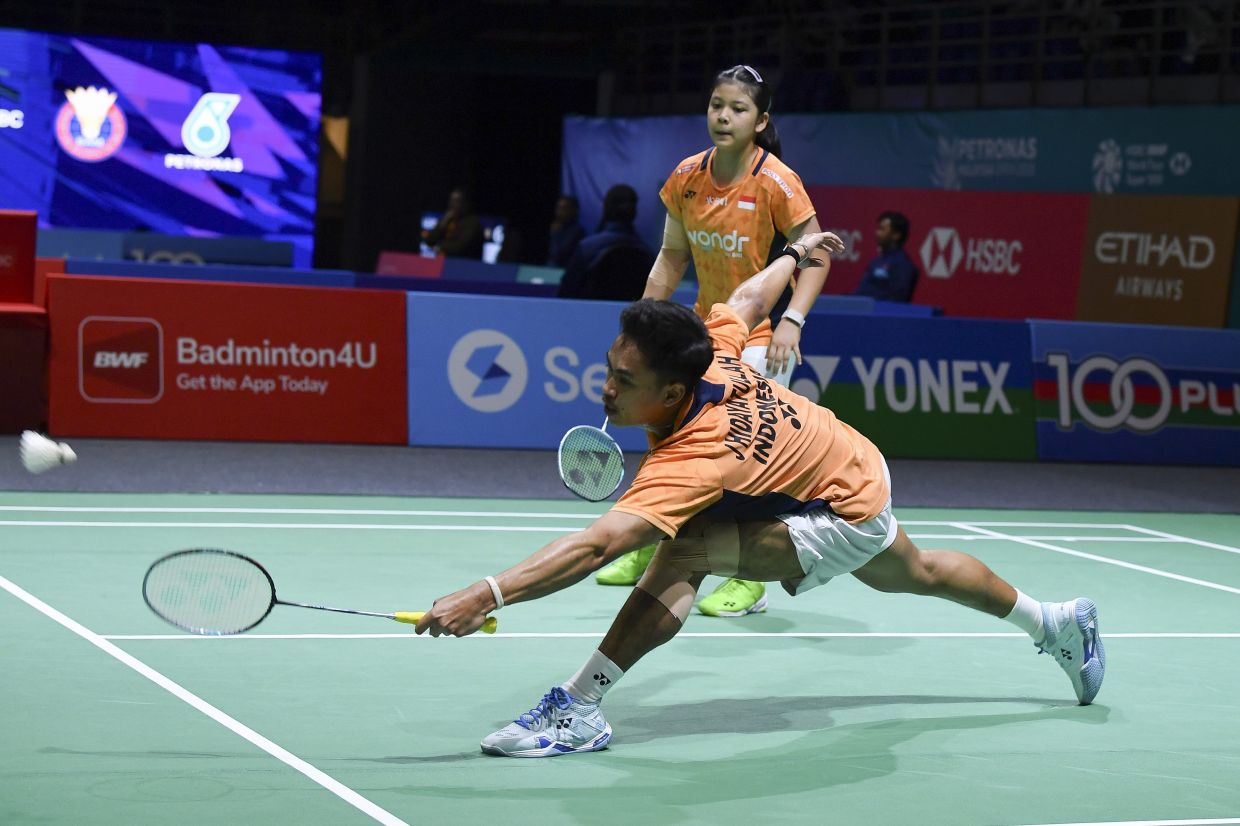
The integrity of international badminton has come under fresh scrutiny with the withdrawal of two Indonesian mixed doubles pairs from the World Championships, as the sport's governing body presses ahead with investigations into alleged match-fixing involving multiple players from the Southeast Asian nation. While the Indonesian Badminton Association (PBSI) has stopped short of explicitly confirming a connection between the withdrawals and the ongoing probe, the timing and circumstances have inevitably drawn speculation about the true reasons behind the squad changes.
Jafar Hidayatullah and Felisha Pasaribu, currently ranked 13th in the world, were among the first to exit the tournament, with their decision announced on July 29. This followed the earlier withdrawal of another mixed doubles combination, Adnan Maulana and Indah Cahya Sari Jamil, who stepped back from competition on July 13. The staggered nature of the withdrawals, coupled with an apparent absence of injury or personal circumstances being cited as reasons, has intensified questions about what prompted the decisions.
Indonesia's badminton pedigree in mixed doubles has long been formidable on the world stage, making these developments particularly significant for the country's standing in the sport. The withdrawals come at a sensitive moment for Indonesian badminton, which has previously weathered controversies and sought to rebuild its reputation. The fact that not one but two pairs have exited the championship simultaneously suggests a systemic concern rather than isolated incidents affecting individual athletes.
The Badminton World Federation (BWF) is conducting independent judicial proceedings focused on alleged integrity breaches spanning several Indonesian players, according to a statement from PBSI secretary-general Ricky Soebagdja. The federation has neither revealed the scope of this investigation nor identified the specific athletes under scrutiny, maintaining confidentiality as the process unfolds. What remains clear is that the matter is sufficiently serious to warrant formal proceedings by the sport's international governing body.
PBSI's official explanation for the squad changes emphasises procedural compliance and adherence to international tournament regulations. The association characterised the withdrawals as part of broader adjustments to Indonesia's World Championships roster, suggesting that administrative and eligibility considerations may have factored into the decision-making process. However, this carefully worded justification has done little to quell speculation about the underlying causes, particularly given the visible presence of a formal investigation.
The association has adopted a cautious stance regarding public commentary on the situation. Soebagdja stated that PBSI would refrain from further discussion while the BWF proceedings remain active, appealing to all stakeholders to avoid premature judgements until the Independent Hearing Panel delivers its verdict. This measured approach reflects the delicate balance Indonesia must strike between defending its athletes' presumption of innocence and acknowledging the severity of match-fixing allegations within competitive sport.
Despite the departures of these two pairs, Indonesia will maintain a presence in the mixed doubles competition at the World Championships. Amri Syahnawi and Nita Violina Marwah will lead the country's challenge in this discipline, while Rehan Kusharjanto and Gloria Widjaja have been elevated from the reserve list to fill the gap left by the withdrawals. This arrangement ensures that Indonesia retains competitive representation while allowing the domestic federation to manage the integrity concerns transparently.
Match-fixing in badminton has emerged as a recurring concern for the BWF in recent years, with several high-profile cases involving players from various nations. The sport's structure, featuring numerous tournaments across different continents and the relatively modest prize pools at some events, has historically created vulnerabilities that unscrupulous actors have sought to exploit. Southeast Asia, home to some of the world's strongest badminton talent, has not been immune to these pressures, though the frequency and nature of breaches remain subjects of ongoing scrutiny.
For Malaysian badminton observers and the broader Southeast Asian sporting community, these developments carry particular resonance. The region's badminton ecosystem is tightly interconnected, with players, coaches, and support staff frequently moving between countries and competing across shared circuits. Confidence in the integrity of competition is essential to maintaining the health of the sport regionally, and any credible allegations of match-fixing undermine the competitive principles that attract investment, media attention, and public participation.
The BWF's independent judicial process represents an opportunity for the sport to demonstrate its commitment to policing misconduct rigorously and transparently. The federation has positioned itself as guardian of badminton's integrity, backing its investigative findings with formal proceedings that provide due process to those under scrutiny. How thoroughly and fairly the hearing panel examines the evidence will significantly influence perceptions of badminton governance among players, federations, and fans throughout the region.
The outcome of the BWF investigation may also carry implications for Indonesia's broader sporting reputation. The nation has invested substantially in developing world-class badminton talent and infrastructure, and persistent integrity concerns could dampen enthusiasm for the sport domestically and internationally. Conversely, a thorough and credible investigation that results in appropriate sanctions—if wrongdoing is confirmed—could reinforce confidence in the sport's regulatory mechanisms.
As the World Championships proceed without these Indonesian pairs, the absence serves as a visible reminder that badminton's governing structures take allegations of misconduct seriously. The investigation's outcome, whenever it arrives, will likely influence how both national federations and the BWF approach integrity safeguards in the future, potentially reshaping competitive practices across the sport.

