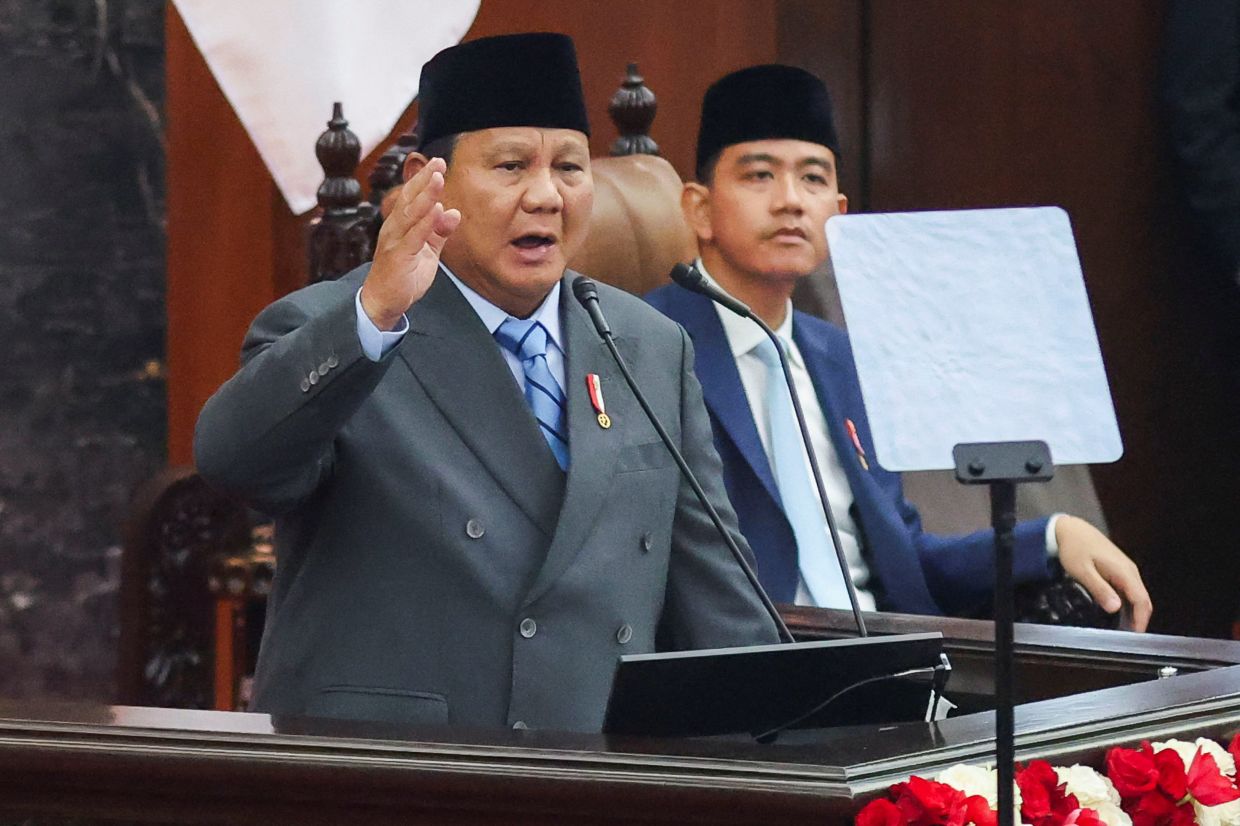
President Prabowo Subianto has launched what he characterizes as potentially the world's largest corporate restructuring, pledging to eliminate more than 750 of Indonesia's state-owned enterprises by the end of 2024. Speaking during his state of the nation address to parliament on Friday, the Indonesian leader outlined an ambitious plan to pare down a bloated public sector that, he argues, operates with minimal accountability and generates fictitious profits despite chronic underperformance.
The sheer scale of Indonesia's state enterprise apparatus came as something of a shock even to the nation's leadership. When the Danantara sovereign wealth fund was established last year to consolidate management of state assets, officials discovered there were 1,074 state-owned enterprises in total—a figure far exceeding the president's previous estimate of between 300 and 400 entities. This revelation underscored the fragmented and opaque nature of state asset management across Southeast Asia's largest economy, where enterprises have historically operated with considerable autonomy and minimal central oversight.
Prabowo's restructuring agenda directly challenges what he describes as a culture of unaccountability within state enterprises. In his parliamentary address, he criticized entities that consistently report losses to regulators while simultaneously claiming substantial profits—a pattern he branded as fabrication. This disconnect between reported financial performance and operational reality reflects deeper governance failures that have long plagued Indonesia's public sector and contributed to the country's persistent corruption problems.
The financial implications of the restructuring are substantial. Already, the government has closed 290 enterprises and anticipates saving approximately 50 trillion rupiah (more than US$2.8 billion) in overhead expenditure. These savings encompass director and commissioner salaries, building leases, vehicle rentals, and business travel costs—areas where bloated state enterprises have traditionally incurred wasteful expenses. The administration aims to exceed 70 trillion rupiah in savings during the current year as the closure programme accelerates.
Performance metrics reveal the positive impact of improved state enterprise management. Prabowo reported that collective profits across remaining state-owned enterprises surged more than 75 percent, reaching 326 trillion rupiah last year compared to the prior year. These gains suggest that consolidation and enhanced oversight are yielding tangible financial results, though analysts caution that Indonesia's official economic data warrants careful scrutiny.
Beyond fiscal efficiency, Prabowo's initiative reflects a broader anti-corruption agenda. He has proposed establishing a special ad hoc court to investigate the management and governance failures of state enterprises spanning the past three decades. This retrospective investigation could expose systematic corruption, misappropriation, and negligent stewardship across numerous entities. Yet acknowledging the scale of potential wrongdoing, the president simultaneously suggested offering amnesty to officials willing to cooperate and demonstrate contrition—a carrot-and-stick approach common in transitional governance reform efforts.
Indonesia's corruption challenges are well-documented internationally. The nation scored just 34 out of 100 on Transparency International's 2025 Corruption Perceptions Index, placing it among lower-ranked economies and highlighting the persistent opacity of its public institutions. This low rating reflects entrenched systemic problems extending beyond state enterprises into broader governance structures, explaining why piecemeal reforms face skepticism from analysts and civil society observers.
The restructuring programme carries symbolic importance amid broader public discontent. As Indonesians grapple with escalating living costs exacerbated by elevated global oil prices resulting from Middle Eastern instability, corruption in public administration has become a focal point for popular frustration. Citizens increasingly view endemic graft as directly linked to their economic struggles, making Prabowo's crackdown politically resonant and potentially essential to maintaining social stability.
A signature initiative drawing particular scrutiny is Prabowo's free school meals programme, a flagship policy designed to address childhood malnutrition. The president acknowledged Friday that roughly one in four Indonesian children suffer from stunting—a serious public health crisis—and recommitted to the programme while promising greater efficiency. The initiative's cost has fueled criticism from those questioning whether resources are being appropriately deployed, making demonstrated management improvements increasingly vital to its political sustainability.
Economic performance broadly contextualizes the restructuring efforts. Indonesia's GDP growth decelerated to 5.3 percent in the second quarter of 2024 following 5.6 percent in the first quarter, prompting Prabowo to express confidence that growth will reach 6.0 percent by end of 2026. However, international analysts have repeatedly questioned the reliability of Indonesia's official growth statistics, suggesting actual performance may diverge significantly from reported figures. The president emphasized that growth represents merely instrumental means toward genuine prosperity rather than an endpoint, stressing instead that every rupiah of investment must tangibly improve living standards, particularly for lower-income populations.
For Malaysia and broader Southeast Asia, Indonesia's reform trajectory carries substantial implications. As the region's economic anchor and Indonesia's neighbor, Malaysia faces spillover effects from Indonesian policy decisions affecting trade, investment flows, and regional stability. A more efficiently managed Indonesian state sector could enhance bilateral economic cooperation and regional supply chain reliability. Conversely, should corruption persist despite reform efforts, regional confidence in Indonesian institutions could erode, potentially disrupting ASEAN economic integration objectives and investment patterns.
The success of Prabowo's restructuring programme remains contingent on sustained political will and institutional capacity. Previous Indonesian administrations have launched anti-corruption initiatives that subsequently stalled due to bureaucratic resistance, legislative obstacles, or shifting political priorities. Whether the current government can maintain momentum through the December deadline while genuinely investigating decades of malfeasance will determine whether this represents transformative reform or merely symbolic gesturing. International observers and regional partners will monitor implementation closely as indicators of institutional trajectory within Southeast Asia's largest economy.

