Indonesia is positioning itself to become an artificial intelligence user across its most significant government initiatives, embedding the technology into its flagship $15 billion free-meal scheme and other presidential priority programmes through a comprehensive roadmap spanning 2026 to 2029. A draft presidential regulation obtained by Reuters outlines how ministries and regional authorities will adopt AI systems to drive economic expansion and enhance operational efficiency, a strategy the government calculates could add approximately $366 billion to gross domestic product by 2030.
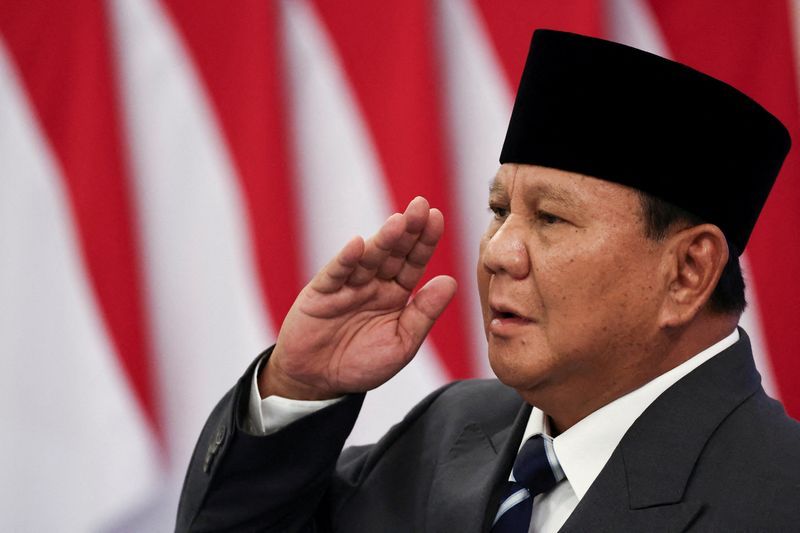
The regulatory framework, currently awaiting President Prabowo Subianto's endorsement, reflects Jakarta's determination to modernise public service delivery and establish competitive advantage in a region where neighbours have already seized significant ground. Singapore and Malaysia have aggressively positioned themselves as development hubs for artificial intelligence infrastructure, attracting billions of dollars in investment from global technology corporations seeking to establish data centres and cloud facilities to service the burgeoning demand for AI-powered solutions across Asia-Pacific markets. Indonesia's entry into this competitive landscape marks a critical juncture as the nation attempts to transition from technology consumer to more active participant in the regional AI economy.
The drafting process involved substantial input from major international technology firms including Meta Platforms, IBM and Microsoft, according to Wahyudi Djafar, a technology analyst who contributed to the regulation's development and sits on Indonesia's AI government task force. This collaboration underscores how foreign technology companies are becoming embedded within Indonesia's policy-making apparatus, a dynamic that raises questions about the alignment of corporate interests with national development priorities. Microsoft has already committed $1.7 billion to expand cloud infrastructure and AI capabilities throughout Indonesia in a multi-year investment programme initiated in 2024, demonstrating the commercial stakes driving such partnerships.
Within the proposed free-meal programme—which has faced considerable scrutiny over governance and implementation standards—artificial intelligence would serve multiple functions designed to address longstanding operational deficiencies. The system would analyse regional dietary preferences to customise menu offerings, establish real-time kitchen hygiene monitoring protocols, forecast food consumption patterns, and flag potential supply chain disruptions. Additionally, AI would integrate health information to enable early detection of public health emergencies, a capability that gained urgency after tens of thousands of children experienced food poisoning incidents last year. These applications represent an attempt to deploy technology as a solution to transparency and accountability problems that have plagued the scheme since inception, including the recent dismissal and arrest of the programme's administrator amid investigations into irregular kitchen construction practices.
However, experts caution that Indonesia's institutional and technical readiness for meaningful AI implementation remains questionable. Derwin Suhartono, an artificial intelligence professor at Bina Nusantara University in Jakarta, contends that Indonesia lacks the foundational elements necessary to become an AI technology developer, pointing to critical infrastructure deficiencies including domestic semiconductor manufacturing capabilities and insufficient workforce training in advanced computing disciplines. Suhartono's assessment is sobering: Indonesia risks remaining confined to the role of importing foreign AI solutions rather than building indigenous technological capacity, a dynamic that would perpetuate long-term economic dependency on external technology providers. He further argues that while government deployment of AI is theoretically achievable through methodical implementation strategies, current execution reflects aspirational rhetoric rather than concrete operational change.
The regulatory proposal contemplates broader applications beyond the meal programme. Artificial intelligence systems would analyse data gathered during Indonesia's free health screening initiatives and support tuberculosis testing protocols, potentially improving disease detection and resource allocation within public health systems. These medical applications highlight how AI could theoretically enhance preventive health capacity in a country where infectious disease surveillance remains inconsistent across regions. Yet translating such potential into sustained improvements depends entirely on whether underlying institutional weaknesses can be remedied through technology deployment alone—a hypothesis that many development specialists remain sceptical about.
Fiscal architecture supporting AI expansion includes establishment of a sovereign AI fund, primarily administered through Danantara Indonesia, the country's newly created wealth management vehicle. The regulatory framework also proposes fiscal incentives directed toward artificial intelligence researchers and programmes designed to cultivate technical talent, attempting to address documented workforce shortages that currently impede domestic capability development. These provisions acknowledge that technology adoption without simultaneous human capital investment is unlikely to generate sustainable competitive advantages in an increasingly AI-driven global economy.
Accompanying the AI adoption directive is a complementary regulatory instrument requiring government bodies to assess and publicly report on artificial intelligence-related risks, including unauthorised biometric data exploitation, intellectual property infringement through AI systems, and the deployment of deepfake technology. This governance layer responds to growing international concern about algorithmic bias, privacy violations, and synthetic media deployment by state and non-state actors—risks that become particularly acute in contexts where institutional accountability mechanisms remain underdeveloped and public trust in government institutions is fragile.
The timing of Indonesia's AI strategy reflects mounting pressure to demonstrate technological modernity as Southeast Asian economies compete for foreign investment and regional influence. The regulatory framework builds upon foundations established through a white paper released the previous year, suggesting incremental development of policy coherence around artificial intelligence. Yet the gap between formally articulated strategy and realistic implementation capacity remains substantial, a tension that will likely dominate discussions as Prabowo considers whether to formalise the regulation and commit government resources to executing an ambitious multi-year transformation programme.