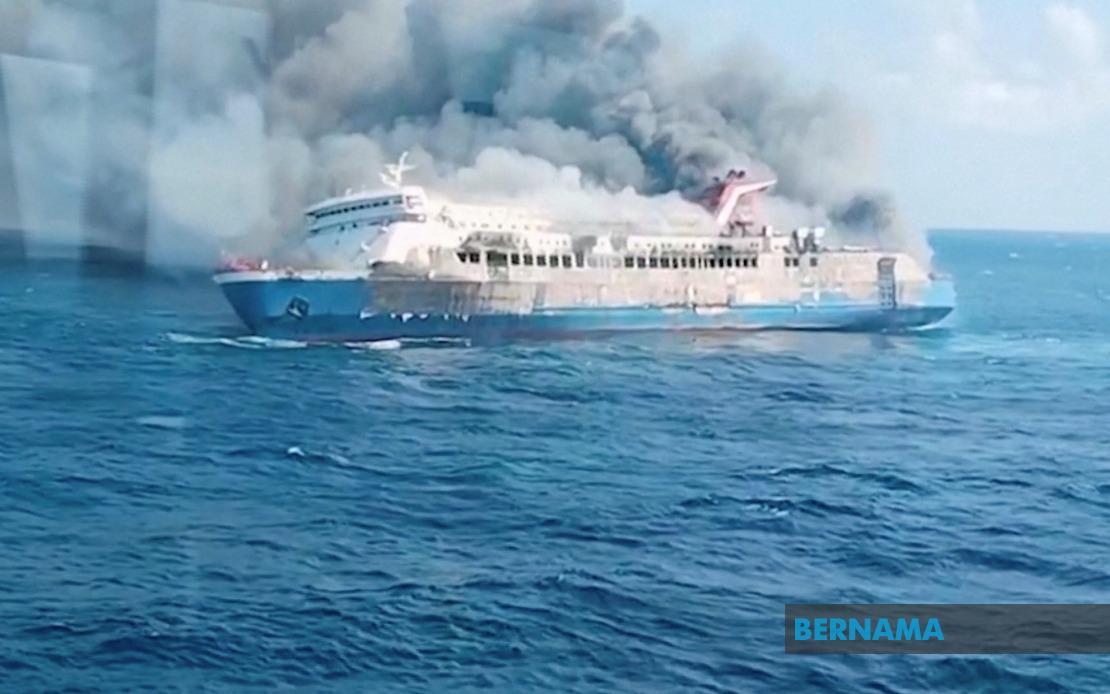
Indonesia's maritime rescue authorities have mobilized significant naval and air resources to locate dozens of people unaccounted for following a catastrophic fire aboard the KMP Mutiara Sentosa II ferry in the northern waters off Madura on Monday morning. The search operation, now in its second day, represents one of the country's most intensive coastal rescue efforts in recent months, involving multiple government agencies and military assets coordinating across challenging sea conditions in the Java region.
The ferry, which was transporting 232 passengers and 39 crew members, erupted in flames at approximately 8:24 am local time near Sumenep in Madura. Eyewitness accounts and initial investigations suggest the blaze consumed much of the vessel's structure rapidly, leaving survivors with limited time to evacuate. The scale of the disaster reflects ongoing safety concerns within Indonesia's extensive ferry network, which carries millions of passengers annually across the archipelago's complex waterways.
According to Nanang Sigit, Chief of the Surabaya Search and Rescue Office, rescue teams have successfully evacuated 229 survivors to Tanjung Perak Port in Surabaya where they are undergoing medical examinations. The swift evacuation prevented what could have been a substantially higher casualty count, though the disappearance of multiple individuals suggests some passengers may have been trapped below deck or swept into the surrounding waters. The discrepancy between the total number aboard and those accounted for continues to drive the intensive search operation.
The confirmed death toll currently stands at five victims, with bodies recovered and transferred to Bhayangkara H.S. Samsoeri Mertojoso Hospital in Surabaya for identification and autopsy procedures. The relatively modest confirmed fatality count compared to the number missing underscores the possibility that some individuals may still be alive in undiscovered pockets of the wreck or in life rafts, propelling rescuers to maintain maximum effort despite challenging weather and visibility conditions in the straits.
Responding to the emergency, Indonesian military and civilian maritime authorities deployed the TNI warship KRI Bung Hatta-370 alongside multiple specialized vessels. These assets complement the permanent rescue infrastructure in East Java, including the State Ship Grantin P.211 and the patrol vessel Manyar 5003. The East Java Police also contributed helicopter support, extending search coverage across a wider geographic area and enabling aerial reconnaissance of the burn site and surrounding waters.
The incident highlights vulnerability within Indonesia's domestic shipping sector, where ferries and inter-island vessels serve as critical transportation infrastructure connecting remote communities. Despite regulations governing vessel maintenance and safety equipment, recurring maritime accidents across Indonesian waters point to persistent challenges in enforcement and compliance. Ferry operators frequently face pressure to maintain tight schedules and reduce operational costs, potentially compromising maintenance standards and safety protocol adherence.
For Malaysian observers, the tragedy carries sobering implications regarding maritime safety standards throughout Southeast Asia. Many regional ferry services operate across shared waters and follow similar regulatory frameworks inherited from colonial-era maritime law. The incident serves as a stark reminder that passenger safety improvements require sustained investment in vessel inspection regimes, crew training standards, and emergency response coordination—areas where resource constraints often hamper progress across the region.
The location of the disaster in Madura's northern waters places it within a commercially important shipping corridor connecting Java's industrial heartland with eastern Indonesia. The area experiences significant maritime traffic, yet rescue infrastructure remains distributed across several ports, potentially delaying response times during crises. This geographic factor influenced the decision to coordinate rescue assets from Surabaya, East Java's major port city, located approximately 60 kilometers from the incident site.
Indonesian authorities have not yet released preliminary findings regarding the fire's origin, though investigations will likely examine whether the blaze began in engine compartments, cargo areas, or passenger sections. Maritime fire incidents aboard ferries typically stem from electrical malfunctions, engine problems, or improper cargo stowage, with older vessels particularly vulnerable due to aging wiring and accumulated material. Understanding the fire's cause will be critical for regulatory bodies implementing corrective measures across Indonesia's broader fleet.
The rescue operation's scale demonstrates the Indonesian government's commitment to comprehensive search procedures, contrasting with some historical incidents where maritime disasters received limited official response. However, the ongoing search also reflects the harsh reality that locating missing persons in open water becomes exponentially more difficult as time elapses, currents disperse wreckage, and environmental conditions change. Weather forecasts for the Madura Strait region will therefore prove crucial in determining whether rescuers can maintain search intensity throughout the coming days.
For the regional maritime industry, this incident will likely prompt renewed discussions regarding ferry safety standards at upcoming Association of Southeast Asian Nations maritime safety forums. Indonesia's shipping sector, while central to the nation's economy, requires modernization and better regulatory oversight to prevent similar tragedies. The tragedy also carries implications for passenger confidence in inter-island ferry services, potentially affecting tourism and commerce across eastern Indonesia and neighboring regions.

