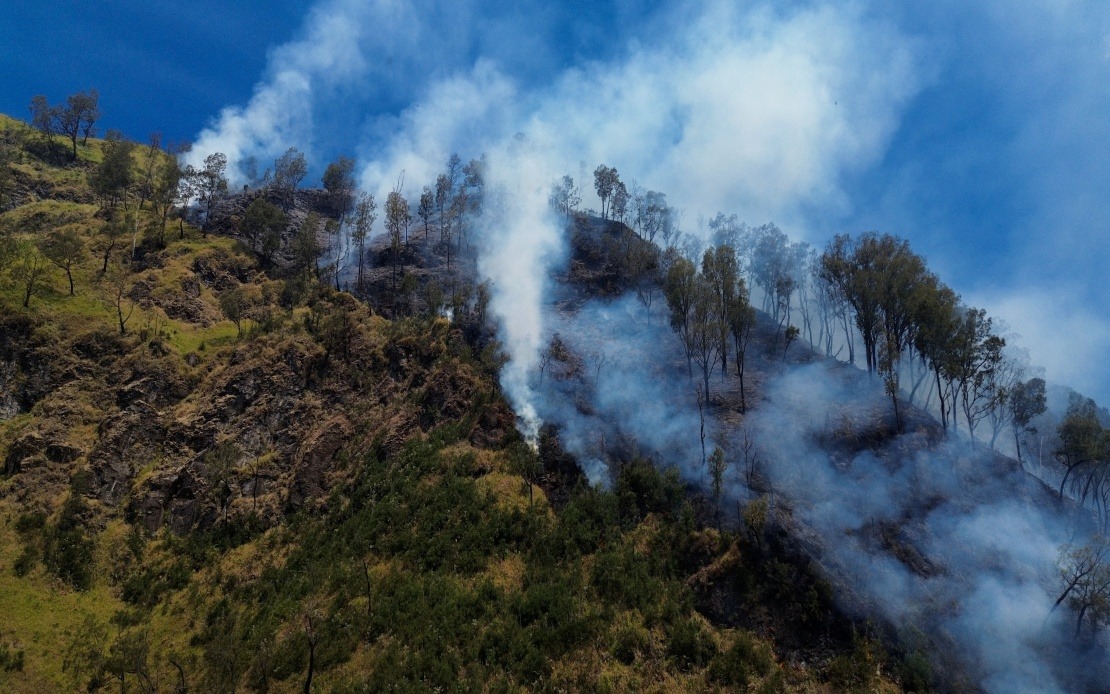
Indonesia's iconic Mount Bromo has been entirely closed to tourists as authorities battle a persistent wildfire sweeping through the Bromo Caldera region in East Java. The Bromo Tengger Semeru National Park management announced the comprehensive shutdown of visitor access on Saturday evening, effective from 10pm, marking a significant disruption to one of Southeast Asia's most visited volcanic attractions. The decision reflects the escalating threat posed by the spreading blaze, which has forced officials to prioritise emergency response operations and safeguard the thousands of tourists who normally flock to the site annually.
The closure encompasses all five primary access points that funnel visitors into the national park system. These include the Cemorolawang entrance in Probolinggo Regency, the Wonokitri gateway in Pasuruan Regency, and three separate access routes through Malang Regency—Jemplang and Coban Trisula—alongside the Senduro entry point in Lumajang Regency. This multi-pronged approach to sealing the park underscores the geographical spread of the fire and the difficulty authorities face in containing it across such a vast and ecologically sensitive landscape. For tourists holding pre-booked tickets purchased through the park's online system, park officials have offered flexibility through rescheduling arrangements or full refunds, attempting to balance commercial impact with public safety imperatives.
The wildfire itself ignited on Monday and has since consumed an estimated 176.20 hectares across Probolinggo and Malang regencies, according to data released by Indonesia's National Disaster Management Agency (BNPB). By Saturday night, active hotspots remained visible despite intensive firefighting operations, with smoke continuing to billow from affected zones. The persistence of these hotspots suggests the fire has penetrated deep into vegetation reserves and may be sustained by underground root systems or peat layers, a common challenge in volcanic terrain where organic matter accumulates in dense concentrations. Weather patterns have compounded the difficulty, with moderate winds reported across the region, potentially carrying embers to unburned areas and complicating suppression efforts.
Indonesian authorities have mobilised significant aerial resources to tackle the blaze, deploying two helicopters equipped with water-dropping capabilities. Each aircraft can carry approximately 1,000 litres of water per sortie, enabling repeated bombing runs across the affected zones. While such aerial intervention represents a substantial commitment of resources, the terrain's complexity—steep slopes, volcanic rock formations, and dense vegetation—limits the effectiveness of traditional ground-based firefighting teams. The combination of helicopter support and ground crews represents a multi-layered response strategy, yet the ongoing presence of hotspots suggests that suppression operations remain insufficient to fully contain the fire's advance.
The Mount Bromo closure creates significant economic and tourism implications for the broader East Java region. The volcano attracts substantial international and domestic tourism flows, with visitors drawn to its distinctive landscape of ash plains, volcanic craters, and surrounding mountains. The park's shutdown eliminates revenue streams for local communities dependent on tourism infrastructure, from accommodation providers to guide services and merchandise vendors. Hotel bookings, tour operator schedules, and transport arrangements across the region face disruption, rippling through local economies that have become increasingly reliant on consistent visitor numbers.
The investigation into the fire's origins remains ongoing, with authorities yet to determine whether the blaze was deliberately set, resulted from unattended campfires, agricultural burning practices that escaped control, or other natural or human-caused factors. Establishing causation carries important implications for future prevention strategies and potential accountability. Mount Bromo's popularity as a trekking destination means substantial numbers of visitors traverse the caldera and surrounding forests, and preliminary investigation may focus on whether visitor activities inadvertently triggered the conflagration.
Concurrently, Indonesian authorities have battled a separate forest fire affecting Mount Rinjani National Park in East Lombok Regency, located some distance away on the neighbouring island of Lombok. This blaze consumed approximately 30 hectares across the Sembalun Resort zone before being brought under control around 1:30am on Saturday. The fire had originated around 8pm on Friday, meaning suppression teams achieved containment within roughly five hours—a markedly faster response than the Bromo situation. This secondary fire outbreak during the same period suggests broader environmental and climatic conditions favouring combustion across East Java and Lombok, potentially linked to seasonal patterns, drought conditions, or atmospheric factors creating heightened fire danger.
The closure of Mount Bromo represents a cautionary moment regarding vulnerability of Indonesia's natural attractions to environmental hazards. Climate change patterns have extended dry seasons and intensified heat conditions across archipelago regions, creating conditions where vegetation becomes increasingly combustible. For Malaysian and regional travellers, the situation underscores the importance of checking entry restrictions before planning visits to Indonesian national parks. Tour operators and travel agencies throughout Malaysia will need to reassess itineraries featuring Mount Bromo while fire suppression continues.
The incident also highlights the preparedness challenges facing park management across the region. While Indonesia possesses disaster response capabilities and aerial resources, the speed with which fires can spread through volcanic terrain with dense vegetation cover exceeds suppression capacity in many scenarios. Southeast Asian nations sharing similar geography—including Malaysia, with its national parks and protected forest areas—face comparable fire risks, particularly during extended dry periods. Knowledge exchange and cooperative emergency response frameworks between regional nations could enhance collective capacity to manage such crises.
As firefighting operations continue, the park authority has not announced a timeline for reopening Mount Bromo to visitors. The decision will depend on suppression progress, ecological assessment of affected zones, and confirmation that fire risks have diminished to acceptable levels. Indonesian officials' commitment to maintaining closure until conditions stabilise reflects lessons learned from previous incidents where premature opening resulted in additional safety incidents. For tourism stakeholders and international visitors dependent on access to this volcanic icon, extended uncertainty regarding reopening dates presents ongoing challenges to forward planning and revenue recovery.

