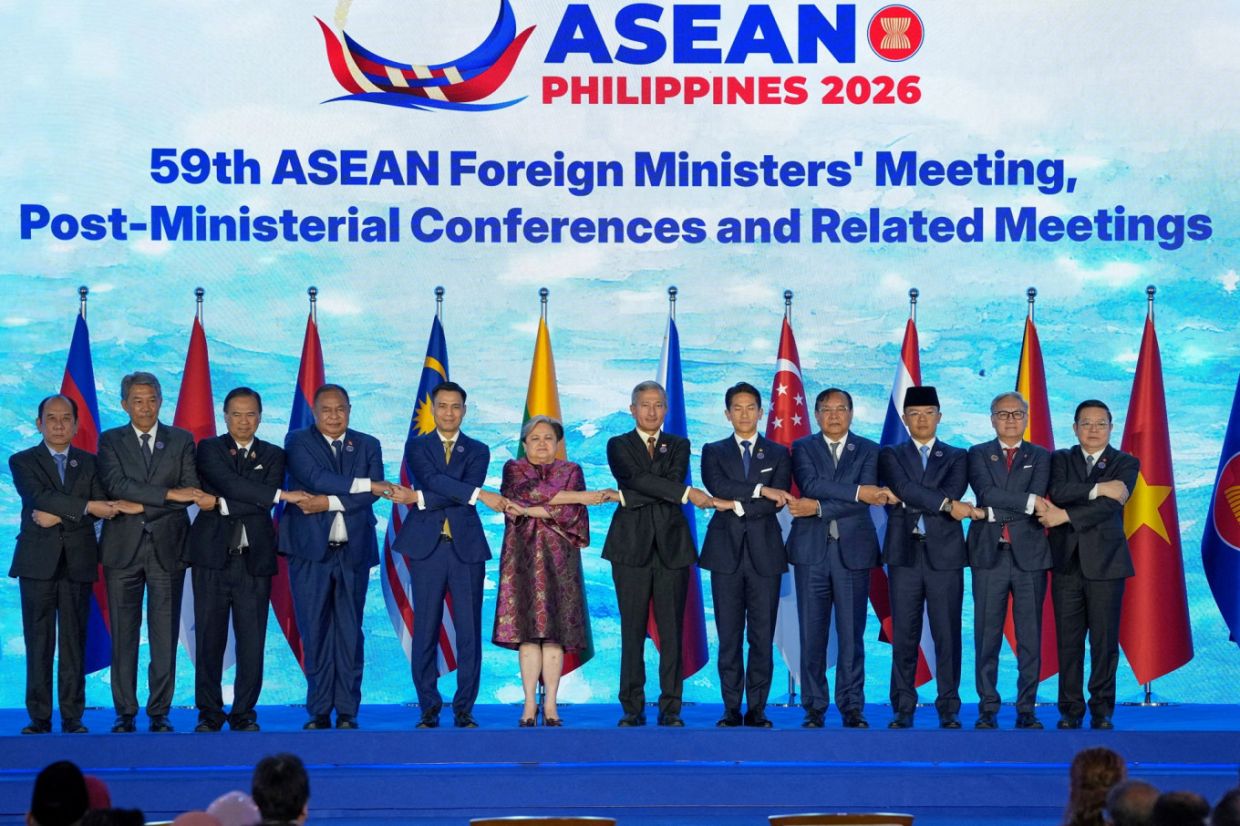
Indonesia has issued a pointed challenge to Asean, urging the regional bloc to move beyond diplomatic rhetoric and convert its carefully crafted pledges into measurable achievements through binding agreements and strengthened partnerships with external powers. The appeal underscores deepening anxieties within Southeast Asia's premier multilateral institution about whether it can maintain relevance and cohesion in the face of mounting international pressures and internal divisions that threaten to undermine its influence. The warning came during Tuesday's closed-door discussions in Manila, where foreign ministers from all 11 Asean member states convened to establish unified positions before engaging their major dialogue partners on Wednesday.
Indonesian Foreign Minister Sugiono framed the moment as a watershed for the bloc's credibility, insisting that recent cascading global crises—particularly the Middle East conflict—have exposed the urgent necessity for Asean to anticipate and collectively manage external shocks. At the plenary session of the 59th Asean Foreign Ministers Meeting, Sugiono reminded his counterparts that the bloc had demonstrated strategic ambition when it amended its charter in May to welcome Timor-Leste as its eleventh member. Yet this expansion, he suggested, now demands proof that Asean possesses the operational capacity and unified will to translate foundational principles into concrete regional outcomes that benefit all member states and stabilise Southeast Asia.
The timing of Indonesia's intervention reflects mounting concern that the Middle East conflict is reshaping Asean's strategic equation in ways that could permanently weaken the bloc's negotiating position with major powers. The crisis has triggered widespread disruptions to energy supplies flowing through the Strait of Hormuz, forcing several Asean economies to accelerate sourcing alternatives from China. Trade data reveals that the Philippines, this year's Asean chair, more than doubled its imports of Chinese solar panels in the first five months of 2024 compared with the equivalent 2023 period—a tangible indicator of how quickly the region is recalibrating its economic dependencies. This shift carries profound implications for Asean's leverage in ongoing discussions with Beijing, potentially eroding the collective bargaining power that member states have been gradually building across numerous frameworks.
The divergence between Asean's stated principles and its negotiating reality crystallises most acutely around the Code of Conduct for the South China Sea, a document that diplomats have been negotiating for nearly a quarter-century without resolution. Sugiono stressed that completing this long-delayed framework represents a litmus test of Asean's ability to deliver tangible governance improvements in one of the world's most contested waterways, where competing territorial claims and military buildups create persistent flashpoints. He emphasised that Southeast Asia's populations have waited two decades for rules that would establish predictable, rights-based management of maritime resources and sovereignty questions, and that further delays would only deepen regional frustration with multilateralism as an effective problem-solving mechanism.
The joint statement issued by Asean ministers following their closed plenary acknowledged the Middle East conflict's direct economic consequences for the region, including threats to the safety of Southeast Asian workers abroad and disruptions to supply chains that many economies depend upon for growth. The statement revealed that member states have begun implementing separate and collective measures to cushion their populations from the fallout, though it offered limited detail about whether these initiatives reflect genuine regional coordination or merely parallel national responses. This distinction matters considerably for Asean's international standing: coordinated regional action signals institutional coherence, while fragmented national responses undermine the premise that Asean functions as a meaningful collective actor.
Myanmar's protracted instability returned to the diplomatic agenda on Tuesday, with ministers convening a dedicated session to assess progress on the Five-Point Consensus, Asean's carefully negotiated roadmap for restoring civilian governance in Naypyidaw. The continued prominence of Myanmar discussions reveals how thoroughly this single member state's internal crisis has consumed Asean's diplomatic energy and complicated its ability to focus on external relationships. While Indonesia and other concerned capitals have recently intensified engagement with Myanmar's military government, fundamental disagreements among member states about appropriate pressure tactics and acceptable timelines have prevented the emergence of a unified negotiating strategy. Philippine Foreign Secretary Theresa P. Lazaro indicated that ministers had agreed to review the mechanisms through which Asean measures progress toward the Five-Point Consensus and had discussed potential reforms to the bloc's annual special envoy arrangement, with completion targeted for the November leaders' meeting.
The structural constraints limiting Asean's effectiveness have become increasingly apparent as the bloc attempts simultaneously to manage intra-regional disputes, coordinate responses to external crises, and maintain productive engagement with major powers including the United States, China, and Russia. The need to accommodate the preferences of all eleven member states—whose economies range from least-developed to upper-middle income, and whose geopolitical alignments span the spectrum from close Western partnerships to deep Chinese integration—creates inherent tensions that frequently prevent decisive collective action. When external shocks such as the Middle East conflict emerge, they often accentuate these underlying divisions rather than forge consensus, as member states prioritise immediate national interests over long-term institutional strengthening.
Indonesia's call for Asean to demonstrate credibility through delivered results carries particular weight given Jakarta's traditional role as the bloc's anchor institution and normative leader. As the largest Asean economy and most populous member, Indonesia has historically invested considerable diplomatic capital in strengthening Asean's autonomy and institutional capacity. Sugiono's emphatic framing of the current moment as a test reflects genuine concern that without tangible progress on flagship initiatives such as the South China Sea code, the Myanmar peace process, and economic resilience mechanisms, Asean risks declining into an increasingly ornamental institution that convenes regularly but achieves little of substance.
The Wednesday meetings with Asean's major dialogue partners will test whether the bloc has successfully developed coherent positions on the security and economic dimensions of the Middle East crisis, or whether internal divisions have prevented the emergence of unified approaches. The participation of the United States, China, and Russia—powers with competing regional interests and vastly different stakes in Asean's stability—will further complicate discussions, as member states navigate pressures to align with particular external actors while maintaining the fiction of regional consensus. The outcome will reveal whether Indonesia's latest call for institutional accountability resonates sufficiently to stiffen Asean's collective resolve, or whether the bloc continues its familiar pattern of issuing ambitious statements while member states pursue divergent national strategies.
For Malaysian observers, these developments carry particular relevance given Kuala Lumpur's prominent role in shaping Asean mechanisms and its substantial economic interests in regional stability and South China Sea governance. Malaysia's positioning as a middle power with its own South China Sea claims, its integration into Chinese supply chains, and its diplomatic relationships spanning the US-China divide places it at the nexus of Asean's internal tensions and external pressures. The success or failure of Asean's efforts to crystallise the Code of Conduct and manage the Middle East crisis's spillover effects will significantly influence Malaysia's own strategic options and the broader regional order within which Southeast Asian nations must navigate an increasingly multipolar international system.

