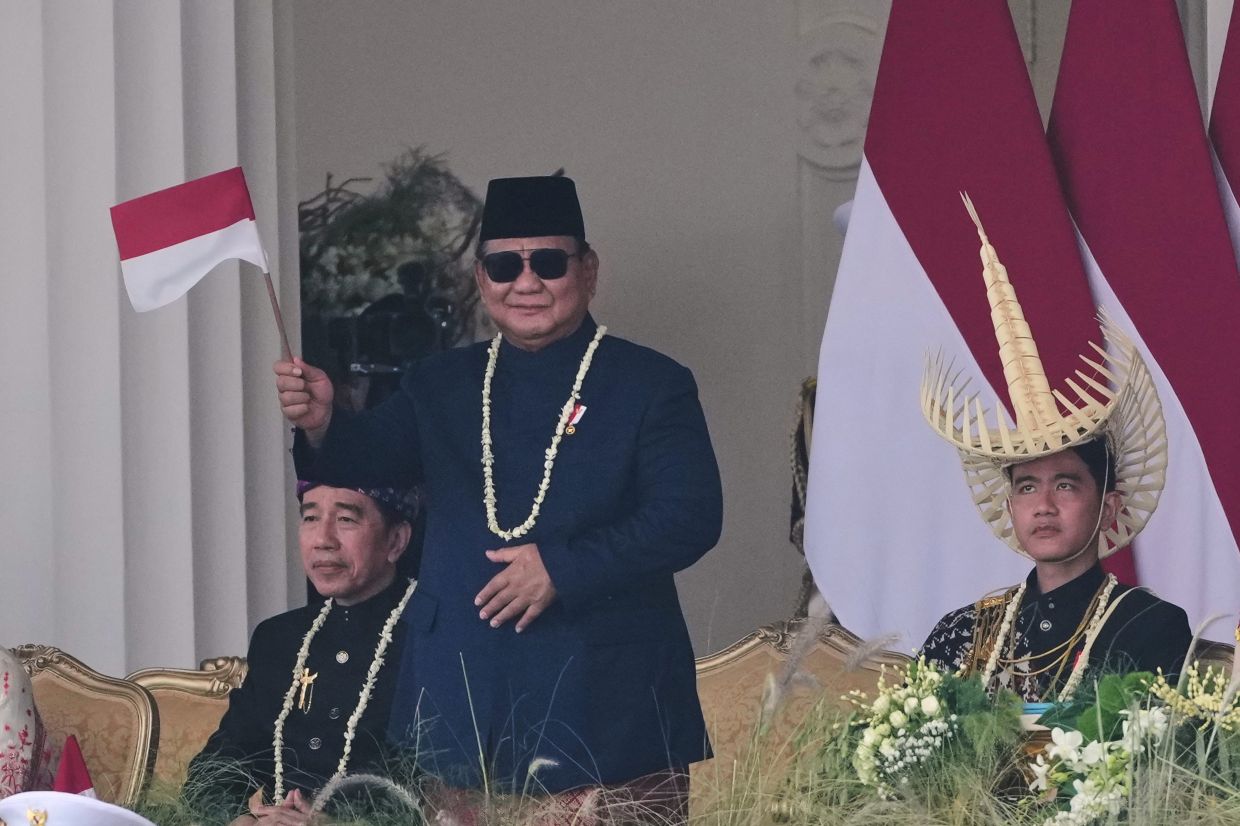
President Prabowo Subianto presided over Indonesia's 81st Independence Day commemoration at Merdeka Palace in Jakarta on Monday, an occasion tinged with solemnity as the nation grappled with the aftermath of a catastrophic earthquake that has devastated communities in East Nusa Tenggara. The ceremony, held against a backdrop of ongoing disaster response operations in Flores, underscored the dual challenge facing the government: honouring the nation's founding moment while simultaneously addressing an unfolding humanitarian crisis that has claimed dozens of lives and displaced thousands from their homes.
Prabowo, attired in formal traditional dress comprising a navy beskap, black peci, and a jasmine garland, conducted the flag-hoisting ceremony in his role as the nation's chief official. The proceedings included the ceremonial transfer of a replica of the red-and-white flag and the original Proclamation text from the National Monument to the presidential palace, accompanied by an elaborate procession featuring 114 cavalry troops and 45 military police officers on motorcycles. The spectacle of independence day pageantry—featuring arts performances and a gilded carriage—proceeded as planned, yet the atmosphere remained notably more restrained than typical celebrations.
The earthquake that struck Flores early Saturday morning has emerged as one of Indonesia's deadliest natural disasters in recent years. The initial tremor registered 7.7 in magnitude and was followed by nearly 1,000 aftershocks of varying intensities, according to the National Disaster Mitigation Agency (BNPB). The scale of displacement has been extraordinary, with approximately 5,400 residents fleeing their homes, while more than 130 people sustained injuries, predominantly involving fractures and bone breaks. Hundreds of houses and buildings sustained damage, creating immediate shelter and supply challenges across the island.
The seismic activity has shown no signs of abating. On the very morning of the independence ceremony in Jakarta, another significant earthquake measuring 5.8 in magnitude struck offshore from the island, originating at a depth of approximately 10 kilometres with its epicentre situated roughly 39 kilometres north of Nusa Tenggara Timur, as confirmed by the Meteorology, Climatology and Geophysics Agency (BMKG). This continuing tremor activity complicates rescue and recovery operations, forcing emergency responders to exercise heightened caution as aftershocks threaten already-compromised structures and complicate access to affected areas.
During the independence day ceremony, President Prabowo observed a moment of silence to honour the nation's heroes and to acknowledge the suffering endured by Indonesians affected by the disaster. This tribute represented an attempt to balance the celebratory aspects of independence commemoration with recognition of contemporary national challenges. The president's gesture signalled that, despite the ceremonial occasion, national consciousness remained focused on the immediate needs of disaster victims and the ongoing rescue efforts.
The governmental response to the earthquake has necessitated significant resource allocation and ministerial focus. State Secretary Prasetyo Hadi announced that several key cabinet members were absent from the Jakarta ceremony specifically because they had travelled to Nusa Tenggara Timur to oversee disaster response coordination. Among those working in the field were Coordinating Human Development Minister Pratikno, Home Minister Tito Karnavian, Public Works Minister Dody Hanggodo, and Deputy Health Minister Benjamin Paulus Octavianus. Their presence in the disaster zone reflected the administration's prioritization of immediate relief and reconstruction efforts over ceremonial attendance.
Prasetyo articulated the government's position that independence day observance must be reconciled with humanitarian obligations. His statement that "as we celebrate Independence Day, we also need to ensure that our fellow citizens who are affected by the disaster are being cared for" highlighted the tension between national commemoration and immediate crisis response. This framing suggests that the Prabowo administration views disaster relief not as secondary to state ceremonies but as integral to the meaning of national independence itself.
When questioned about the possibility of President Prabowo travelling personally to Flores to inspect conditions and meet with affected communities, Prasetyo declined to confirm any firm plans. His response—that the government would first assess the situation through the ministers already deployed there before making decisions about a presidential visit—suggested a pragmatic approach prioritizing the gathering of accurate information before the president's presence. Such restraint may reflect concern about interfering with ongoing rescue operations or drawing resources away from emergency response.
For Southeast Asian observers and the Malaysian region, Indonesia's handling of this dual challenge carries significance. The coordination between ceremonial obligations and disaster response demonstrates how major nations balance symbolic governance with practical crisis management. Indonesia's earthquake frequency and the resulting challenges in evacuation and recovery illuminate the shared geological vulnerabilities affecting the region. Moreover, the deployment of multiple cabinet ministers to a disaster zone suggests institutional mechanisms for rapid response that regional governments continue to develop and refine.
The earthquake's impact extends beyond immediate casualties and structural damage. The displacement of 5,400 individuals raises longer-term questions about reconstruction, livelihood restoration, and psychological support for traumatized communities. In Flores, an island with limited economic infrastructure compared to Java, such disasters create cascading economic effects that ripple through local agricultural and fishing sectors. The coordination required between national government ministries and provincial authorities underscores the institutional complexity of disaster response in a geographically dispersed archipelago nation.
As Indonesia marked its independence milestone, the concurrent earthquake crisis served as a reminder that national sovereignty encompasses not merely political independence but also the state's capacity to protect and support its citizens during natural disasters. The government's evident mobilization of resources and senior officials to Flores suggested recognition of this responsibility. The coming weeks will reveal whether the initial response translates into effective medium-term reconstruction and whether communities can rebuild before the monsoon season potentially exacerbates structural vulnerabilities in damaged buildings.

