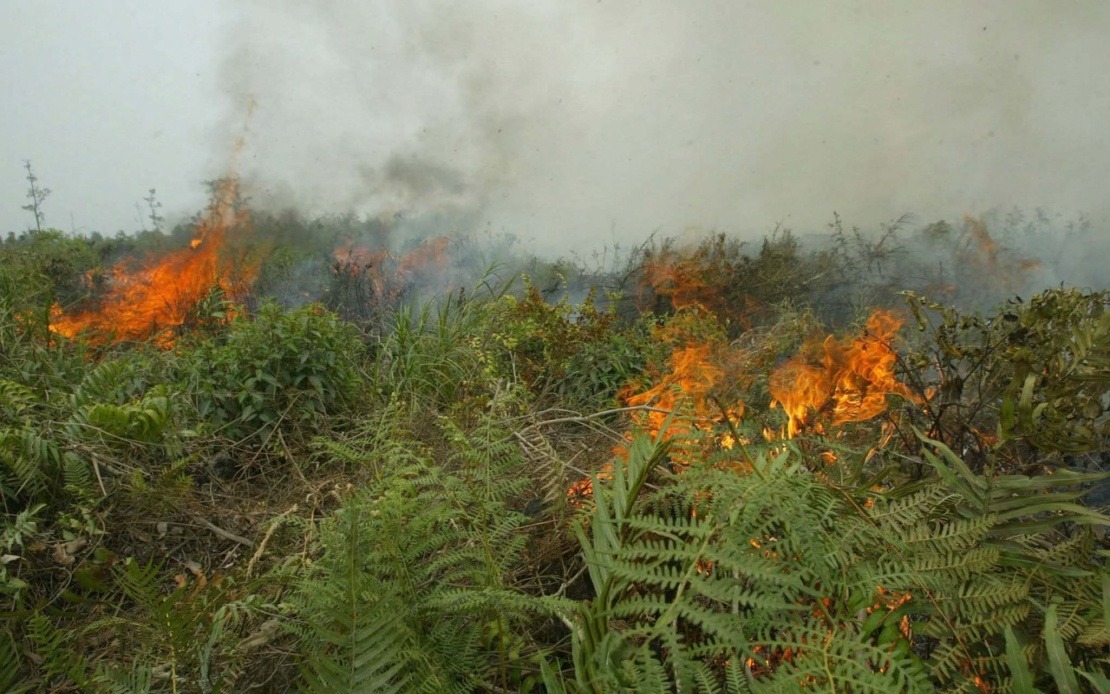
Indonesia is confronting an intensifying environmental crisis as forest and land fires sweep across its eastern regions, with West Kalimantan emerging as a critical flashpoint. According to the National Disaster Mitigation Agency (BNPB), hotspots in West Kalimantan nearly doubled to 7,377 in late August, representing a dramatic surge of 3,553 recorded instances. This escalation underscores the vulnerability of Indonesia's vast forest estates to seasonal fire outbreaks and signals mounting pressure on disaster management systems already stretched thin across multiple provinces.
The situation in West Kalimantan reflects broader instability across the Kalimantan region. While Central Kalimantan recorded a modest decline in hotspots, falling by 147 to 5,244, the number of active fire spots paradoxically increased by 16 to 72, suggesting that fires, though fewer in geographic distribution, may be burning with greater intensity or duration. South Kalimantan presented a similarly mixed picture, with hotspots decreasing by 405 to 504 yet fire spots simultaneously rising by 33 to 55. These conflicting trends complicate assessment and response strategies, as officials must balance resource allocation between regions showing different fire signatures.
Visibility conditions have deteriorated significantly in affected areas, with measurements in West Kalimantan dropping below one kilometre—a threshold that poses serious risks to aviation, transportation, and daily life. Such haze conditions typically indicate substantial smoke concentrations and reflect fires of considerable scale. The atmospheric degradation extends beyond mere visibility concerns, penetrating residential areas and amplifying the public health dimension of the crisis. For Malaysian readers particularly familiar with transboundary haze episodes, the severity of current conditions carries troubling echoes of previous years when regional smoke events disrupted life across Southeast Asia.
Sumatra likewise struggles with fire escalation, though patterns vary significantly across provinces. South Sumatra recorded a concerning increase of 209 hotspots to reach 1,013 total instances, suggesting conditions are worsening in this traditionally fire-prone region. Conversely, Riau and Jambi provinces demonstrated improvement, with hotspots declining significantly and fire spot counts dropping across both locations. This geographic variability reflects the complex interplay between weather patterns, land-use practices, and fire prevention efforts, making uniform solutions difficult to implement.
The humanitarian consequences of these fires are substantial and growing. Nearly 5.5 million residents across Sumatra and Kalimantan face ongoing exposure to smoke and air quality degradation. Deputy Health Minister Prof Dante Saksono Harbuwono highlighted that acute respiratory infection cases totalled approximately 13,500 cumulatively across July and August, with 4,082 individuals still receiving treatment as of late August. The trajectory suggests conditions are worsening compared to the previous year, indicating that current response measures have not stemmed the health burden. This epidemiological shift carries particular relevance for Southeast Asian nations concerned about transboundary air pollution and its cascade effects on public health systems.
Responding to enforcement gaps, Indonesia's Environment Ministry has identified 42 companies operating within fire-affected concession areas for potential regulatory action. Environmental Law Enforcement Deputy Rizal Irawan explained that satellite hotspot data was systematically overlaid with concession maps to generate this initial inventory. Of these companies, 19 are undergoing field verification to establish whether fires originated through deliberate clearing or resulted from inadequate fire management protocols. The remaining firms face inspection in subsequent phases. This enforcement approach represents an attempt to hold corporate stakeholders directly accountable for fire incidents within licensed territories, though implementation challenges and resource constraints often limit effectiveness.
Indonesia's legal framework imposes strict liability on concession holders regardless of intent, meaning companies bear responsibility whether fires were deliberately set or accidentally ignited through negligent management. Administrative and civil sanctions represent the enforcement arsenal, ranging from fines to operational restrictions. However, the gap between regulatory provisions and consistent application remains significant. Previous episodes have demonstrated that corporate accountability mechanisms frequently founder when faced with complex forensic investigation requirements or when companies exploit procedural ambiguities. The flagging of 42 companies thus represents only a portion of potential violators, with many infractions likely evading detection entirely.
Regional coordination has emerged as a central element of Indonesia's response strategy, reflecting recognition that transboundary haze knows no political boundaries. Indonesian officials have engaged Malaysia and Singapore through ASEAN frameworks, with ministerial-level discussions occurring in Bali following the latest fire escalation. Such diplomatic engagement proves essential given the interconnected atmospheric systems across Southeast Asia, whereby Indonesian fires generate haze affecting neighbouring economies and public health systems. For Malaysia specifically, these coordination mechanisms provide mechanisms to influence Indonesian fire prevention policies and secure advance notice of deteriorating conditions likely to impact the peninsula.
Prevention infrastructure has expanded substantially through the Fire Care Community programme, which now encompasses 95 established groups comprising 1,425 trained personnel distributed across six high-risk provinces in Sumatra and Kalimantan. An additional 35 community groups are slated for establishment, suggesting authorities recognise that grassroots fire prevention capacity requires continuous investment. Concurrently, Indonesia notified 2,226 companies last year to prepare fire prevention and response capabilities. Though approximately 80 per cent subsequently confirmed readiness, the remaining 20 per cent—roughly 445 companies—either failed to respond or did not complete preparations. This compliance gap represents a vulnerability, as inadequately prepared operations remain susceptible to uncontrolled fire outbreaks.
The underlying drivers of fire escalation remain incompletely addressed despite these multi-faceted responses. Seasonal drought conditions, agricultural clearing practices, inadequate fire monitoring in remote areas, and weak enforcement against illegal burning collectively create an environment where fires proliferate. Development pressures on forest concessions and peatlands generate incentives for fire-based land clearing, while detection and prevention capacity frequently cannot match the scale of potential ignition sources. Unless these structural factors receive direct attention—through stronger peatland protection, stricter monitoring of concession operations, and enhanced investment in fire detection technology—seasonal fire surges will likely persist as a recurring crisis.

