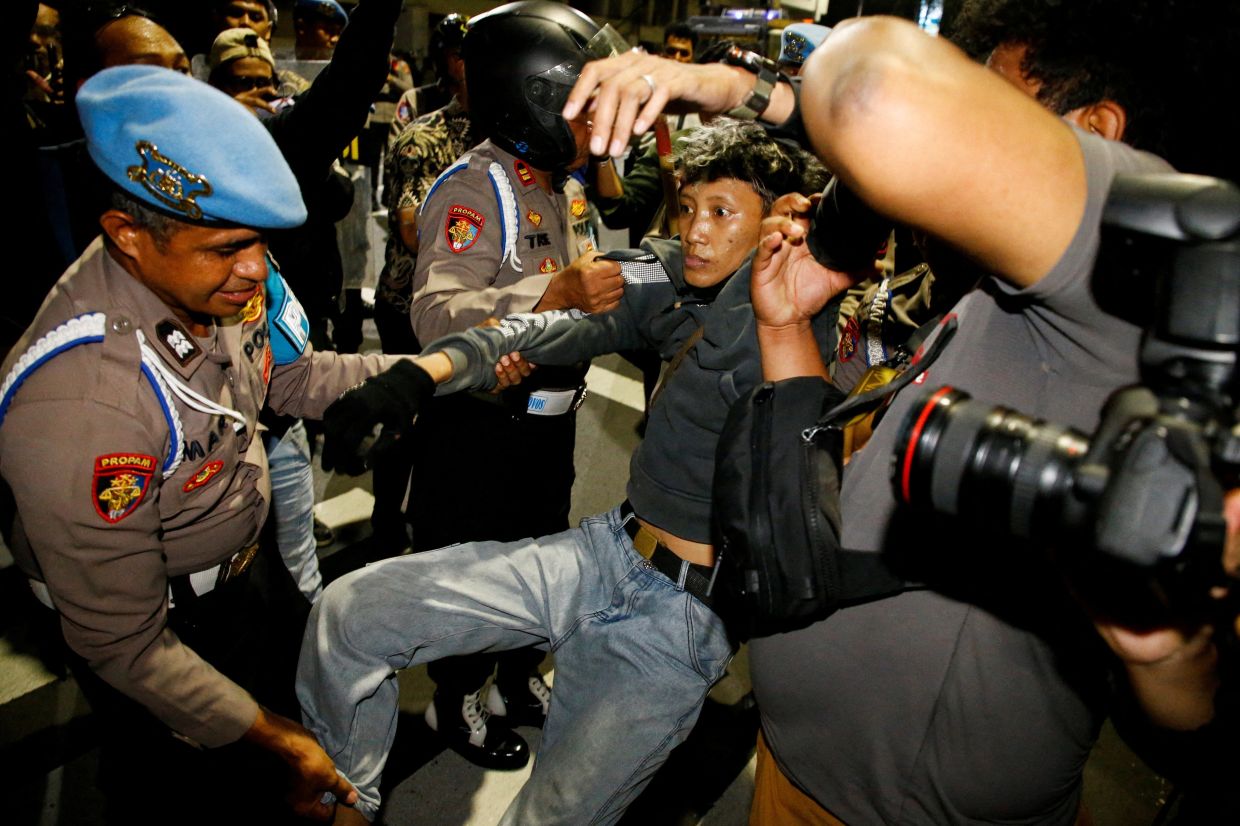
Indonesian police have formally charged four individuals in connection with an anti-government demonstration held in Surabaya, the country's second-largest city, marking an escalation in authorities' response to growing public discontent over economic policy and social programme failures. The charges emerged on Sunday as law enforcement detailed their handling of Friday's rally, which drew approximately 100 participants to the vicinity of a government complex to voice opposition against a controversial fuel price adjustment and a troubled national meal subsidy initiative.
The protest in Surabaya reflected deeper anxieties spreading across Indonesia's major urban centres this month, as the government implemented a significant tariff adjustment on non-subsidised petrol, increasing prices by roughly 30 per cent to ease mounting fiscal strain. This policy move, undertaken amid international energy market volatility stemming from Middle Eastern geopolitical tensions, has intensified economic hardship for ordinary Indonesians already grappling with inflation and stagnant wages. For a nation that ranks as South-East Asia's largest economy yet remains paradoxically dependent on fuel imports despite domestic oil reserves, the price surge highlighted the contradiction between resource wealth and economic vulnerability.
According to Surabaya police chief Luthfie Sulistiawan, some demonstrators escalated their actions by deploying firecrackers and stones toward security forces, prompting police intervention described as "firm actions" to break up the gathering. The confrontation resulted in the initial detention of 24 individuals on Friday, though most were subsequently released without facing prosecution. The decision to charge four people specifically for property damage and assault against law enforcement officers signals an intent to deter future protest participation, even as the charges represent a selective judicial response compared to the broader arrest sweep.
Simultaneously, authorities initiated investigations into six additional detainees after toxicological screening revealed drug-related substances in their systems, potentially expanding the legal exposure for some participants. This parallel investigative track demonstrates how protest participation can expose individuals to multiple layers of state scrutiny and vulnerability, a pattern that may discourage future civic engagement among younger demographics.
The Surabaya demonstration was not an isolated incident but rather one manifestation of nationwide mobilisation primarily concentrated among student populations centred in Jakarta, the capital. These broader protests have targeted both the fuel price restructuring and the government's signature free meal initiative, a multi-billion-dollar scheme initially promoted as a comprehensive solution to childhood malnutrition across Indonesia's lower-income communities. The initiative represented a flagship social welfare commitment, intended to address persistent nutritional deficiencies while supporting domestic agricultural sectors.
However, the programme has deteriorated into a public relations catastrophe and governance failure. Large-scale food poisoning incidents have sickened tens of thousands of programme participants since its inception, transforming what should have been a humanitarian achievement into a health crisis. Accusations of financial mismanagement and corruption have compounded public frustration, suggesting that allocated resources failed to reach intended beneficiaries or were diverted through fraudulent channels. These allegations have fundamentally undermined public trust in government capability to execute large-scale social programmes.
The government's partial suspension of the meal scheme represents a tacit acknowledgement of programme dysfunction, yet this remedial step has come only after substantial reputational damage and documented public health consequences. For Malaysian observers, the Indonesian experience offers a cautionary illustration regarding the complex execution requirements for nationwide subsidised food initiatives and the political vulnerability created when welfare programmes encounter logistical or integrity failures.
The convergence of fuel price protests and meal scheme opposition reveals underlying economic anxieties among Indonesia's younger generations, who face diminished purchasing power and reduced confidence in institutional performance. Students, frequently mobilised by concerns about cost-of-living pressures and service delivery failures, represent an important political constituency whose activism carries implications for upcoming electoral cycles and policy formation.
The police response, involving selective prosecution of protest participants, reflects broader governance tensions between maintaining public order and permitting legitimate expression of political grievance. By charging specific individuals while releasing the majority of detainees, authorities attempt to thread a delicate needle between demonstrating resolve against perceived lawlessness and avoiding the international criticism that comprehensive protest suppression might provoke. This calibrated approach suggests concern about Indonesia's regional standing and democratic credentials within South-East Asia.
For regional observers including Malaysia, Indonesia's unfolding political dynamics merit attention given the two nations' economic interdependencies, shared ASEAN membership, and comparable challenges regarding subsidy sustainability and welfare programme implementation. How Jakarta manages its current fiscal pressures and social discontent will establish precedents relevant to other governments contemplating similar economic restructuring or social programme expansions.

