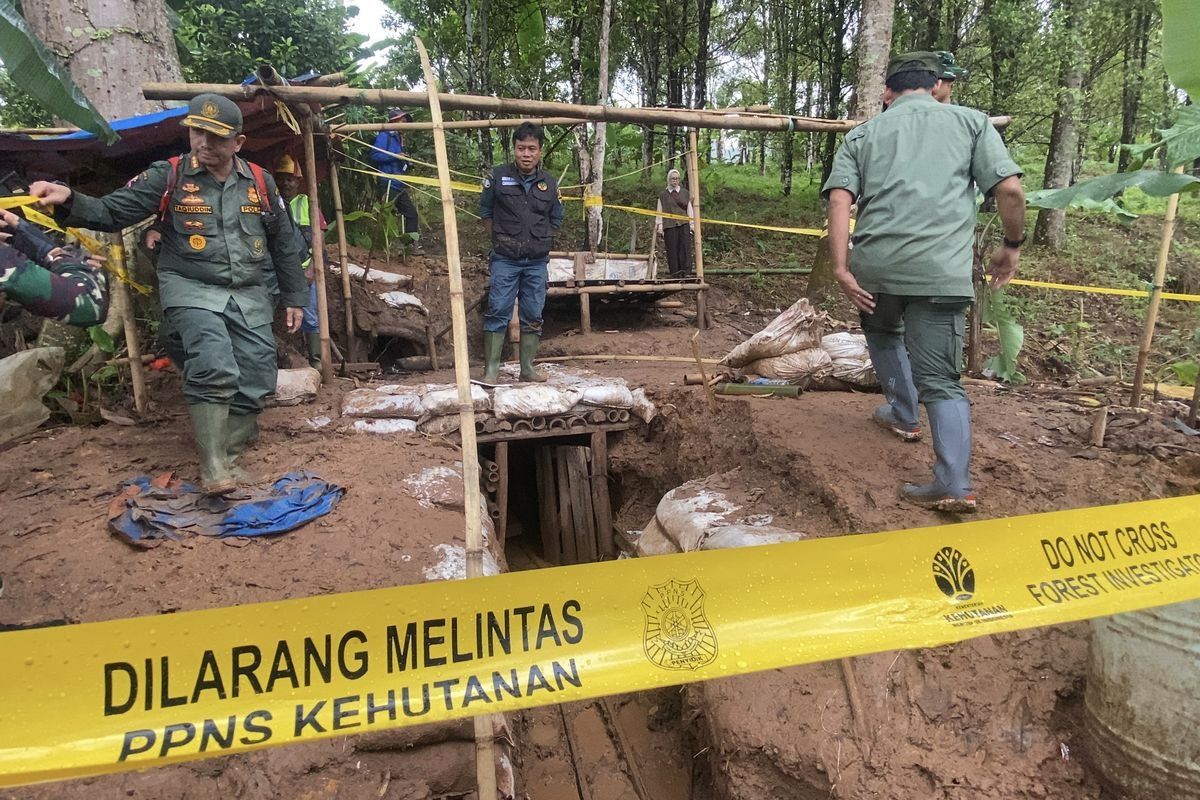
Indonesia's energy ministry has moved to prosecute 24 foreign nationals accused of orchestrating an extensive illegal gold mining enterprise in the Maluku region, marking the latest in a series of enforcement actions against unauthorised extraction operations involving overseas workers. The charges come as the Jakarta government intensifies its crackdown on unregulated mining that siphons resources and undermines legitimate operations throughout the archipelago. Officials from the energy ministry announced the charges on Thursday, indicating that the suspects face potential sentences of up to five years imprisonment if convicted under Indonesian mining law.
According to energy ministry official Jeffri Huwae, the foreign suspects are alleged to have erected substantial infrastructure to support the illicit mining venture around the Gunung Botak locality in Maluku. The construction work included access roads, processing facilities, and related installations designed to facilitate large-scale gold extraction and refinement. This systematic approach to building out mining infrastructure suggests a well-organised operation rather than sporadic artisanal extraction, indicating that the suspected illegal miners had access to considerable financial resources and technical expertise. The scale of such infrastructure development would have required coordination and planning across multiple sites within the region.
State news agency Antara previously reported that the operation involved 24 Chinese nationals working under the auspices of a local company registered as PT Harmoni Alam Manise, which authorities apparently used as a front for the illegal activities. The involvement of a locally-registered entity suggests that the foreign workers may have had Indonesian partners facilitating their access to mining areas and providing operational cover. This pattern reflects a broader challenge across Southeast Asia, where illegal mining networks frequently operate through domestic intermediaries who handle permits, land access, and relationships with local officials. The arrangement allowed the foreign workers to maintain operational presence while distributing culpability across multiple parties.
The enforcement action has produced mixed results in terms of apprehending suspects. While authorities have detained 12 of the charged foreigners within Indonesian custody, the remaining 12 have evaded capture and are believed to remain outside Indonesia's territorial jurisdiction. This geographic dispersal complicates prosecution efforts and demonstrates the transnational dimension of organised illegal mining in Southeast Asia. The suspects at large likely fled through maritime routes or overland corridors to neighbouring countries, illustrating the difficulty regional law enforcement faces in pursuing perpetrators across porous borders. Their departure may signal that the operation had contingency plans established before authorities initiated enforcement.
Indonesian prosecutors have also charged two domestic citizens alongside the foreign nationals, indicating that local involvement extended beyond providing corporate registration and land access. These Indonesian suspects potentially held supervisory roles, coordinated logistics, or managed relationships with local communities and administrative officials. The inclusion of domestic charges reflects a recognition that illegal mining networks depend fundamentally on local participation and complicity. Without cooperation from Indonesian citizens who understand local terrain, governmental procedures, and community dynamics, foreign operators would struggle to establish and maintain mining operations at scale.
The charges represent the application of Indonesia's anti-mining regulations, which impose substantial criminal penalties to deter unauthorised extraction. The five-year maximum sentence is intended to send a strong deterrent message, though actual sentences typically range considerably lower depending on the extent of cooperation, amount of gold extracted, and degree of environmental damage caused. The ministry declined to disclose either the nationalities of individual suspects or the volume of gold allegedly produced through the operation, citing ongoing investigative sensitivity. Such information typically becomes available only through court proceedings, which may reveal additional details about the operation's scale and yield.
This enforcement action follows a similar case in Papua, Indonesia's easternmost region, where police arrested four Chinese nationals in Senggi district the previous year. That incident demonstrated that illegal mining involving foreign workers has emerged as a recurring enforcement challenge across multiple Indonesian provinces. The geographic spread of such operations from Papua to Maluku suggests a broader trend wherein overseas mining syndicates target resource-rich regions throughout eastern Indonesia where monitoring capacity may be more limited than in western areas. The repeat pattern indicates that previous enforcement actions have not fully deterred illegal mining entrepreneurs from attempting similar ventures.
The broader context of illegal mining in Indonesia reflects substantial economic incentives that attract both foreign and domestic actors despite escalating legal consequences. Gold prices remain elevated globally, creating profitable margins even after accounting for the costs of bribing officials, establishing front companies, and managing security risks. The remoteness of many mining locations in eastern Indonesia, combined with challenging terrain and limited government presence, offers operational advantages that attract illegal miners. Communities in resource-rich regions often face pressure to tolerate illegal operations due to employment opportunities and cash flows that exceed income from legitimate formal sector employment.
For Malaysia and Southeast Asian nations, the Indonesian case underscores shared challenges in combating transnational illegal mining networks that exploit porous borders and weak enforcement coordination. Malaysian authorities have similarly confronted illegal mining in Pahang and Perak involving both domestic and foreign workers, indicating that the pattern extends across the region. The involvement of Chinese nationals in operations across multiple Indonesian provinces suggests sophisticated international supply chains where overseas workers are positioned as expendable field operatives while organisational control and profit flows likely concentrate in other countries. Strengthening regional cooperation on mining enforcement, intelligence sharing, and prosecution could enhance effectiveness in disrupting these networks that currently exploit jurisdictional gaps and regulatory asymmetries across Southeast Asia.

