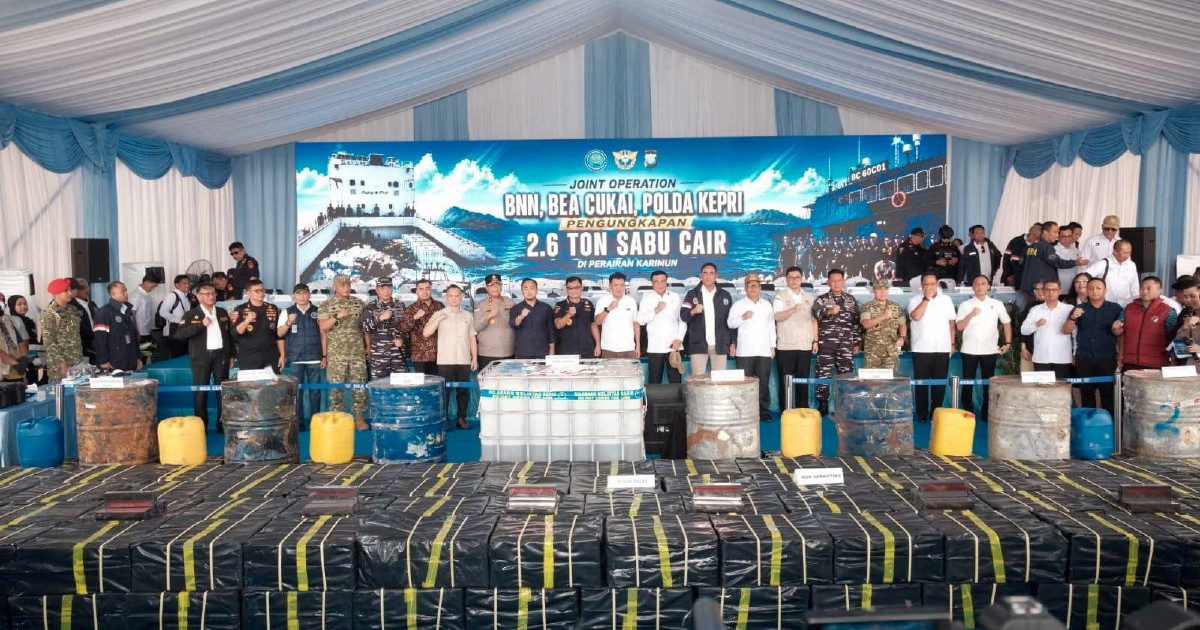
Indonesian authorities have arrested 10 nationals from Myanmar after uncovering one of the nation's most substantial liquid methamphetamine caches aboard a commercial vessel, signalling intensifying trafficking operations across Southeast Asia's maritime corridors. The seizure of 2.6 metric tonnes of the illicit substance from a ship registered under a Tanzanian flag represents a watershed moment in Indonesia's drug enforcement campaign and underscores the scale of transnational organised crime networks exploiting shipping routes through the region.
The operation, revealed at an official announcement on Friday, demonstrates how criminal syndicates leverage international maritime commerce to move narcotics between production centres in mainland Southeast Asia and consumer markets throughout the region and beyond. The vessel's Tanzanian registration—likely a flag of convenience—exemplifies tactics employed by smuggling rings to obscure ownership and evade detection by authorities monitoring conventional shipping patterns and known trafficking routes.
Liquid methamphetamine, a concentrated form of the drug that can be processed into crystal methamphetamine with minimal additional refinement, represents a particularly valuable commodity for traffickers. Its liquid state allows for more efficient concealment within shipping containers and other cargo, reducing the bulk and weight compared to solid forms while maintaining potency. The 2.6 metric tonne haul carries an enormous street value and could supply addiction networks across multiple nations for extended periods, making its interdiction a substantial blow to organised crime operations.
Myanmar's emergence as a primary source of such major synthetic drug shipments reflects the country's transformation into a narcotics manufacturing hub, particularly following political upheaval and the military takeover that fragmented governance and law enforcement capacity. The Shan State and border regions have become epicentres of methamphetamine production facilities, many operating with tacit tolerance from armed actors who benefit from taxation or direct involvement in the trade. These operations supply not only Southeast Asia but increasingly reach Australia, New Zealand, and distant markets across multiple continents.
For Malaysia and other Southeast Asian nations, such seizures carry urgent implications. The region serves simultaneously as a production zone, transit corridor, and consumption market, creating multiple exposure points where communities face threats from trafficking and drug-related crime. Malaysian ports and maritime zones remain vulnerable to similar smuggling attempts, necessitating sustained vigilance and enhanced coordination with neighbouring enforcement agencies. The discovery reinforces that regional security cannot be achieved through isolated national efforts alone.
Indonesia's capacity to execute such high-impact interdictions reflects substantial investment in maritime surveillance capabilities and intelligence gathering, yet the sheer volume of contraband still reaching Southeast Asian waters suggests that seizures represent only a fraction of total trafficking volumes. Intelligence analysts estimate that dozens of similar shipments may transit the region annually without detection, perpetuating supply chains that feed addiction crises from Bangkok to Manila to Kuala Lumpur.
The apprehension of 10 Myanmar nationals raises questions about command structures and operational networks behind the smuggling enterprise. These individuals likely occupy roles ranging from deck crew with minimal awareness of cargo contents to higher-ranking operatives directing the shipment's route and eventual delivery. Interrogation of detainees may yield intelligence regarding upstream suppliers, downstream distribution networks, and financial mechanisms sustaining these operations—information potentially valuable to law enforcement across multiple jurisdictions.
Cross-border cooperation represents Indonesia's strongest weapon against maritime drug trafficking. Formal information-sharing arrangements with Malaysian, Thai, Singaporean, and Philippine authorities can help identify suspect vessels, coordinate surveillance, and intercept contraband before it reaches intended destinations. The Association of Southeast Asian Nations has developed frameworks for such cooperation, though implementation remains inconsistent and hampered by varying capabilities and political priorities among member states.
Beyond enforcement, the persistence of major seizures highlights fundamental challenges in addressing synthetic drug production at its source. Without meaningful interventions in Myanmar's conflict-affected zones—including alternative livelihood development, governance strengthening, and security sector reform—production capacity will likely expand rather than contract. The financial incentives driving Myanmar citizens into trafficking roles underscore the nexus between political instability, economic desperation, and organised crime.
The arrested individuals now face prosecution under Indonesia's stringent narcotics laws, which carry severe penalties including lengthy imprisonment and, in extreme cases, capital punishment. Such prosecutions serve deterrent purposes, though their effectiveness remains contested among criminologists who note that traffickers consistently discount legal risks against potential profits. The broader significance lies in demonstrating to criminal enterprises that Southeast Asian governments possess capability to disrupt major operations, even as resource constraints limit frequency of such successes.
Indonesia's announcement of this seizure follows similar high-profile interdictions throughout Southeast Asia over recent months, collectively indicating that authorities are achieving increased effectiveness in maritime interdiction. However, the consistency with which new shipments continue emerging suggests an ongoing evolutionary dynamic between enforcement techniques and trafficking methodologies, with criminal networks adapting routes, concealment methods, and vessel types to evade detection. Sustaining enforcement momentum requires sustained investment and regional commitment that remains unpredictable given competing governmental priorities across Southeast Asian capitals.

