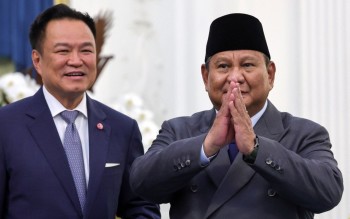
Indonesia and Thailand have signalled ambitious economic intentions by adopting a comprehensive strategic partnership roadmap aimed at doubling their bilateral trade relationship to US$20 billion by 2030. The framework was formally endorsed during the second Leaders' Consultation between President Prabowo Subianto and Thai Prime Minister Anutin Charnvirakul at Merdeka Palace in Jakarta on Monday, marking a significant escalation in ties between Southeast Asia's two largest economies by population.
The roadmap represents a strategic pivot for both nations, building on their earlier elevation to Strategic Partnership status during Prabowo's visit to Bangkok in 2024. For Thailand, this marks Anutin's debut official visit to Indonesia since assuming the premiership in September 2025, while it represents the first Thai prime ministerial visit to Jakarta in 15 years—an interval that underscores how far bilateral relations had drifted. The restoration of high-level engagement reflects mutual recognition that the relationship has untapped potential given the economic scale of both countries.
Central to the partnership framework is the establishment of the Indonesia-Thailand Joint Trade Commission, the first of its kind between the two nations. Operating at the commerce minister level, this mechanism will serve as the primary institutional vehicle for negotiating trade agreements and dismantling non-tariff barriers that have historically constrained commerce. The JTC addresses a structural gap in bilateral relations and positions both governments to proactively resolve business disputes and identify investment opportunities rather than allowing friction to accumulate.
Food security emerged as a cornerstone of the collaboration, reflecting Thailand's historic agricultural strengths and Indonesia's substantial import requirements. Thailand has committed to remaining a reliable supplier of high-quality rice to Indonesia while simultaneously seeking greater market penetration for Thai agricultural products, meat, dairy, and farm machinery. More significantly, Thailand aims to dramatically expand its fertiliser imports from Indonesia, seeking to increase annual purchases of Indonesian urea from the current 60,000 tonnes to several hundred thousand tonnes. This reversal of import expectations could substantially boost Indonesian agricultural exports and generate significant revenue for domestic fertiliser producers.
Energy security and renewable transition formed another pillar of cooperation. Both governments have committed to convening an Indonesia-Thailand Energy Forum designed to fortify energy security while accelerating movement toward sustainable energy through coordinated government and business initiatives. This focus reflects broader regional anxieties about energy resilience and the imperative to transition away from fossil fuels while maintaining grid stability and economic competitiveness.
The digital economy represents an emerging frontier for partnership, with both countries prioritising the adoption of local currency transactions in bilateral trade and investment flows. By promoting the use of Indonesian rupiah and Thai baht in commerce between them, both nations can reduce exposure to currency fluctuations and external payment systems, enhancing transaction efficiency while building a self-reinforcing economic relationship less dependent on third-party financial intermediation. This approach aligns with broader ASEAN efforts to reduce reliance on foreign currencies in intra-regional trade.
Halal industry development offers a distinctive opportunity leveraging combined regional influence. Indonesia and Thailand together command substantial weight in global halal supply chains, and coordinated efforts to develop integrated value chains could enhance competitiveness against other producers. Notably, both governments have prioritised renewing their mutual recognition agreement on halal certification before its November expiration, ensuring continuity in this critical trade enabler.
Investment commitments accompanying the roadmap signal confidence in bilateral economic prospects. These include an agreement between the Tourism Authority of Thailand and TransNusa on tourism and connectivity initiatives, as well as a collaboration between Bio-Axel and Pro Konsilium on organic waste processing. While individually modest, such ventures demonstrate practical conversion of political commitments into commercial activity.
Education forms the human capital dimension of the partnership. A newly signed memorandum of understanding on education aims to strengthen the talent pipeline supporting future economic collaboration, recognising that long-term prosperity depends on developing skilled workforces capable of operating across borders and sectors.
For Malaysia and the broader Southeast Asian region, this bilateral deepening carries important implications. Indonesia-Thailand cooperation on food security and agricultural technology could reshape regional agricultural markets and supply chains. Enhanced energy collaboration may influence regional power trading arrangements and renewable energy development trajectories. The emphasis on local currency transactions and digital economy integration sets precedents that other ASEAN dyads may eventually follow, potentially reconfiguring the financial architecture of intra-regional commerce.
From Malaysia's perspective, stronger Indonesian-Thai ties create both opportunities and considerations. Enhanced food trade between these neighbours could increase regional agricultural competition, while expanded fertiliser commerce may influence input costs affecting Malaysian palm oil producers. Conversely, improved stability and prosperity in both nations supports Malaysian interests in a prosperous, integrated ASEAN.
Achieving the US$20 billion trade target will require sustained political commitment beyond ceremonial announcement. Current bilateral trade levels remain substantially below this aspiration, necessitating concrete removal of tariff and non-tariff barriers, simplified customs procedures, and business-friendly regulatory alignment. The JTC's effectiveness in identifying and resolving concrete obstacles to trade will determine whether this roadmap becomes a transformative agreement or another aspirational document gathering dust in government filing cabinets.

