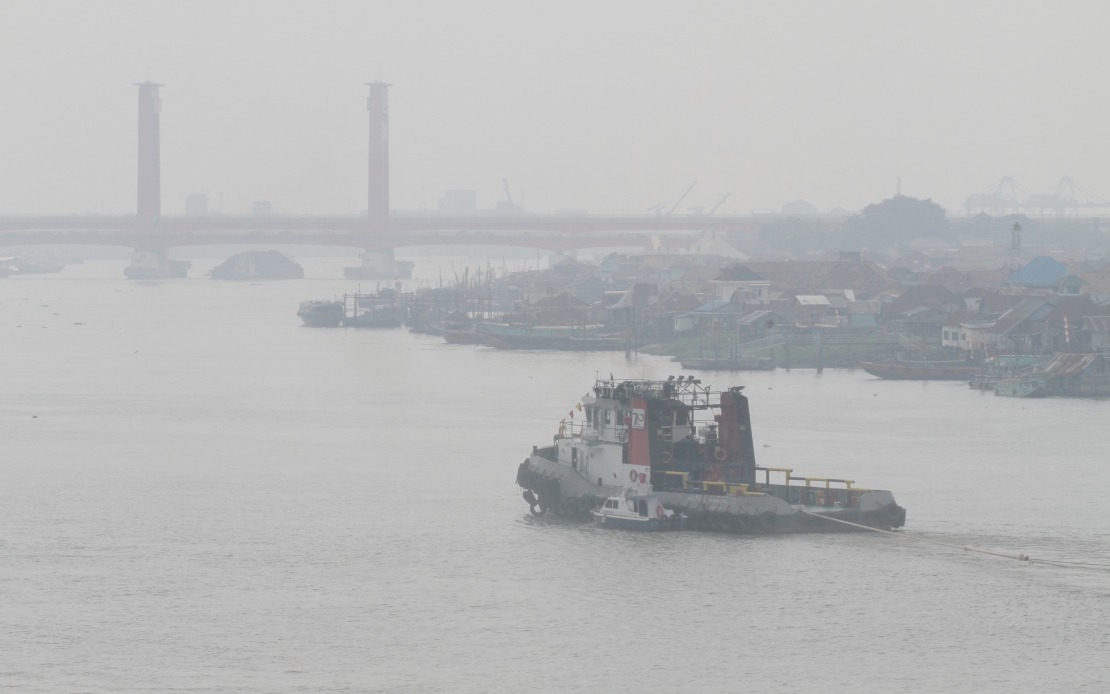
Indonesia has formally confirmed an expanding coordination framework with Malaysia to address the escalating transboundary haze crisis, with weather modification operations emerging as the immediate focus for both nations working along their shared border zones. The announcement reflects mounting urgency as smoke billowing from forest and plantation fires in West Kalimantan continues to degrade air quality across Malaysia's eastern and western regions, creating a public health emergency that demands urgent bilateral action.
The severity of the current situation is evident in real-time air quality measurements. Sarawak has registered Air Pollutant Index readings reaching 195 in certain locations as of Friday morning—a reading approaching the threshold of 201 and above that triggers official "very unhealthy" classifications. Beyond Sarawak's direct exposure, the haze has spread inland to affect major population centres including Kuala Lumpur, Selangor, Penang, Kedah, and Perak, each recording air quality metrics well above healthy levels and prompting widespread concern among residents and health authorities.
Berton Panjaitan, the Acting Head of Indonesia's National Disaster Mitigation Agency (BNPB) Data, Information, and Disaster Communication Centre, outlined the bilateral framework during remarks to media. He emphasized that communications channels with Malaysia remain active and that both governments have committed to broadening their cooperation across prevention, continuous monitoring systems, and coordinated weather modification initiatives. This represents a formal elevation of haze response beyond ad-hoc emergency measures toward institutionalized cross-border protocols.
The Malaysian position has been equally clear. Malaysia's Natural Resources and Environmental Sustainability Minister Datuk Seri Arthur Joseph Kurup confirmed that Indonesia has formally authorized Malaysian aircraft to enter Indonesian airspace for cloud-seeding operations. This procedural approval, though seemingly technical, represents a significant diplomatic development, as it removes a potential sovereignty-based obstacle to direct interventions and signals genuine political commitment from Jakarta to facilitate active mitigation rather than passive cooperation.
While firefighting support has been offered by the Malaysian government, Indonesia has not yet submitted an official request for direct Malaysian firefighting assets such as water-bombing operations or ground crews. Panjaitan indicated that the Indonesian government maintains openness to escalating support should conditions warrant it, and that any such deployments would operate within established bilateral mechanisms and frameworks. This measured approach suggests Indonesia is attempting to balance Malaysian assistance with domestic capacity and regional protocol considerations.
The current crisis stands in stark contrast to recent years. The Malaysian Consulate in Pontianak noted that 2024 and 2025 saw minimal haze episodes, yet the situation has deteriorated markedly in 2025, underscoring the unpredictable cyclical nature of the region's transboundary air pollution challenges. This year-to-year volatility complicates long-term planning and suggests that neither nation has yet developed comprehensive prevention systems capable of reliably preventing large-scale fire events.
The diplomatic groundwork for current efforts was laid during late August discussions between Arthur and Indonesian Environment Minister Jumhur Hidayat, during which both parties agreed to intensify prevention measures and firefighting responses. This ministerial-level engagement signaled that haze management has ascended to the level of formal diplomatic priority rather than remaining a technical environmental issue managed by lower-ranking officials.
For Malaysian expatriates in the affected region, the health consequences are immediate and tangible. The Malaysian Consulate in Pontianak, which oversees 577 registered Malaysian citizens scattered across West Kalimantan, has advised residents to comply with local authority directives including mandatory mask-wearing, transition of school instruction to online platforms, and curtailment of non-essential outdoor activity. These protective measures reflect the genuine respiratory hazards posed by prolonged exposure to smoky conditions, particularly for children, elderly persons, and those with pre-existing respiratory conditions.
Malaysia's institutional memory of previous haze episodes informs its current approach. In 2023, the Pontianak Consulate contributed six water pumps to the West Kalimantan Governor's Office, demonstrating Malaysia's willingness to provide material support for local firefighting infrastructure. This precedent suggests that hardware provision, beyond operational firefighting teams, may feature in ongoing cooperation frameworks. Such contributions address systemic capacity gaps in Indonesian fire management infrastructure while building diplomatic goodwill and practical capability.
The transboundary nature of the haze crisis creates an inherent asymmetry in the crisis response dynamic. Fires in West Kalimantan produce atmospheric consequences immediately visible and measurable in Malaysian states, yet the primary locus of fire suppression authority and capacity remains within Indonesia. This geographic-administrative mismatch necessitates the kind of cooperative frameworks now being activated—Malaysia must negotiate access to operational zones outside its borders while Indonesia must accept external participation in what traditionally falls within national fire management jurisdiction.
Weather modification operations, the stated priority for bilateral cooperation, represent a particularly sophisticated intervention approach. Cloud-seeding technology relies on precise meteorological conditions and coordination with seasonal wind patterns that will carry moisture across border zones. Success depends not merely on technical capability but on timing, atmospheric composition, and predictive meteorological models—dimensions that demand sustained technical dialogue between Indonesian and Malaysian meteorological and environmental agencies.
The effectiveness of current coordination mechanisms will be tested in coming weeks as the dry season progresses. Historical patterns suggest fire frequency and intensity typically escalate through September and October across Indonesian Borneo, implying that the air quality crisis will likely intensify before improving. The bilateral frameworks now being activated will face practical operational tests, revealing whether diplomatic agreements translate into tangible air quality improvements for Malaysian populations.

