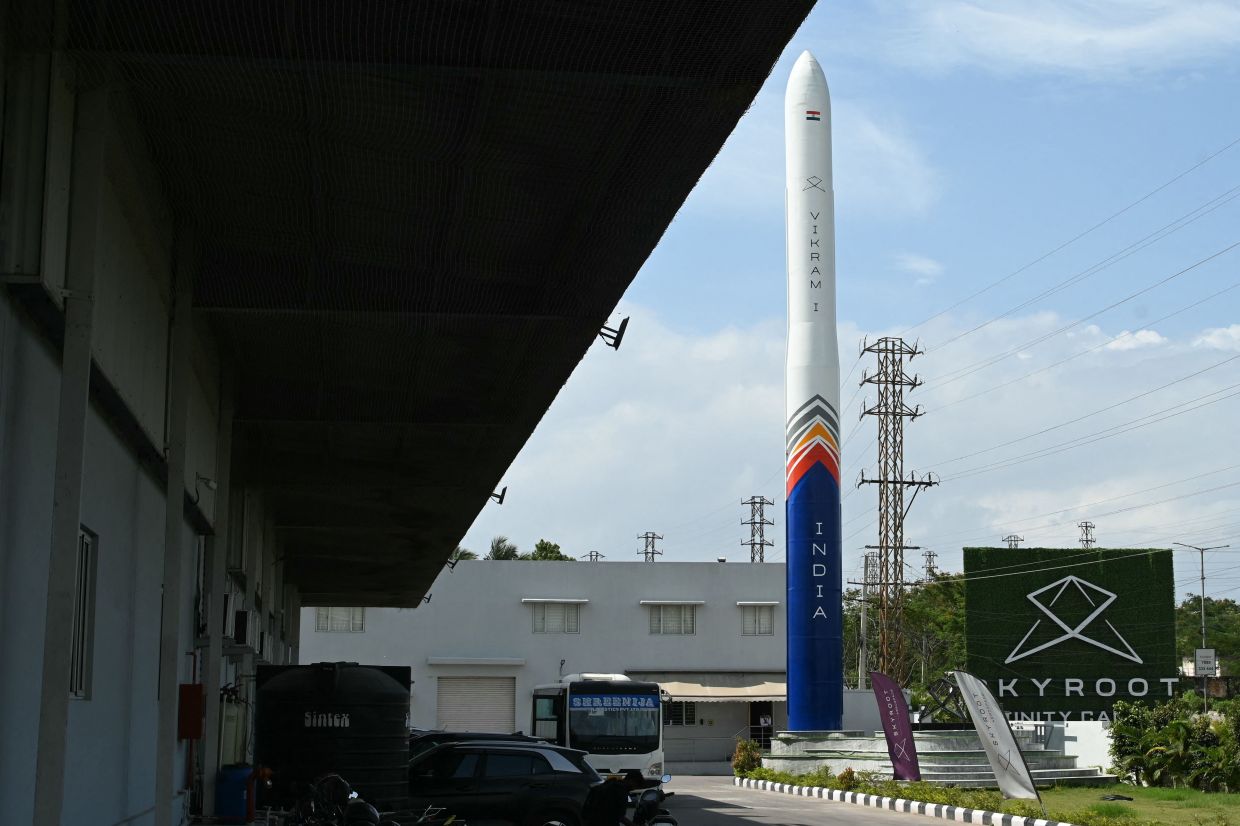
India stands on the cusp of a significant milestone in its space ambitions. Skyroot Aerospace, a private venture backed by India's newly liberalised space economy, is preparing to send the Vikram-1 rocket skyward between July 12 and August 4, marking the first orbital-class launch by a private Indian firm. This achievement arrives as New Delhi's broader space sector accelerates its transformation from a government-dominated arena into a thriving commercial ecosystem, reshaping India's technological standing in Asia and beyond.
The transformation of India's space sector has been remarkably swift. Since the government opened the industry to private investment in 2020, the space economy has swelled to an estimated US$8.4 billion, creating fertile ground for entrepreneurial ventures. More than 400 space startups have emerged, drawn by the prospect of accessing India's established launch infrastructure, regulatory framework, and technical expertise accumulated over decades by the Indian Space Research Organisation (ISRO). This entrepreneurial surge reflects a deliberate policy shift by New Delhi to harness private-sector innovation while maintaining state control over strategic assets.
India's credentials in space exploration provide a foundation upon which this commercial expansion is built. The nation became Asia's first to successfully place a spacecraft around Mars in 2014, a feat achieved at a fraction of the cost of comparable international missions. The Chandrayaan lunar programme has yielded increasingly impressive results, culminating in the 2023 landing of a rover that made India the fourth nation globally to achieve a soft landing on the Moon. These achievements reflect ISRO's engineering prowess and cost-conscious approach—qualities that distinguish Indian space capabilities in an increasingly competitive field.
Looking ahead, India's ambitions extend well beyond Earth's immediate vicinity. A fourth Chandrayaan mission slated for 2027 will attempt to return Moon samples to Earth, placing India among an elite group of nations with this capability. Simultaneously, ISRO is preparing a Venus orbit mission for 2028, demonstrating India's commitment to exploring the inner solar system. The Aditya solar mission is already operational, studying the Sun's corona and space weather phenomena. These initiatives underscore how India's space programme encompasses not merely national prestige but scientific inquiry and technological advancement with practical terrestrial applications.
Commercial spacefaring has become integral to India's space strategy. ISRO has launched over 430 foreign satellites, generating more than US$600 million in revenue and establishing India as a competitive player in the global commercial launch market. The organisation operates from Sriharikota on the southeastern coast of Andhra Pradesh, with a second spaceport under construction at Kulasekarapattinam in Tamil Nadu. These expanding launch facilities position India to capture an increasing share of the growing demand for satellite deployment services, particularly among emerging economies and commercial operators unable to afford Western launch costs.
The potential of India's space sector is reflected in government projections. New Delhi anticipates its space industry will reach US$44 billion by 2033 and US$100 billion by 2040—an extraordinarily ambitious but not implausible trajectory given current growth rates. Such expansion would require sustained private-sector investment, technological breakthroughs, and favourable international collaboration. The Department of Space has articulated this vision explicitly, emphasising deep-space exploration, human spaceflight, and orbital infrastructure as pillars of India's long-term space strategy.
Private firms are already diversifying across multiple segments of the space value chain. Beyond Skyroot Aerospace's imminent rocket launch, companies such as Pixxel are developing Earth-observation satellites for agricultural and environmental monitoring—applications with immediate utility for developing economies. Bellatrix Aerospace is advancing satellite propulsion systems, while Agnikul Cosmos is pioneering 3D-printed rocket engines for small-lift-vehicle launches. This specialisation mirrors the evolution of commercial space sectors globally, where vertically integrated monopolies give way to ecosystems of specialist suppliers.
International collaboration underpins India's space ambitions. Beyond established ties with Russia—which supports India's nascent human spaceflight programme—New Delhi has expanded partnerships with NASA, the European Space Agency, France, Germany, Italy, Japan, and Saudi Arabia. These relationships provide access to technology, expertise, and markets while elevating India's standing within the global space community. Such multilateral engagement also signals to private investors that India offers a stable, internationally integrated platform for space ventures.
However, the expansion of India's private space sector intersects significantly with defence considerations. The overlap between civilian space technology and military applications has deepened as companies supply components to both ISRO and India's Defence Research and Development Organisation. Propulsion systems, guidance electronics, and launch vehicles inherently possess dual-use potential. ISRO's coordination with defence agencies, coupled with the success of the India-Russia BrahMos missile programme, demonstrates how space capabilities feed into broader defence modernisation. This convergence means that India's space sector growth carries strategic implications extending beyond commercial competition.
For Malaysia and Southeast Asia, India's emerging space capabilities warrant careful attention. An increasingly capable Indian space sector—bolstered by private innovation and international partnerships—will likely expand India's influence in regional space initiatives, satellite services, and technology standards. As India projects itself as a technology leader in the Indo-Pacific, its space achievements serve as visible markers of technological prowess. Malaysian policymakers considering their own space ambitions, satellite procurement, or regional partnerships would be wise to monitor India's trajectory closely.
The successful launch of Skyroot's Vikram-1 rocket would represent more than a single achievement; it would validate India's strategic decision to liberalise the space sector and demonstrate that private enterprise, when given appropriate regulatory frameworks and access to state infrastructure, can rapidly advance technological frontiers. Whether this milestone catalyses further acceleration depends on sustained policy support, continued investment, and the ability of Indian entrepreneurs to navigate international competition in an increasingly commercialised space economy. The coming weeks will provide the first concrete measure of India's private space ambitions.

