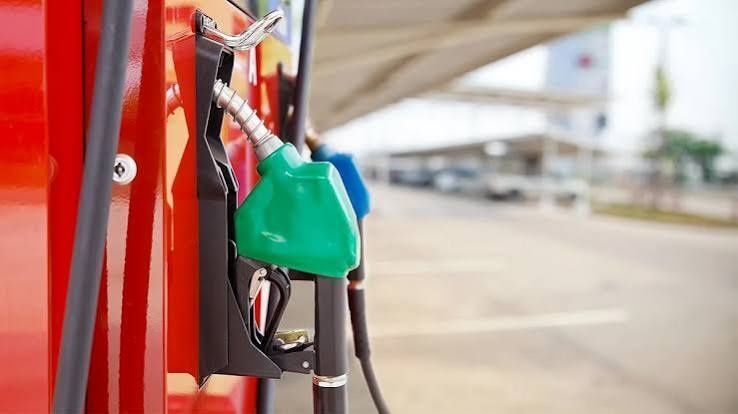
India's government is fighting a serious credibility battle over its push to mandate ethanol-blended petrol, as widespread consumer discontent threatens to become a political liability for Prime Minister Narendra Modi's administration. The controversy centres on E20 fuel, which blends 20 per cent ethanol with conventional petrol, and has become one of the most contentious domestic policy issues in the world's third-largest automotive market despite being introduced only last year.
The dispute erupted into public view this week when Attorney General R. Venkataramani used the word "experiment" to describe the E20 programme during a court hearing, a characterisation that immediately went viral on social media and validated critics' claims that the rollout was rushed and inadequately tested. Although Venkataramani later clarified he was referring only to ethanol supply volumes rather than the fuel policy itself, and the government's official statement denied the remark was made, video evidence of the court proceeding proved otherwise. This pattern of denial followed by correction has only deepened public suspicion that authorities are not being transparent about the policy's readiness for nationwide implementation.
Consumer frustration reflects genuine concerns about practical impacts on vehicle performance and operating costs. Motorists across the country have taken to social media to document complaints of reduced fuel efficiency and increased mechanical wear, with some uploading videos showing damaged vehicles requiring expensive repairs shortly after switching to E20. One viral video viewed more than 500,000 times featured a frustrated car owner named Manish Kashyap lamenting the deterioration of his vehicle within just two months of using the blended fuel, highlighting the financial burden falling on individual drivers rather than being absorbed by industry or government.
The government's response has oscillated between dismissal and reassurance, undermining its attempts to manage the narrative. Officials have characterised public criticism as "wild claims" and "rage bait," while Petroleum Minister Hardeep Singh Puri attempted to normalise E20 by comparing it to racing fuel, arguing that while mileage might decline slightly, performance benefits would offset concerns. Such statements ring hollow to consumers already experiencing concrete problems and having no choice at fuel pumps, where E20 has become mandatory rather than optional.
Organised resistance is coalescing around the policy, with activists planning major demonstrations in New Delhi. Tehseen Poonawalla, a prominent socialite and Congress party supporter, has announced a protest for Sunday and reported receiving thousands of expressions of interest from motorists wanting to participate. This level of coordinated opposition reflects not merely technical complaints but deeper frustration with a government perceived as imposing policies without adequate consultation or consideration of citizen feedback.
The political dynamics of the E20 controversy extend beyond individual grievances. Opposition voices, including Congress state minister Priyank Kharge, have seized on the issue to criticise what they characterise as arrogant governance, arguing that the Modi administration implemented the policy without consulting stakeholders and now dismisses mounting evidence of problems. Kharge's observation that the government "cannot challenge citizens to prove damage when your own data is still pending" articulates a widespread perception that the rollout prioritised ideological and economic objectives over rigorous evaluation.
The government's rationale for E20 focuses on environmental and economic benefits rather than consumer convenience. Officials argue the blend reduces carbon emissions, lowers crude oil imports thereby preserving foreign exchange reserves, and supports agricultural incomes by increasing demand for ethanol feedstock production from farm-derived materials. These objectives align with India's broader sustainability goals and rural development priorities, making the policy strategically significant for the administration regardless of short-term public relations damage.
However, the implementation has created a classic policy implementation failure where governmental priorities diverge sharply from public experience. By mandating E20 rather than allowing gradual voluntary adoption, the government eliminated consumer choice and forced every vehicle owner to absorb adaptation costs without advance notice or support mechanisms. Vehicle owners cannot easily switch back, making the policy feel coercive rather than consensual, particularly to middle-class motorists already burdened with rising living costs.
For Malaysia and other Southeast Asian economies observing India's experience, the E20 controversy offers important lessons about stakeholder engagement in energy transition policies. While renewable and sustainable fuel initiatives are increasingly necessary, the Indian case demonstrates that technical soundness alone does not guarantee public acceptance. Policymakers across the region should consider how mandatory fuel blends might be introduced with adequate transition periods, consumer choice protection, and transparent communication about both benefits and potential drawbacks.
The situation also reflects broader challenges facing India's automotive sector, which is already contending with production disruptions and consumer hesitancy. The E20 mandate risks aggravating market sentiment at a vulnerable moment, potentially pushing cost-conscious buyers toward used vehicles or alternative markets rather than embracing new technology. If the Modi government fails to contain the backlash and restore public confidence, the policy could become symbolic of governmental overreach, with repercussions extending far beyond fuel specifications.
Looking forward, damage control will require more than rhetorical responses. The government must consider whether strategic concessions—such as maintaining some non-E20 fuel availability at select stations, offering vehicle upgrade incentives, or launching transparent independent testing—might defuse opposition while preserving the policy's core environmental objectives. Without such steps, E20 risks evolving from a technical mandate into a potent political flashpoint that undermines broader administrative credibility.
The unfolding controversy demonstrates how energy transition policies, while necessary for long-term sustainability, must be implemented with careful attention to distributional impacts and public participation. India's experience suggests that even well-intentioned environmental policies can generate severe political costs if citizens perceive themselves as bearing disproportionate burdens without adequate consultation or support. As developing nations across Asia pursue cleaner energy futures, India's E20 rollout provides a cautionary lesson about the importance of inclusive policymaking and transparent communication.

