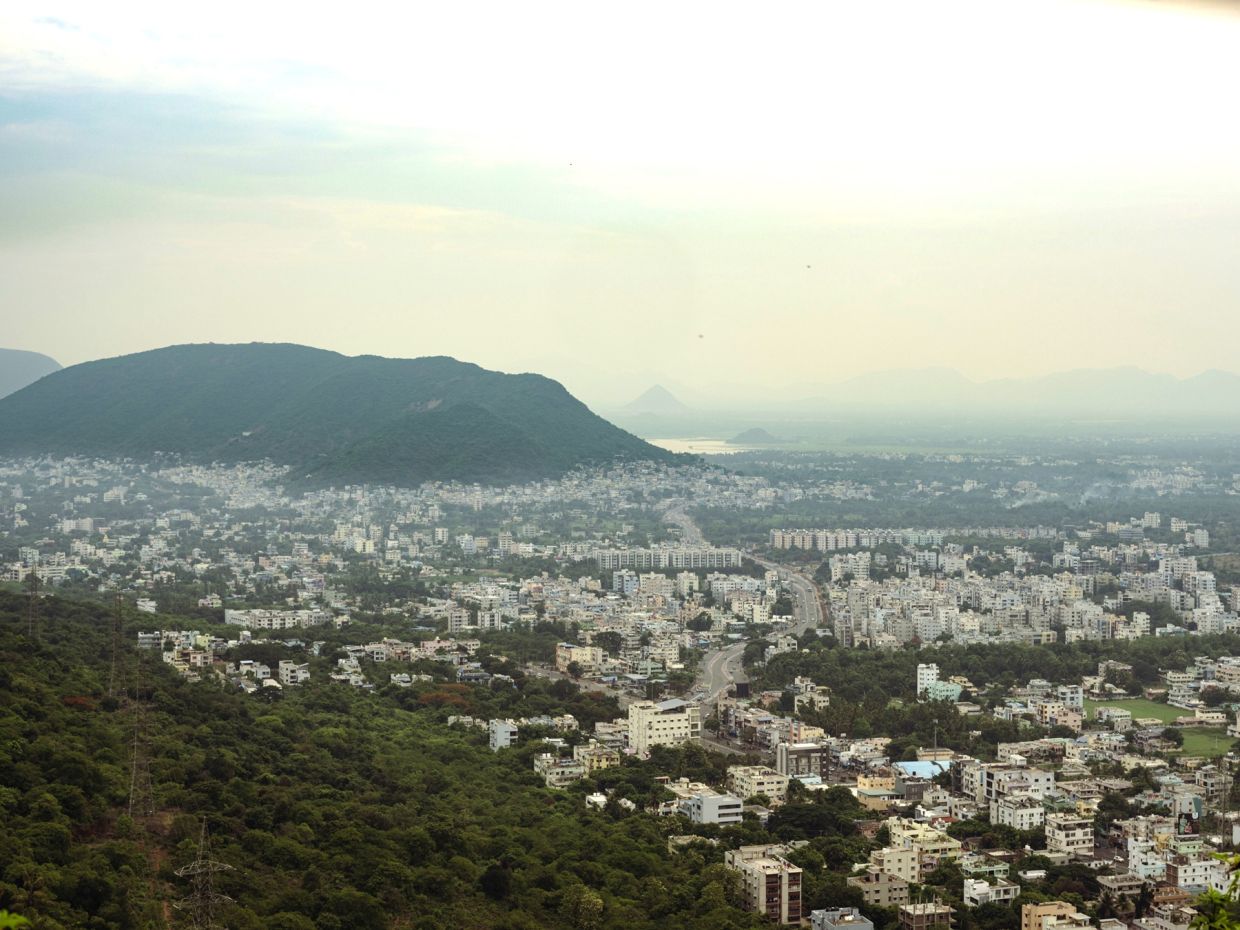
India is racing to build its way into artificial intelligence leadership, but the headlong pace of development is creating friction in coastal communities bearing the environmental burden. In the village of Tarluvada, near Visakhapatnam city on India's southern coast, a welcoming billboard displays the faces of national and state politicians alongside the message "Welcome, Google, Welcome!" – a sign that reflects government enthusiasm for the American technology giant's US$15 billion (RM61.36 billion) investment in local data infrastructure. Yet beneath this display of official endorsement, scepticism and worry are mounting among residents who fear they will shoulder the ecological costs of India's determined push into the global artificial intelligence era.
Google's undertaking in Andhra Pradesh represents a critical bet by Prime Minister Narendra Modi's government that controlling massive data processing capacity is fundamental to India's future competitiveness. The first phase includes constructing a one-gigawatt data centre alongside new subsea cables, work that has already begun with heavy machinery clearing ground near Tarluvada. Concurrently, Reliance Industries and Brookfield Asset Management are building an equivalent facility in the same region. Together, these two installations will more than double India's existing data centre capacity once they begin operating, signalling the scale of the government's commitment to closing a critical gap in its artificial intelligence infrastructure.
State officials frame the initiative as a transformative opportunity that extends far beyond computing hardware. Nara Lokesh, Andhra Pradesh's information technology minister, describes the cascading economic benefits encompassing power electronics manufacturing, air conditioning systems, building materials production, and related industrial activity. His vision reflects a broader development strategy among India's southern states, which compete fiercely to attract foreign capital by positioning themselves as more business-friendly and economically advanced than their northern counterparts. For Lokesh and his government, the Google project symbolises exactly the kind of anchor investment that catalyses broader manufacturing clusters and employment growth.
Yet this optimistic official narrative obscures substantive anxieties about environmental stewardship and financial transparency. Data centres are notoriously energy-intensive and water-consuming operations that generate few permanent jobs, a tension that has already surfaced in developed economies. In the United States, proposed facilities worth tens of billions of dollars have been blocked or significantly delayed by community opposition rooted in legitimate concerns about resource depletion and environmental degradation. India faces these same challenges acutely – particularly in a region already classified as water-stressed, where summer months routinely bring supply disruptions that affect millions of residents. The irony is stark: India's government, desperate to secure its position in global artificial intelligence competition, is importing a model that wealthy nations have begun rejecting.
Critics point to troubling irregularities in the approval process. Environmental clearance rules appear to have been relaxed to permit construction in ecologically sensitive zones. The lack of public disclosure about water and electricity sourcing, combined with opacity regarding the full scope of government subsidies, has deepened community distrust. VS Krishna, a campaigner with the Human Rights Forum, articulates the core complaint: if this were a defence project, such secrecy might be justified, but for a commercial development project, it represents a democratic failure. Local residents and activists argue they are being asked to absorb infrastructure costs, environmental risks, and long-term ecological consequences without meaningful participation in decision-making or access to accurate information about what is being promised or what will actually be delivered.
The political dynamics surrounding the project amplify these concerns. Gautam Adani, the billionaire partner in Google's endeavour, is widely perceived as closely aligned with Prime Minister Modi. Adani's extraordinary wealth accumulation during Modi's twelve-year tenure, coupled with his track record of successfully navigating complex regulatory environments, invites speculation that political connections rather than transparent governance are facilitating project approvals. This perception, whether entirely fair or not, reflects a broader anxiety in India about whether mega-infrastructure decisions are being made on their merits or through corridors of power inaccessible to ordinary citizens.
Underlying the entire push is India's sobering position in the global artificial intelligence race. Despite possessing a vast market, world-class technical talent, and a thriving technology services sector, India has been relegated to what Morgan Stanley characterised as a "laggard" in developing domestic artificial intelligence capability. Hundreds of billions of dollars in investment capital have flowed to Taiwan, South Korea, and other Asian economies that manufacture cutting-edge semiconductors and foundational artificial intelligence technologies. India's role remains largely that of a deployer and integrator of foreign technologies rather than an originator of breakthrough innovations. This structural weakness has created what government officials see as an imperative: without massive data centre capacity, India cannot even function effectively as a deployment hub for artificial intelligence applications serving its enormous domestic market and global clientele.
The statistics underlying this anxiety are telling. India produces approximately twenty percent of the world's data, yet controls only a fraction of global data centre capacity – a mismatch that leaves the country dependent on infrastructure elsewhere. For policymakers, closing this gap is not optional luxuries but essential infrastructure for economic survival. The two Visakhapatnam facilities represent a dramatic attempt to correct this imbalance through concentrated investment and favourable regulatory treatment. Google and its local partner, the Adani Group, are receiving substantial subsidies ranging from discounted land and energy prices to broad tax exemptions – packages that would face fierce resistance in mature democracies but that India's government views as necessary to compete against other nations offering similar inducements.
Job creation claims attached to the project require particular scrutiny. State officials have asserted that the construction phase will generate approximately 120,000 positions, with roughly 60,000 permanent jobs once facilities become operational. However, critics note that these figures are inconsistent with employment patterns observed at comparable data centre facilities globally. Environmental clearance documents, when examined closely, contain details suggesting far smaller permanent workforces – information about parking requirements and toilet flushing water consumption that imply operational staffing levels much lower than government pronouncements suggest. This discrepancy raises uncomfortable questions about whether employment projections are reliable or whether they represent aspirational thinking rather than realistic analysis.
India faces a deeper tension that extends beyond this single project. The International Monetary Fund has warned that artificial intelligence deployment could trigger a "tsunami hitting the labour market," with particularly severe consequences for India's massive technology services sector that has provided stable middle-class employment for millions. If artificial intelligence automates away the routine technology support work that powers Indian outsourcing companies, the nation's largest source of foreign exchange earnings could face structural decline precisely as it attempts to transition toward more sophisticated technological capabilities. Building data centre capacity without simultaneously addressing employment disruption risks creating a narrow corridor of opportunity for elite technology workers while leaving vast populations increasingly marginalised from the digital economy.
Google executives and Adani subsidiary officials have responded to environmental concerns by asserting that advanced cooling technologies will minimise water consumption and operate independently from local potable water supplies. They emphasise that the company is investing in clean energy generation and guarantee that no costs will be transferred to local households, businesses, or state government. These commitments, if honoured, would represent a responsible approach to development. Yet scepticism persists among informed observers. EAS Sarma, a former senior official in India's ministries of finance and energy with doctoral expertise in energy planning, contends that infrastructure expenses will ultimately burden local populations through higher electricity bills, even if direct subsidies are technically separated from consumer charges. Every subsidy represents a societal cost, he argues, particularly when it flows toward foreign corporations while local communities bear environmental consequences.
The Visakhapatnam case exemplifies a broader pattern across India's development trajectory: rapid industrialisation pursued without adequate environmental safeguards or genuine public participation. Whether this particular project ultimately proves beneficial or harmful will depend substantially on whether commitments about water independence and cost protection are maintained in practice. But the underlying tension remains: India's legitimate need to develop technological capacity is colliding with the legitimate claims of local communities to have voice in decisions affecting their environment and futures. How this collision is resolved will shape not only Visakhapatnam's trajectory but also whether India can achieve sustainable technological advancement or whether the pursuit of artificial intelligence dominance will deepen existing inequalities and environmental pressures that already burden the nation.

