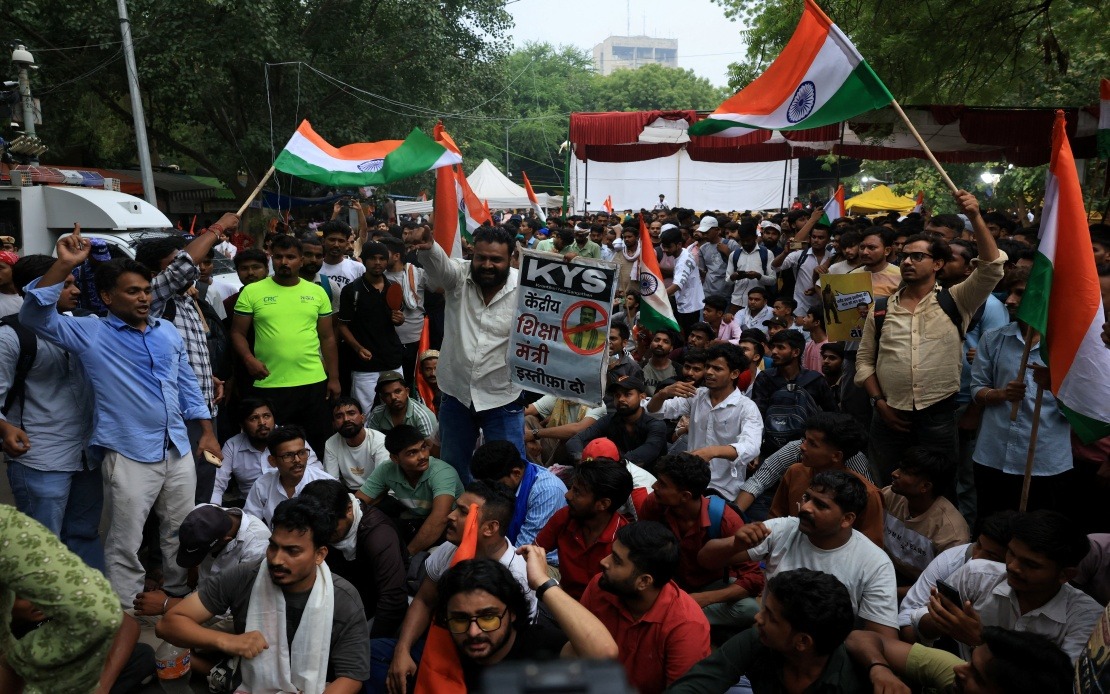
Thousands of demonstrators took to the streets of New Delhi on Monday in an ambitious bid to reach the Indian Parliament, only to be met with police crowd-control operations that halted their advance. The protest, organized by a newly-formed youth movement claiming millions of online supporters, sought to press lawmakers on the need for substantial reforms to India's educational framework. The timing of the demonstration coincided with the opening of the Monsoon Session of the Indian Parliament, placing the issue of academic system overhaul directly in the spotlight as lawmakers began their legislative calendar.
The march, which organizers billed as "Sansad Chalo" or a direct appeal to parliament, reflects growing discontent among India's younger generation with the current structure and delivery of education. The movement represents a shift in how young Indians are mobilizing around policy concerns, leveraging digital platforms to aggregate support before translating online sentiment into street-level activism. This approach of building momentum through social media before staging physical demonstrations has become an increasingly common tactic among emerging protest movements across South Asia, signaling how digital connectivity is reshaping political engagement patterns in the region.
Police established multiple barricades throughout central New Delhi to prevent the marchers from breaching security cordons surrounding parliament. As protesters attempted to push past these restrictions, authorities deployed standard crowd-control measures to manage the gathering and prevent them from reaching the legislature. The restrictions on public assembly reflect broader concerns about managing large demonstrations in sensitive areas, particularly during parliamentary sessions when security protocols are typically heightened. The police response suggests government anxiety about allowing direct confrontation between organized protest movements and the seat of legislative power.
Prime Minister Narendra Modi was present within the parliament complex as the Monsoon Session commenced, but departed in an official convoy while police worked to disperse and manage the crowds in surrounding areas. His departure underscores the security implications of the protest and the disruption it caused to normal parliamentary operations on the opening day of the legislative session. The incident demonstrates how street-level activism can directly impact the functioning of government institutions, even when it does not breach security perimeters.
The core demands of the protesters center on comprehensive overhaul of India's academic system, a concern that resonates broadly among students, educators, and parents struggling with longstanding criticisms of the country's educational model. Issues such as rote learning emphasis, limited skill development, inadequate digital infrastructure in schools, and the relevance of curricula to contemporary employment markets have sparked debate among policymakers and civil society. The youth movement appears to be channeling frustrations that have accumulated over years of structural challenges within Indian education, presenting a unified call for systemic change rather than incremental reforms.
The newly-formed nature of this movement is significant for understanding its emergence and energy. Unlike established educational advocacy organizations that have worked within formal channels for years, this youth-driven initiative appears to have mobilized quickly by leveraging social media networks and direct appeals to fellow young Indians facing educational challenges. The claim of millions of online followers, if accurate, suggests the movement tapped into substantial latent dissatisfaction with the status quo, coalescing disparate grievances into a focused campaign targeting the highest levels of government. This organizational model reflects how digital-native movements can achieve rapid scale without traditional institutional infrastructure.
Security measures were visibly heightened throughout central New Delhi in response to the protest, with police deploying additional personnel and establishing enhanced protocols in key government zones. Such security augmentation is a standard response to unauthorized marches near sensitive areas, though it also signals the seriousness with which authorities treated the potential disruption. The scale of security deployment necessary to contain the demonstration underscores both the size of the crowd and official concerns about managing organized youth activism in the capital city.
The protest carries implications for Malaysian observers and policymakers. Across Southeast Asia, similar concerns about educational system relevance, adequacy of digital infrastructure in learning, and the mismatch between educational outputs and employment market needs resonate strongly. Malaysia's own education system has faced ongoing debates about curriculum modernization, skills development, and the balance between academic and vocational pathways. The Indian protest demonstrates how educational dissatisfaction among youth can translate into organized political pressure, suggesting that policymakers across the region would benefit from proactive engagement with young people's concerns about their educational experiences and future prospects.
The intersection of education policy and youth activism appears to be a growing fulcrum for political mobilization in South and Southeast Asia. Unlike previous generations, today's young Indians and Southeast Asians have tools to organize rapidly, articulate grievances collectively, and mount public campaigns that command government attention. The New Delhi march illustrates how education—fundamental to individual opportunity and national development—can become a rallying point for broader political engagement among youth cohorts historically disconnected from traditional political processes. Governments across the region would ignore such movements at their peril, as they often represent authentic concerns rooted in concrete daily frustrations with institutional service delivery rather than abstract ideological positioning.
The protest also highlights tensions between government security imperatives and citizens' constitutional rights to petition for redress of grievances. Police restrictions on public assembly in parliamentary areas aim to maintain order and protect sensitive government facilities, yet such restrictions can also be perceived as suppressing legitimate dissent. This balance between security and democratic expression remains contested terrain across South Asia, with critics arguing that overly restrictive approaches stifle the very civic engagement that underpins democratic health. The incident in New Delhi may prompt broader conversations within India about how to accommodate mass protest while maintaining parliamentary operations and security protocols.
Looking forward, the persistence of youth-led movements demanding educational reform suggests this may not be a one-off protest but rather a harbinger of sustained pressure on Indian policymakers. Educational challenges are not resolved quickly or easily; systemic reforms require consensus-building, resource allocation, and institutional restructuring across multiple government departments and levels. The gap between protesters' demands and the capacity of existing institutions to respond comprehensively may fuel continued activism if demonstrators perceive that parliamentary attention to their concerns remains insufficient. For Southeast Asian observers, the Indian case offers both inspiration regarding youth political mobilization and cautionary insight into the complexity of translating street-level advocacy into meaningful policy change.

