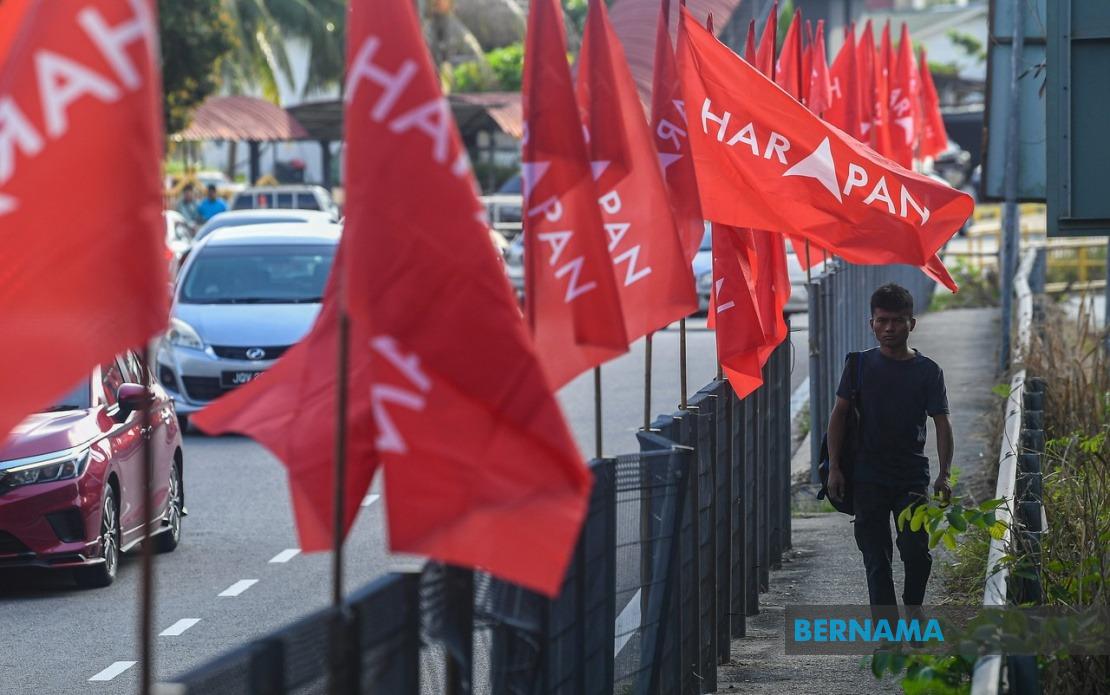
The Indian community in Johor holds considerable electoral leverage that could prove decisive in the upcoming state election on July 11, according to Dr Gunaraj George, a prominent Pakatan Harapan strategist and member of Parti Keadilan Rakyat's Central Leadership Council. Though numerically a minority in the southern state, Indian voters are positioned to sway outcomes across approximately 25 mixed and marginal constituencies, making their participation strategically significant for any coalition seeking electoral dominance.
Dr Gunaraj's appeal frames the election as more than a routine exercise in democratic representation. Rather, he characterises it as a choice between two competing visions for Malaysia's future. On one hand lies the path of sustained political equilibrium paired with the continuation of the government's MADANI reform programme, which emphasises inclusive development and institutional strengthening. Arrayed against this is the prospect of returning to the political turbulence and uncertainty that has periodically destabilised the country, with potentially serious consequences for investor sentiment, business expansion, and household economic security.
In the current global context, this framing carries particular weight. International economic headwinds, ongoing geopolitical tensions, and domestic cost-of-living pressures create an environment in which policy consistency and governmental predictability become genuine competitive advantages. Malaysia's capacity to attract foreign investment and generate employment opportunities increasingly depends on the confidence that international and domestic business communities hold in the stability and coherence of its political institutions. A government caught in perpetual factional conflict or navigating constitutional crises finds itself ill-equipped to pursue long-term economic strategy or secure the policy certainty that investors demand.
The Sentosa Assemblyman's emphasis on MADANI achievements reflects a deliberate strategy to demonstrate tangible returns from supporting the current administration. The government has substantially redirected resources towards programmes directly benefiting the Indian community. Most notably, the Malaysian Indian Transformation Unit's annual budget has climbed from RM100 million to RM150 million following nearly a decade of stagnation under previous governments. Prime Minister Datuk Seri Anwar Ibrahim has committed to progressive expansion of this allocation, signalling that resource augmentation will continue as needs evolve.
Beyond budget increases, Dr Gunaraj highlights structural improvements in how these resources are deployed. MITRA's operational framework has been overhauled to prioritise transparency, public accountability, and systematic parliamentary oversight. This shift addresses longstanding community complaints about fund allocation opacity and implementation efficiency, transforming the unit from a patronage apparatus into a more credible development instrument. For an electorate that has experienced resource mismanagement and opaque governance under previous administrations, this institutional recalibration carries meaningful significance.
The MADANI government has simultaneously expanded support across multiple domains affecting Indian welfare. Tamil National-Type Schools have received enlarged budget allocations, addressing educational infrastructure gaps that persisted for years. Places of worship, including temples, now benefit from regularised maintenance assistance that removes funding uncertainty for religious institutions serving the community. Technical and Vocational Education and Training programmes have been expanded, creating pathways for youth employment in growth sectors while circumventing traditional academic bottlenecks that have historically limited opportunity for students from disadvantaged backgrounds.
Direct cash assistance schemes have also been introduced. Both Sumbangan Tunai Rahmah and Sumbangan Asas Rahmah programmes deliver targeted income support to low-income households, providing immediate relief during periods of economic strain. Complementing these cash transfers, government initiatives have specifically targeted micro, small, and medium enterprises, recognising that many Indian-owned businesses operate in precisely these segments where capital access and technical support have historically been constrained.
Dr Gunaraj's argument implicitly acknowledges a broader electoral reality: support for governing coalitions is rarely unconditional or automatically renewed. Rather, voters increasingly evaluate incumbent performance through concrete metrics. Have policies produced observable improvements in household finances, educational opportunities, or community infrastructure? Have institutions demonstrated competence and integrity in resource management? Have marginalised groups experienced genuine inclusion in development processes, or has their participation remained merely symbolic? By cataloguing specific programme expansions and institutional reforms, the PKR leader signals that the answer to these questions favours continued PH governance.
The timing of this pitch is strategically considered. Elections in Johor carry significance beyond the state itself, serving as bellwethers for national political sentiment. A strong PH performance would validate the government's reform trajectory and provide reinforced legitimacy for advancing the MADANI agenda across additional policy domains. Conversely, weakened performance might encourage internal party factions to question strategic direction or embolden opposition movements claiming popular dissatisfaction with current governance.
For the Indian community specifically, the election presents an opportunity to influence the state government's development priorities and resource allocation frameworks directly. State governments control education, local economic development, land policy, and social service delivery. A committed coalition government is more likely to systematically prioritise infrastructure, education, and welfare policies benefiting Indian constituents than a fractious administration consumed by internal survival struggles. This is why Dr Gunaraj emphasises the connection between voting choice and concrete policy outcomes.
Packatan Harapan is contesting all 56 state legislative seats in the Johor election, deploying full candidate rosters across constituencies. This comprehensive approach underscores the coalition's ambition to achieve decisive majorities rather than merely secure coalition governance through post-election arithmetic. A commanding mandate would provide the administrative space to implement longer-term structural reforms without constant negotiation with coalition partners or vulnerability to cross-floor defections.
The appeal to the Indian community represents a calculated component of PH's broader electoral strategy. While minority communities cannot individually determine election outcomes, their concentrated participation in specific constituencies can shift marginal seats—precisely the dynamics that determine state government composition when broader voter patterns are evenly distributed. By mobilising Indian voters through appeals emphasising communal benefit and institutional improvement, Dr Gunaraj seeks to multiply PH's effective voting strength beyond raw community demographics, leveraging minority concentrated influence to secure coalition dominance.

