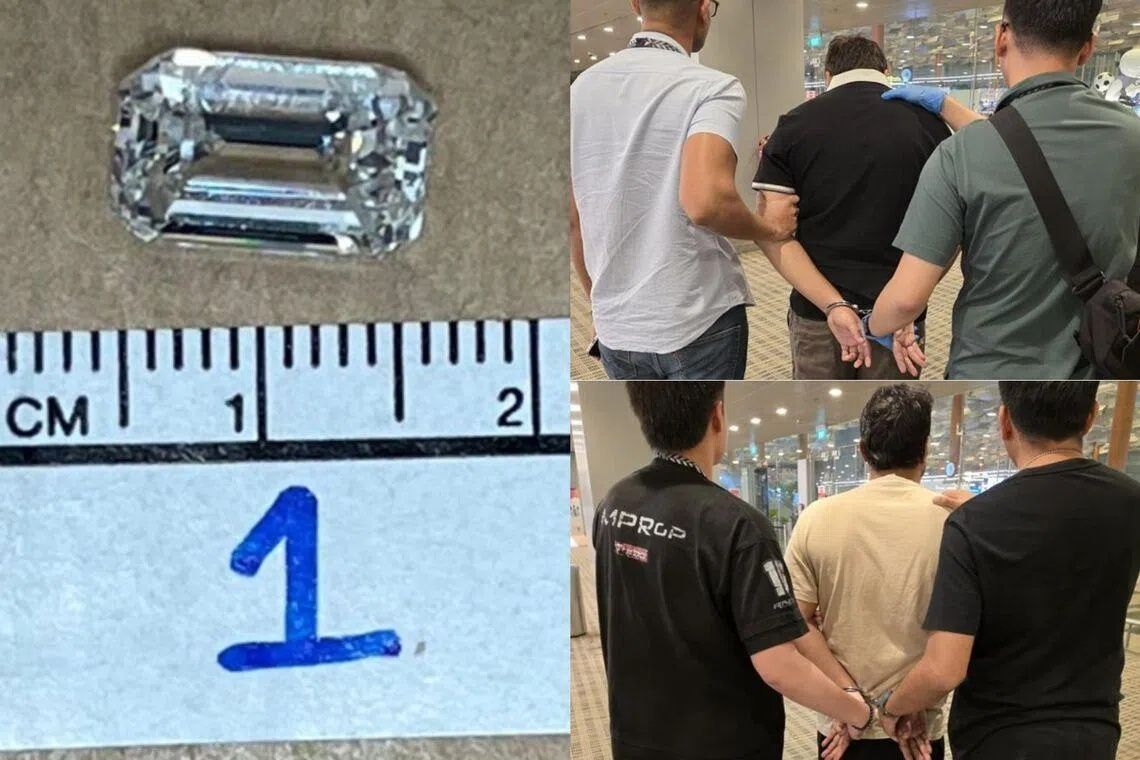
A meticulously planned jewellery theft at a Chinatown store unravelled within hours when two Indian nationals attempting to flee Singapore were intercepted at Changi Airport with the stolen diamond still in their possession. Mangroliya Manojkumar Kurjibhai, 41, was sentenced to two years, two months and two weeks' imprisonment on Friday, July 17, after pleading guilty to the theft of a 4.95-carat diamond valued at US$154,000 (approximately S$199,000) from Dianoche on Kreta Ayer Road. His accomplice, Serasiya Milan Ramnikbhai, 30, remains in the criminal justice system with proceedings still pending.
The heist showcased a level of premeditation that extended beyond Singapore's borders. The pair had arranged the fabrication of a counterfeit diamond while in India, commissioning a fake stone that matched not only the appearance but also the specifications and serial number of the legitimate gem they intended to steal. This preparation suggested the men had gathered intelligence about the target jewel before arriving in Singapore, though court documents remained silent on precisely how they identified and learned the particulars of the diamond.
On June 19, both men touched down in Singapore, setting their scheme into motion the same day. At approximately 3pm, they entered the Dianoche store with roles clearly assigned. Serasiya, carrying the fabricated diamond in his mouth, served as the passive component of the operation while Mangroliya assumed the active role. The latter requested to examine the 4.95-carat diamond, prompting a sales manager to retrieve it from secure storage.
Mangroliya then executed a calculated delay tactic, repeatedly asking the manager to bring out additional items for inspection. Each request necessitated the manager leaving his station, creating the window of opportunity the conspirators needed. During one of these absences, Mangroliya signalled Serasiya, who expelled the counterfeit stone from his mouth and swapped it for the genuine diamond, which he then concealed orally. The pair maintained their composure, informing the manager they would deliberate on the purchase before departing the premises undetected.
The deception might have succeeded indefinitely had the store maintained less rigorous quality-control procedures. However, the jewellery establishment's manager grew suspicious and subjected the stone left behind to examination using an optical gemstone identification machine, which immediately revealed the substitution. Simultaneously, the store's CCTV system had captured the entire transaction, providing authorities with a precise visual record of the crime.
Without delay, the store's management alerted local law enforcement. By then, the criminals had already vacated their accommodation and secured airplane tickets to India. The urgency of their departure suggests they intended to exploit a relatively small window before discovery, betting they could clear immigration and depart Singapore airspace before suspicion crystallised.
Their calculation proved fatally flawed. Officers stationed at Changi Airport Terminal 3 apprehended both men around 9pm that evening, just hours after the theft, as they proceeded through immigration. The recovery of the genuine diamond from Serasiya's haversack confirmed the crime and provided conclusive evidence linking both individuals to the felony.
During court proceedings, State Prosecuting Officer Yip Cheng Yee presented the consolidated evidence, establishing that Mangroliya bore primary responsibility as the orchestrator and decision-maker throughout the operation. The swift guilty plea suggests the prosecution's case was robust, built on CCTV footage, the recovered diamond, the counterfeit substitution, and the timing of their airport arrest.
The sentencing carries significance for Southeast Asian travellers and the tourism industry's intersection with crime. Organised jewellery theft targeting high-value stones remains a persistent challenge for retail establishments across the region, with international criminal networks occasionally identifying specific targets through reconnaissance or intelligence gathered from accomplices within host countries. Singapore's jewellery retail sector, given the city-state's position as a regional luxury goods hub, represents an attractive target for such operations.
The case also illustrates Singapore's sophisticated airport security infrastructure and the coordination between retail establishments and immigration authorities. The rapid interception prevented what might have escalated into an international asset-recovery challenge, where pursuing stolen property across jurisdictions becomes exponentially more complicated.
Theft convictions in Singapore carry substantial penalties, with the law permitting imprisonment of up to seven years and financial fines depending on the value involved and circumstances. Mangroliya's sentence reflects the deliberate, premeditated nature of the crime, distinguished from opportunistic theft by the advance procurement of counterfeits and coordination across borders. Serasiya's pending case will likely result in comparable or potentially identical sentencing, given his material participation in the scheme, though his role as the subordinate actor may influence final determination.
For Malaysian readers and regional business operators, the case serves as a reminder that despite stringent border security and surveillance technologies, determined criminals continue devising sophisticated schemes targeting high-value merchandise. Retailers throughout Southeast Asia operating luxury goods markets should examine their vulnerability to similar fraud patterns and consider enhanced protocols for high-value transactions involving international customers.

