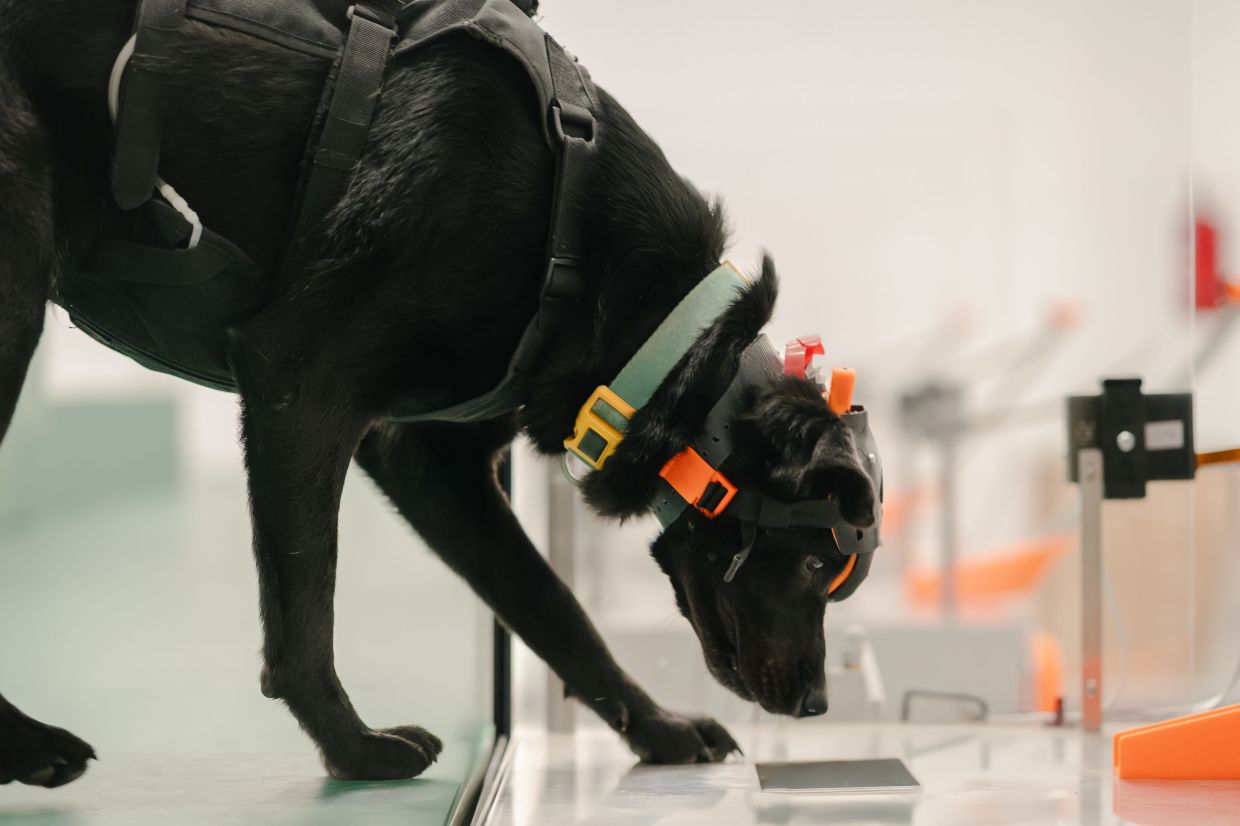
On a sprawling farm near Bengaluru, a team of beagles, labradors and Dutch shepherds has traded the traditional roles of drug and explosives detection for a more medically consequential mission: identifying traces of cancer in human breath. The canines—including Billy, Jessie and Banu—work in a laboratory setting where they serve as the primary diagnostic tool for Dognosis, a two-year-old startup attempting to revolutionise early cancer detection by making it accessible and affordable across India. Rather than relying on expensive imaging scans, invasive biopsies or blood tests, the company has designed a system that transforms the dog's exceptional olfactory capabilities into a low-cost screening platform with potentially transformative implications for public health across the region.
The screening process itself is elegantly simple in conception yet technologically sophisticated in execution. Patients breathe into specially designed masks that are then transported to Dognosis's facility, where trained dogs are exposed to the breath samples. The animals' responses—their movements, breathing patterns, brain activity and body language—are captured by sensors and processed through artificial intelligence algorithms that determine whether cancerous markers are present. This non-invasive approach eliminates the need for uncomfortable procedures and expensive diagnostic infrastructure, addressing a critical gap in healthcare delivery where conventional screening methods remain prohibitively expensive for large segments of the population.
The scientific foundation for this approach is surprisingly robust. In a Phase 2 trial published in the Journal of Clinical Oncology, Dognosis reported approximately 90 percent sensitivity for early-stage cancers spanning seven broad categories encompassing more than 20 cancer types, including breast cancer. Most remarkably, co-founder Akash Kulgod noted that dogs trained to identify ten specific cancer types subsequently identified an eleventh variety they had never encountered before, suggesting their olfactory detection abilities may generalise beyond their specific training. These preliminary results position canine-based screening as potentially one of the most sensitive early detection methods available, particularly compared to existing screening rates in India where accessibility and affordability remain severe constraints.
India's cancer burden makes the timing of such innovations particularly urgent. The International Agency for Research on Cancer identified India as having the third-highest prevalence of new cancer cases globally, with an estimated 1.5 million new diagnoses and over 900,000 deaths from cancer in 2024 alone. Approximately one in ten Indians face significant risk of developing cancer before age 75, with breast cancer representing the most commonly diagnosed type, followed by cancers of the lip, oral cavity, lung and cervix. These figures underscore a massive and growing health challenge that existing healthcare infrastructure is fundamentally unprepared to address at scale.
Yet the screening infrastructure in India remains woefully inadequate relative to disease burden. Available data from 2019-2021 surveys revealed that only 1.9 percent of Indian women had ever been screened for cervical cancer, whilst just 0.9 percent had undergone screening for breast or oral cancers. Among men, merely 1.2 percent reported ever receiving oral cancer screening. These extraordinarily low screening rates reflect both the scarcity of accessible screening facilities and the financial barriers preventing most Indians from accessing conventional diagnostic pathways. In this context, an affordable, at-home prescreening test could fundamentally expand the population receiving early detection, particularly benefiting rural and lower-income populations who currently have virtually no access to cancer screening.
Dognosis has secured meaningful financial backing to operationalise this vision. The startup raised $1.5 million through a pre-seed round in 2024, followed by an undisclosed subsequent investment, funds the company projects will sustain operations for approximately two years given its planned growth trajectory. Early-stage investors including Accel India and San Francisco-based Caffeinated Capital have evidently recognised the market opportunity and social impact potential of scaling non-invasive cancer detection across a population of 1.4 billion where conventional screening remains largely inaccessible. The funding reflects broader investor recognition that innovative healthcare solutions targeting emerging markets can simultaneously address genuine medical needs and capture significant commercial value.
The working conditions for the canine diagnosticians themselves are carefully structured to maintain animal welfare whilst optimising detection performance. The dogs reside together on the farm, receive regular walks and playtime, and spend between thirty minutes to one hour daily working the detection platform, where the screening process is deliberately gamified to maintain engagement and motivation. Their compensation comes in the form of treats rather than monetary remuneration, creating a system where the dogs' natural instincts and innate abilities are channelled toward productive medical application. During recent observation sessions, beagles like Whiskey demonstrated the protocol by working through multiple samples sequentially, pausing at suspicious samples to sniff, circulate and signal positive detections through their behavioural patterns that the system recognises and records.
The company's commercialisation strategy prioritises accessibility and scale, recognising that technical capability alone proves insufficient without viable pathways to patients. Dognosis intends to launch an at-home multi-cancer prescreening test in India next year at a cost of several thousand rupees—a fraction of conventional screening costs—making early detection economically feasible for middle-income Indian households previously priced out of cancer screening entirely. The company has established an ambitious roadmap including expansion to process one million tests annually, doubling its canine workforce to thirty animals, and reducing turnaround times to one week. Geographic expansion into the United States market is also planned, with Kulgod indicating potential facility establishment by late 2027 or early 2028, suggesting confidence in the underlying technology's global applicability.
Validation through rigorous clinical research remains essential before widespread adoption can occur. Dognosis initiated its Phase 3 trial in April 2024 across ten Indian hospitals, with plans to recruit approximately 10,000 participants over twelve months. The study specifically targets asymptomatic individuals at elevated cancer risk alongside cancer survivors vulnerable to disease recurrence. Participants testing positive through canine screening will subsequently receive conventional follow-up including imaging and biopsy, establishing whether dogs' preliminary detections correlate with confirmed diagnoses. This methodologically sound approach acknowledges that early-stage trials demonstrating high sensitivity under controlled conditions do not automatically translate to performance across diverse, unselected populations with varying genetic backgrounds, medical histories and environmental exposures.
The regulatory pathway for Dognosis's screening test proves advantageous relative to conventional diagnostic devices. Kulgod emphasises that because their test functions as a prescreening tool rather than a definitive diagnostic device, it escapes the stringent regulatory requirements governing diagnostic instruments in India. This regulatory gap potentially accelerates commercialisation timelines but simultaneously raises questions about appropriate oversight mechanisms for novel diagnostic technologies entering clinical practice. The distinction between prescreening and diagnosis, whilst legally meaningful, may be less clear to patients and healthcare providers, necessitating careful communication about the test's limitations and appropriate clinical context.
Pankaj Chaturvedi, deputy director of the Centre for Cancer Epidemiology at Tata Memorial Centre in Mumbai, articulated the essential principle that innovative diagnostic technologies must strengthen rather than replace existing screening programmes. This cautionary perspective reflects legitimate concerns that novel, non-traditional approaches could undermine established screening infrastructure without providing superior outcomes at population level. The challenge for Dognosis will involve demonstrating not merely that canine-based screening detects cancer effectively, but that implementing such screening at scale actually reduces cancer mortality and improves health outcomes compared to existing approaches. Cost-effectiveness analysis comparing prescreening via canine detection against conventional pathways will prove critical for healthcare system adoption decisions across India.
Dognosis's expansion strategy emphasises partnership with existing diagnostic chains and healthcare providers rather than attempting to establish entirely novel distribution infrastructure. Following Bengaluru market launch next year, the company intends scaling across India through collaborations with established diagnostic networks already possessing patient relationships, clinical facilities and regulatory familiarity. This approach acknowledges that innovation adoption depends not merely on technological capability but on integration within existing healthcare ecosystems where trust, professional relationships and operational compatibility matter substantially. By positioning canine screening as complementary to conventional pathways rather than disruptive replacement, Dognosis navigates the complex organisational and professional dynamics governing healthcare innovation adoption in India.
The broader significance of Dognosis extends beyond India to Southeast Asia's emerging healthcare landscape where similar challenges characterise cancer screening access. Rising cancer incidence across the region, coupled with constrained healthcare infrastructure and limited screening capacity, creates conditions where innovative, scalable, cost-effective detection methods could meaningfully expand early diagnosis rates. If Dognosis successfully validates its approach through rigorous trials and demonstrates consistent performance across diverse populations, the model might feasibly extend to Malaysia, Thailand, Indonesia and Philippines where cancer burdens are increasing whilst screening infrastructure remains inadequate. The fundamental insight—that existing detection capabilities within animal cognition can be systematically harnessed and scaled through technological integration—represents a paradigm potentially applicable across multiple disease domains and geographic contexts.

