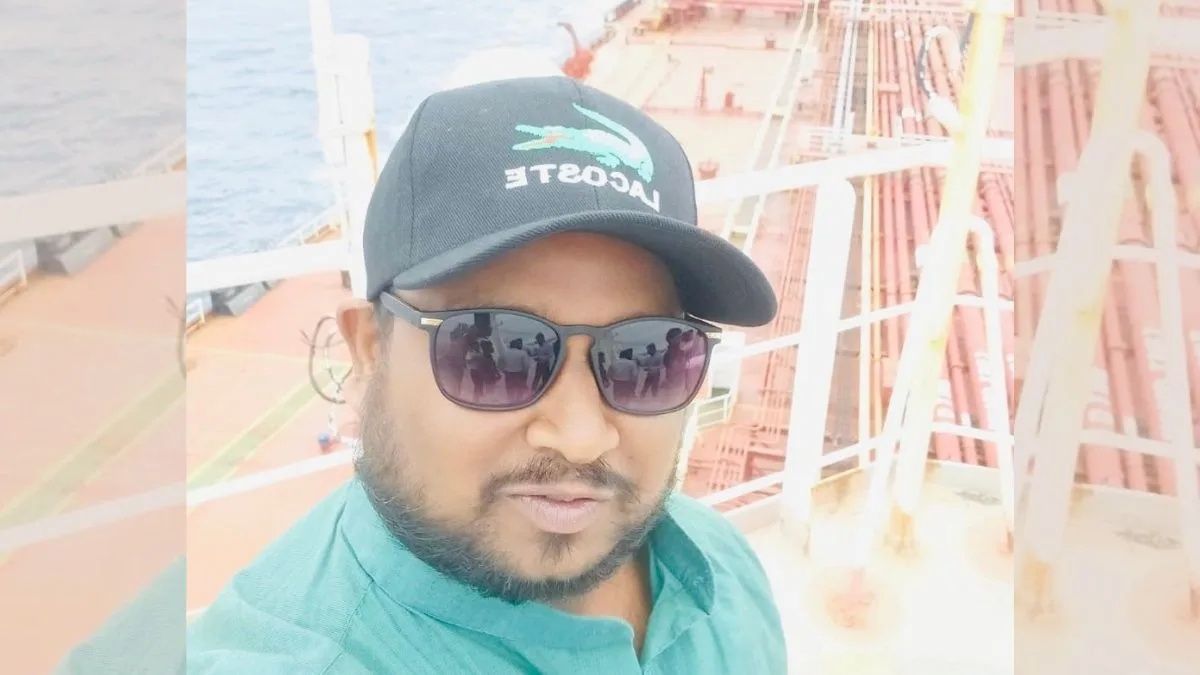
The death of Rakesh Chauhan, a 33-year-old seafarer from Uttar Pradesh, has escalated into a major diplomatic and human rights concern after a post-mortem examination in India revealed that his body was returned from Venezuela entirely devoid of major internal organs. The discovery has triggered urgent calls from his family and maritime labour unions for the Indian government to intervene, while raising troubling questions about the circumstances surrounding his demise and the handling of his remains by Venezuelan authorities.
Chauhan travelled to Venezuela in November 2025 to work aboard a merchant vessel, a routine deployment that turned tragic when his family received the first notification of an onboard accident. According to his relatives, representatives from the shipping company informed them that Chauhan had sustained injuries from a fall and was receiving medical attention. Within hours, the narrative shifted dramatically. Company officials presented increasingly grim assessments, first suggesting only a five per cent survival probability, then confirming his death by day's end. The family was given a single explanation: that he had succumbed to injuries from the fall. The body, they were assured, would arrive in India within seven days. Instead, it took nearly a month—arriving on June 4, more than 30 days after his death on May 7.
When Indian medical personnel conducted a re-autopsy in Deoria district, they documented extensive surgical incisions that indicated a previous post-mortem had been performed. A Y-shaped incision ran from the neck to the pubic symphysis, while a second cut extended from ear to ear across the back of the skull. What was missing, however, proved far more significant than what remained. The examination found a complete absence of the brain, heart, both lungs, liver, kidneys, spleen, pancreas, thyroid, larynx, trachea, stomach, intestines, gall bladder, and major blood vessels. Medical records explicitly noted that the cause of death could not be established because the organs necessary for forensic analysis were absent.
The Federation of Seafarers' Unions of India has characterised the situation as unprecedented and deeply suspicious. In statements circulated on social media, the federation highlighted that Chauhan's body was returned without any autopsy report or official documentation from Venezuelan authorities explaining the circumstances of death. The organisation emphasised the scale of the organ removal through repeated documentation of the surgical incisions—22 stitches traversing the front of the body and 21 stitches across the back of the head—combined with the complete absence of every major organ system. This level of extraction goes far beyond what would be necessary for a standard autopsy, raising questions about whether organs were harvested for purposes beyond routine post-mortem examination.
The family's initial complaint centred on the lack of transparency regarding basic facts of the case. No Venezuelan autopsy report was provided before the body's repatriation, leaving Chauhan's relatives without official documentation of what killed him or why such extensive organ removal was deemed necessary. The federation has since raised additional concerns about administrative irregularities that compound the medical anomalies. The receipt accompanying the body reportedly listed a signatory named Anjana Chauraisya, whereas the family's representative was identified as Ranjana Chaurasiya—a discrepancy that raises questions about document authentication and chain of custody protocols.
Further investigation by the federation uncovered a fundamental mismatch between employment records and actual deployment. According to documents obtained, Chauhan's employment agreement specified one vessel, yet he was actually deployed aboard a different ship. This discrepancy suggests potential gaps in crew tracking systems, inadequate oversight of worker assignments, or deliberate concealment of Chauhan's actual location and employment circumstances. Such inconsistencies are particularly alarming in maritime contexts, where proper documentation serves as a critical safeguard for worker protection and accountability.
The Federation of Seafarers' Unions of India has drawn international attention to what it characterises as a pattern of irregular handling that extends beyond mere administrative carelessness. The union has explicitly raised concerns about potential organ trafficking, noting that the systematic removal of all major organs without apparent medical justification or family consent represents a serious violation of bodily dignity and fundamental human rights. The organisation has demanded that Venezuelan authorities provide complete transparency regarding why organs were extracted, who authorised the extraction, and what happened to the removed organs. These questions touch on legal and ethical boundaries that transcend individual cases and implicate broader questions of sovereignty, maritime labour rights, and international human trafficking.
For Malaysian and Southeast Asian readers, Chauhan's case carries profound implications for regional maritime workers. Malaysia's significant maritime and shipping sectors employ thousands of crew members from across Asia, many working aboard vessels that touch Venezuelan and other Latin American ports. The absence of proper oversight, documentation, and protection for a worker from a fellow South Asian nation underscores vulnerabilities in global maritime employment frameworks. Southeast Asian maritime unions and government bodies have long advocated for strengthened international standards governing crew welfare, medical documentation, and repatriation procedures—concerns that Chauhan's case validates with tragic urgency.
The Indian government faces mounting pressure to elevate the case diplomatically. The Indian Embassy in Venezuela must demand access to comprehensive Venezuelan medical records, investigate the circumstances surrounding Chauhan's death beyond the official explanation of a workplace accident, and ensure that Venezuelan authorities account for the handling of his remains. The government should also examine whether systemic failures in the shipping company's protocols contributed to the incident and whether adequate safeguards exist for Indian seafarers working in geopolitically sensitive regions.
Chauhan's family continues to pursue answers while grappling with the profound indignity of receiving a body stripped of its internal organs without explanation or consent. Their pursuit of justice reflects broader questions about accountability in an increasingly interconnected global economy where workers from developing nations often labour in distant regions with minimal oversight. The case demands not only investigation and compensation but also institutional reform to prevent similar tragedies and to ensure that maritime workers enjoy fundamental protections regardless of where their vessels travel.

