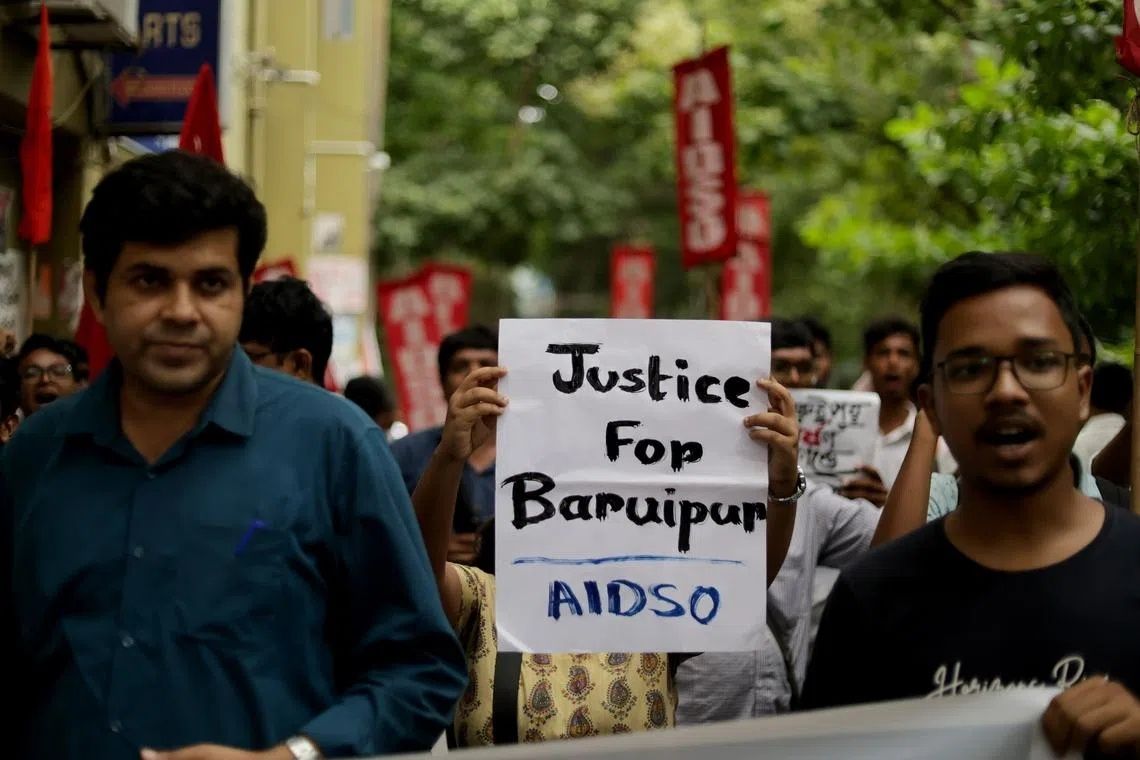
Indian police have intensified efforts to restore order in West Bengal following days of violent unrest sparked by the discovery of an 11-year-old girl's body in Baruipur, a city located approximately 30 kilometres south of Kolkata. The child went missing on July 4 and was found dead in a pond the following day, triggering widespread anger across the state and beyond. Law enforcement authorities reported on Friday that they had taken 35 individuals into custody for their involvement in property damage and acts of violence committed during the demonstrations, with investigators actively reviewing multiple videos circulating on social media to identify additional participants.
The intensity of public reaction underscores the depth of community outrage at crimes targeting children and women. Since the girl's body was discovered, angry crowds have blocked transportation routes and set vehicles ablaze across the region, reflecting the desperation many residents feel regarding personal safety. One particularly tragic consequence emerged as police confirmed that vigilante groups had killed an innocent bystander during the unrest, a development that illustrates how rage can spiral into uncontrolled violence with tragic consequences for uninvolved members of the public.
Police investigations have resulted in the arrest of four men suspected of committing the rape and murder. In a dramatic turn of events, authorities fatally shot one of these suspects, Prabhas Mondal, during the early morning hours of July 8. According to official accounts, Mondal was killed while attempting to flee as police transported him to the crime scene as part of their investigative procedures. The shooting has not escaped controversy, as questions about the circumstances and necessity of the use of lethal force have emerged. Mondal's mother subsequently refused to claim her son's body, declaring in a television interview that she could not accept his remains because he had brought only shame upon their family. "The sin committed by my son, he has received punishment for it," she stated publicly, a comment that reflects the profound family trauma resulting from the case.
The investigation has also been marked by allegations of mistaken identity. Indian news organisations reported that relatives of one of the other three arrested men claim he was wrongly apprehended and is not guilty of involvement in the crime. The families of the remaining two suspects have not issued public statements regarding their innocence or guilt. These claims raise questions about the reliability of investigation procedures and the potential for innocent individuals to face serious criminal charges in an environment of high public pressure and demand for swift arrests.
The renewed focus on violent crimes against women and children arrives at a sensitive moment for West Bengal's new political leadership. Suvendu Adhikari, who assumed office as Chief Minister following his Bharatiya Janata Party's electoral victory in state polls during May, has pledged to pursue perpetrators of sexual violence with maximum legal severity. In a statement posted to social media on July 9, Adhikari declared that his administration would demonstrate "no leniency" towards those who commit rape or engage in acts of violence, nor would tolerance extend to individuals who lynch "innocent and blameless" people in response. He promised that the newly formed government would pursue such criminals "to the fullest extent of the law and ensure justice is served," signalling that addressing these crimes remains a priority for the administration.
This incident reflects a broader and persistent crisis regarding the safety of women and girls across India, an issue that has garnered international attention and sparked sustained policy debates. Although India strengthened its legal framework following the highly publicised 2012 Delhi gang rape and murder case, which claimed the life of a 22-year-old woman and provoked massive nationwide demonstrations demanding reform, sexual violence against women and children continues at alarming rates. That particular case resulted in the execution of four convicted perpetrators, representing a rare instance of capital punishment for rape in India's modern legal history. Nevertheless, the decades since have demonstrated that legal reforms alone have not solved the underlying problem.
West Bengal specifically has faced considerable international scrutiny regarding women's safety following the rape and murder of a trainee doctor at Kolkata's RG Kar Medical College and Hospital in 2024. That crime galvanised nationwide protests and widespread demands for institutional accountability and improved safety measures within hospitals and workplaces across the country. The case became symbolic of broader systemic failures to protect women in positions of vulnerability, including healthcare professionals working long hours in inadequately secured environments. The Baruipur incident now compounds these concerns and demonstrates that the crisis extends beyond institutional settings to threaten children in their own communities.
The public response to the child's death reflects the profound desperation many Indians feel about a justice system perceived as inadequate in deterring serious crimes against women and children. The willingness of ordinary citizens to engage in roadblocks, vehicle torching, and ultimately vigilante violence suggests that communities have lost confidence in formal legal mechanisms to deliver swift and certain punishment. This erosion of faith in institutions creates dangerous cycles where violent mob justice becomes an alternative dispute resolution mechanism, itself generating further casualties and cycles of retribution.
Moving forward, the case will test whether West Bengal's new government can deliver on promises of enhanced safety and more effective law enforcement. For Malaysia and other Southeast Asian nations, the incident serves as a sobering reminder that comprehensive approaches to women's and children's safety require sustained investment in institutional capacity, professional training, community education, and cultural transformation alongside legislative measures. The international dimension of concern about such crimes suggests that regional cooperation on information-sharing and best practices regarding victim support and perpetrator prosecution could prove beneficial across the broader Asian context.

