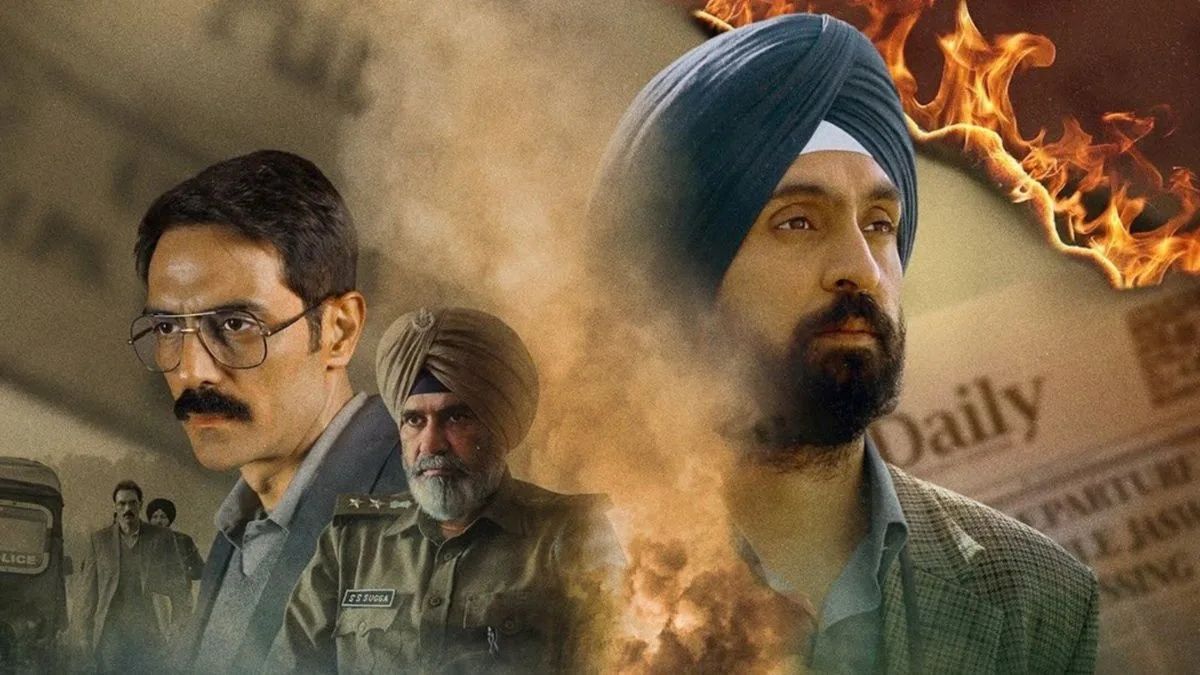
Filmmaker Honey Trehan spent four years locked in a grinding dispute with India's film authorities over "Satluj," his biographical work chronicling the life of Jaswant Singh Khalra, a Sikh activist who documented extrajudicial killings during Punjab's violent counterinsurgency campaign in the 1980s and 1990s. The censorship board demanded 127 separate alterations before Trehan eventually capitulated and released the film through streaming platform ZEE5 earlier this month. Within two days, the streaming service removed the work, citing "current developments" without explanation—though the Press Trust of India reported that the government had requested the takedown over undefined "security concerns."
Treehan's experience reflects what he characterises as a troubling pattern of political manipulation masquerading as regulatory oversight. "This is not the sign of a healthy nation," he stated in an interview, directly accusing India's Ministry of Information and Broadcasting of weaponising film censorship to suppress narratives that challenge government preferences. His assessment touches on a fundamental tension in Indian governance: the country operates one of the world's most invasive film certification systems among major democracies, granting state authorities direct power to edit or prohibit films before public exhibition rather than simply rating them by age appropriateness.
The scale of institutional pressure on filmmakers has become quantifiable. Parliamentary documents reveal that 3,033 films underwent mandatory cuts or modifications during fiscal year 2025, more than double the figure from four years prior. This escalation signals a systematic shift rather than isolated incidents, yet transparency remains elusive—India's Central Board of Film Certification has not released a comprehensive annual report detailing its activities since 2017, leaving the public, filmmakers, and policymakers unable to assess what content triggers intervention or understand the rationale behind specific demands. The board's leadership insists it only enforces changes when content threatens national sovereignty, security, public order, or violates standards around decency and morality, but filmmakers argue the definitions have become dangerously expansive under the Modi government.
This censorship apparatus carries historical baggage rooted in colonial governance structures that India inherited and preserved after independence. However, observers note a qualitative difference in how authorities now wield these powers. Sadanand Dhume, a senior fellow at the Council on Foreign Relations specialising in South Asian affairs, characterises the current moment as a sharp departure: "The politics of the country has taken a sharp turn since the advent of Modi in 2014, and Bollywood is facing the downstream effects." Unlike the age-based classification systems employed across North America and Europe—where ratings guide parental discretion but filmmakers retain editorial control—India's board functions as an active censor with veto power, fundamentally reshaping the industry's creative landscape.
The targeting of "Satluj" reflects broader sensitivities surrounding Sikh identity and separatism that remain politically volatile decades after the Punjab conflict ended. The film stars Punjabi superstar Diljit Dosanjh and examines Khalra's work documenting security forces' brutality. Prime Minister Narendra Modi's Bharatiya Janata Party views Sikh separatism with enduring suspicion, particularly following Canada's 2023 allegations that Indian government agents were involved in the killing of a Sikh activist in Vancouver—a charge India has denied. The geopolitical dimension adds urgency to official wariness about narratives depicting state violence or questioning governmental actions in Punjab, even when those events occurred decades ago and have been extensively documented by human rights organisations.
A pattern of controversial rejections and post-release censorship has affected multiple high-profile productions, illustrating how authorities intervene both before and after films reach audiences. The Malayalam-language blockbuster "L2: Empuraan" was forced to accept 24 post-release cuts in 2025 after Hindu nationalist groups objected to its portrayal of 2002 religious riots. Earlier, "Phule," a biopic examining 19th-century caste reform movements, faced demands to excise caste-related language, whilst "Homebound," India's 2026 Academy Awards submission, cleared certification only after removing eleven references to caste and religious themes. These interventions reveal a particular sensitivity around narratives addressing communal violence, religious minorities, and caste discrimination—topics integral to understanding contemporary India yet apparently treated as menacing when dramatised on screen.
Notably, films celebrating patriotic narratives and state power encounter fewer obstacles. "Dhurandhar," a 2025 spy thriller depicting Indian intelligence operations against Pakistan, received routine clearance with standard violence trims and became the highest-grossing Hindi-language film of all time. This disparity suggests censorship functions less as neutral content regulation and more as a tool directing what stories receive official blessing. Filmmaker Onir, known by a single name, articulates the broader creative toll: "I feel that it's one of the worst phases of Indian cinema because the variety of cinema, the kind of narratives that one wants to see, all kinds of stories—that is disappearing slowly." Onir himself battled censors over his 2023 film "Pine Cone," which was flagged for including the word "gay" in a scene involving a child. The board only cleared it after he removed the dialogue.
The practical mechanisms of control extend beyond official certification processes. Trehan had initially planned to premiere "Satluj" at the 2023 Toronto International Film Festival alongside five gala screenings, but withdrew the film before its scheduled premiere—a decision he attributes to the legal exhaustion of battling India's censors. The documentary later gained selection to screen at the Cannes Film Festival in May, providing an international platform despite domestic suppression. This pattern of international festivals offering alternative distribution channels underscores how official censorship drives significant productions away from domestic release, potentially diminishing India's cultural soft power whilst fragmenting national cinema audiences.
Despite institutional barriers, "Satluj" continues circulating through informal networks demonstrating audience hunger for suppressed narratives. In Punjab, copies downloaded before ZEE5's removal are being screened in Sikh temples, community centres, and village squares. Trehan describes these grassroots screenings as transformative: "The film is getting screened—Hindu, Sikh, every caste, rich, poor, all sitting together... it brought the entire Punjab together." This organic distribution model reveals how censorship, rather than controlling narratives, merely redirects them into unregulated spaces where official messages cannot shape reception. The phenomenon mirrors broader global trends where attempted content suppression generates greater public interest and alternative dissemination methods.
For Malaysia and other Southeast Asian democracies grappling with media regulation questions, India's experience offers cautionary perspective. As the world's largest film-producing nation by volume, India's trajectory toward government-controlled narrative management signals risks endemic to systems granting state agencies direct editorial authority over creative works. Malaysia's own film classification board operates with significant discretionary powers, and patterns emerging from India suggest that institutional creep—whereby regulatory scope expands gradually across administrations—represents a genuine hazard to creative liberty. The question facing policymakers across the region involves distinguishing legitimate content standards from mechanisms for political control, a distinction increasingly difficult to maintain once state agencies gain direct censorship authority. Trehan's years-long struggle against 127 demanded alterations illustrates how incremental pressure, sustained across bureaucratic processes, achieves suppression without dramatic confrontation, making it particularly difficult for audiences to recognise or resist.

